Featured
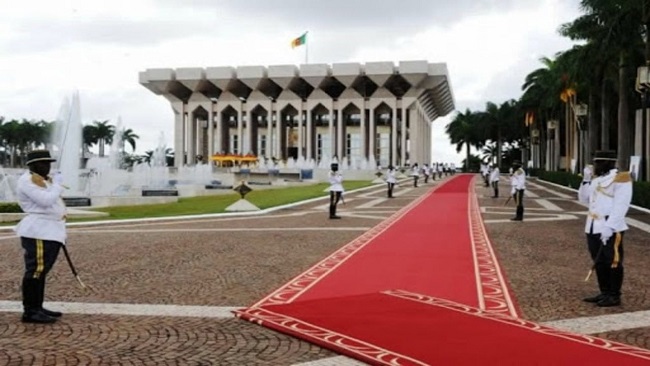 Unity Palace needs a new idea and a new head of state
 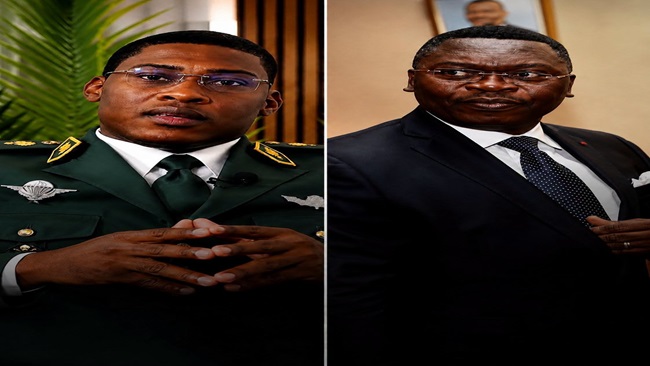 Martinez Zogo Affair: Biya must clean house and make way for a new generation
  Ambazonia People’s Liberation Authority explains motives for the new transition
  A year after Biya’s disputed re-election, CPDM remains without a timetable for next year’s polls.
 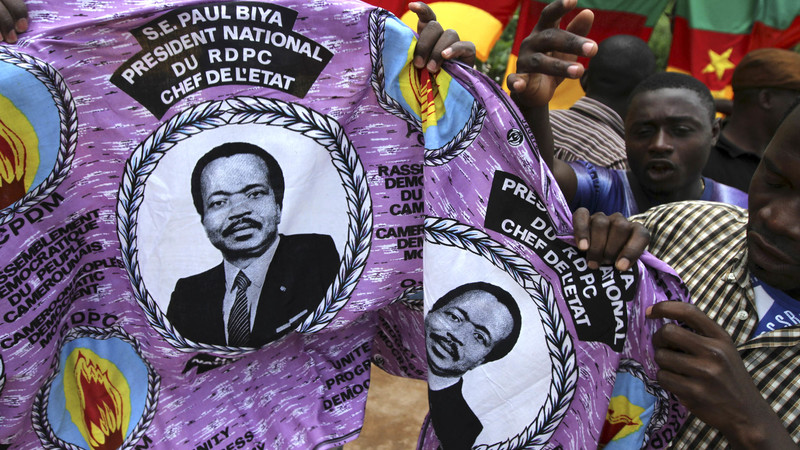 Ruling CPDM Party: When a political message runs out of the road
Most Commented Posts
 4 Anglophone detainees killed in Yaounde
18 comments Chantal Biya says she will return to Cameroon if General Ivo Yenwo, Martin Belinga Eboutou and Ferdinand Ngoh Ngoh are sacked
13 comments The Anglophone Problem – When Facts don’t Lie
12 comments Anglophone Nationalism: Barrister Eyambe says “hidden plans are at work”
12 comments Largest wave of arrest by BIR in Bamenda
10 comments
Featured
-
Harry Kane ends England’s 25-year Ballon d’Or drought
-
Cameroon’s sports betting tax revenue remains unclear
-

Revealed: 2 Franklin Templeton Funds hold CFAF 2 billion in Cameroon bonds
-
Brazil’s Lula beats odds and seals re-election, rival Bolsonaro demands annulment
-
Top officials from Saudi Arabia, Pakistan, Turkey due in Iran for security talks
-

Unity Palace needs a new idea and a new head of state
-
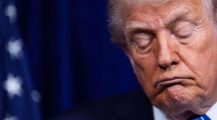
Trump says US may launch ‘another little Epic Fury’ attack on Iran
8, June 2026
Archbishop Esua says ‘there can be no peace without justice’ 0
Archbishop Emeritus Cornelius Fontem Esua of Cameroon is a living witness to the Church’s evolution in Africa. He lived through the transition from a Church led by white missionaries to one governed by local clergy.
“The transition was gradual,” he told Crux Now.
“I was the first priest in my tribe and the 17th priest in the English-speaking part of Cameroon. At that time, most priests were missionaries… Soon after, bishops were appointed from among Africans, marking a gradual change from a missionary church to a church that is missionary itself. We were evangelized to evangelize others.”
In a wide-ranging interview on the sidelines of the 51st Plenary Assembly of the Cameroon Bishops’ Conference, held in Yaoundé from May 30 to June 5, 2026, Esua said he has also lived through Cameroon’s checkered history and has a clear understanding of why the Central African country is now at war with itself.
He was the archbishop of Bamenda when the crisis broke out in 2016, and was the victim of kidnapping in 2019.
“The crisis that broke out in 2016 was the climax of a problem that started about 50 years earlier,” he told Cux Now, and then went down memory lane to explain the root causes of the conflict.
He noted that Cameroonians, as a people, now need to work to actualize the call made by Pope Leo XIV during his recent visit to Cameroon.
“Peace is not decreed; it is welcomed and lived. It is not a matter of words or signatures on a treaty, but of a commitment that is incarnated in a style of life, in a personal and institutional way of being… we need a disarmed peace,” Pope Leo had said during his Cameroon visit.
“The pope has come and gone. As a pastor and leader, he gave us a recipe for justice and reconciliation. Now it is our challenge to listen, understand, and carry out his agenda,” Esua told Crux Now.
Following are excerpts of that conversation…
Crux Now: I just want to start by asking you about your upbringing, your childhood. Did you ever dream that you would become a priest?
Esua: I don’t think I dreamt of becoming a priest, but I was attracted to it when I was a child. I used to go to church and watch what the priest was doing, how he celebrated Mass. I would go back home and imitate, trying to celebrate my own Mass with my friends.
I had always thought that to become a priest, you had to be a white man because, from childhood, I only saw white priests. But then I saw a major seminarian from my parish who had gone to seminary- first in Sasse College and then to Nigeria. When he came back, he wore a white suit and assisted the priest. I came back home and said, “So a black man can also be a priest.”
From that day, I thought I should also become one.
So that was the trigger?
Yes, that was the trigger. After finishing primary school, I told my parents I wanted to become a priest.
Were they receptive to the idea?
Some doubted it, some were okay with it, saying I could do what I wanted. Finally, when I finished Standard Six in 1959, I registered and passed the entrance to Sasse College. I told the priest interviewing me that I wanted to become a priest, and luckily, he was from Sasse. He was interviewing children from Sasse and said I could go to the minor seminary attached to Sasse, which is Holy Family Minor Seminary. It’s up the hill, as we call it. You live there, eat, play, and take extra moral classes but go to Sasse College for lectures and exams.
After I finished, I applied to the bishop to continue my journey to priesthood, and he accepted. So, the journey continued from there.
Just tell us a bit about the journey, the seminary, what were the challenges like?
In Sasse, we were like any other students. We had a separate dormitory where we stayed and played together. When we got to the major seminary, we started subjects relevant to passing our GCE. My teachers at the time were mostly Peace Corps members, as the Peace Corps had just been introduced. I was very good in sciences, math, and physics, but since I wanted to become a priest, some tried to convince me otherwise, especially the American teachers offering scholarships. Many of my friends accepted those scholarships and went to America. I went to Enugu, Nigeria instead, where I did three years of philosophy.
After finishing philosophy, the bishop sent some of us to Rome to continue theology studies. I did my theology in Rome for four years, then came back home and was ordained a priest in December 1971. I had finished in Rome in June but wanted to be ordained at home, so I returned to my village in Mbetta and became the first priest of Mbetta parish.
You were studying in Rome when Pope Paul VI visited Uganda…
Yes, in 1969. We were college students in Rome, and the visit had a big impact on us African seminarians. During a Mass of thanksgiving at St. Peter’s Basilica, we sang African hymns, played drums, and the next day, newspapers called it “the jungle in the Vatican.”
It was the first time African music and drums were heard in the Basilica, and some couldn’t understand it. That moment was impressive for us. Pope Paul VI told us to be missionaries of ourselves, to ourselves. Since then, the church has become more missionary with more vocations from Africa.
So how was the transition from white to black missionaries in Africa?
The transition was gradual. I was the first priest in my tribe and the 17th priest in the English-speaking part of Cameroon. At that time, most priests were missionaries. The pope’s call meant more vocations and training to take on responsibilities.
Soon after, bishops were appointed from among Africans, marking a gradual change from a missionary church to a church that is missionary itself. We were evangelized to evangelize others.
Let’s fast forward to 2016. You were still Archbishop of Bamenda when the crisis broke out. How can you explain what happened?
The crisis that broke out in 2016 was the climax of a problem that started about 50 years earlier. I went to Sasse in 1960, the year French-speaking Cameroon gained independence. In October that year, there was debate on whether the English-speaking part would join Nigeria or Cameroon. At the time, Southern Cameroon had quasi-independence — it was not under Nigeria and was self-governing.
Talks to join French-speaking Cameroon began. I remember political parties like KNDP and KNC. Different opinions existed, but the plebiscite only presented two options, omitting the option for full independence, which many desired.
That lack of choice was unjust and led to long-term grievances. The French part of Cameroon and the English-speaking part of Cameroon however agreed on a Federal Constitution, which was abrogated through a referendum in 1972.
Do you think the dissolution of the federal system led to today’s crisis?
Absolutely. The federal system was not respected. The French-speaking side and their political leaders disregarded it for no valid reason except by claiming it was costly to run, but good things are often expensive. The problem started with denying people the right to choose their future. The situation has been like a festering wound that eventually exploded.
You were kidnapped in 2019. Can you recall what happened? What did you tell your captors?
Yes, I was kidnapped by boys [a reference to separatist fighters] blocking roads. I told them clearly that their way was wrong. They were fighting for freedom and against abuse, but why make the same people they are fighting to free suffer? I continue to believe that without truth and justice, our problems cannot be solved.
In 2019, there was a major national dialogue, yet the crisis persists. Why do you think it failed?
I felt it was more of a monologue than a dialogue. Most participants were chosen by the government, and many were part of the status quo. What could they decide differently?
The dialogue was supposed to address the highest aspirations of Anglophones, including deciding on a form of government that respects both traditions. Yet, the form of government was excluded from the agenda, and no one answered when I questioned this. Many important issues were left off the table, which is why suffering continues. The organizers need to be realistic and put the right questions on the agenda.
Pope Leo XIV during his recent visit to Cameroon spoke about peace and justice. Do you think his words have had any impact?
I hesitated about the pope’s visit, fearing it might seem like condoning the situation. But I was happy he came and spoke the truth. The Church believes there can be no peace without truth and justice. Jesus prays for peace—not the peace the world gives, but the peace God gives, based on truth, justice, respect for human rights, and dignity. The pope insisted on this, emphasizing that justice and peace must embrace to achieve genuine peace. Otherwise, it’s just a silent armistice, not real peace.
From your perspective now, do you think the people who should act on the pope’s words are doing so? Are they moving the needle?
That is the question we all ask. The pope has come and gone. As a pastor and leader, he gave us a recipe for justice and reconciliation. Now it is our challenge to listen, understand, and carry out his agenda.
Culled from Crux