Featured
 Who really pushed for the return of the Vice President of the Republic?
  When politics fails a nation, football and the Church become the battleground
  Biya has had his era; Cameroon must now be allowed to enter its next one
 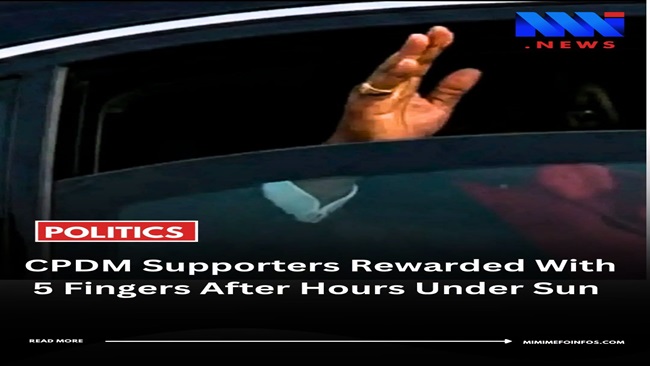 Biya’s hand: a source of glory and shame
  So, Cameroonians, what exactly do you want from President Biya?
Most Commented Posts
 4 Anglophone detainees killed in Yaounde
18 comments Chantal Biya says she will return to Cameroon if General Ivo Yenwo, Martin Belinga Eboutou and Ferdinand Ngoh Ngoh are sacked
13 comments The Anglophone Problem – When Facts don’t Lie
12 comments Anglophone Nationalism: Barrister Eyambe says “hidden plans are at work”
12 comments Largest wave of arrest by BIR in Bamenda
10 comments
Featured
-
Dangote refinery launches continent’s biggest IPO
-

Norway joins 11 other states to criminalize trade with West Bank settlements
-

Southern Cameroons Crisis: 3 civilians, one Amba fighter killed in Ekona
-
White Elephant: Kribi Port sinks to 395th globally after one of the sharpest drops in performance
-

President Putin says figures reflect ‘structural, deep, profound shifts’ in global economy
-
Dion Ngute reaffirms peace efforts amid fresh violence in Ambazonia
-

Yemen’s Houthis seize key island in Bab al-Mandab strait
25, May 2026
Pope Leo apologises for Church’s historic role in slavery 0
by soter • Headline News, News, Religion, World, World
Pope Leo on Monday issued the clearest apology yet from a pontiff for the Catholic Church’s role in slavery, acknowledging both its delay in condemning the practice and its historic involvement in legitimising it.
In a key passage of his first papal encyclical, Leo said the Church had taken centuries to fully recognise “the scourge of slavery” as incompatible with human dignity, calling the legacy “a wound in Christian memory.”
“For this, in the name of the Church, I sincerely ask for pardon,” he wrote in the wide-ranging manifesto, expressing “deep sorrow” for the suffering endured by enslaved people.
Leo acknowledged that Church authorities had, at times, responded to rulers by regulating and legitimising forms of subjugation, including the enslavement of non-Christians.
He also acknowledged that before that time, in the Middle Ages, ecclesiastical institutions had their own slaves.
He said the Church only reached a “formal, absolute and universal condemnation” of slavery in the 19th century, under Pope Leo XIII, after what the current pope described as a long period of inconsistency in teaching and practice.
PREVIOUS PAPAL STATEMENTS ON SLAVERY
The remarks mark the most explicit papal admission to date of institutional responsibility, going beyond earlier statements by previous popes that focused on the actions of individual Christians rather than the Vatican itself.
Pope John Paul II, during a 1985 visit to Africa, asked forgiveness from Africans for the suffering caused by “men belonging to Christian nations” in the slave trade.
Leo’s predecessor Francis condemned the plight of modern-day slaves and formally repudiated papal documents from the 15th century which were used by colonial powers to give legitimacy to their actions, which included slavery.
But such statements stopped short of directly addressing the role of the papacy, instead framing responsibility in broader terms tied to Christians or historical circumstances.
Leo’s intervention was made in his debut encyclical, “Magnifica Humanitas” (Magnificent Humanity), which addresses the ethical challenges of artificial intelligence and warns of new forms of exploitation linked to the global economy.
Genealogical research published after Leo’s election last year showed that history’s first U.S.-born pope had a diverse ancestry that included both enslaved people and slaveholders.
Source: Reuters