1, August 2022
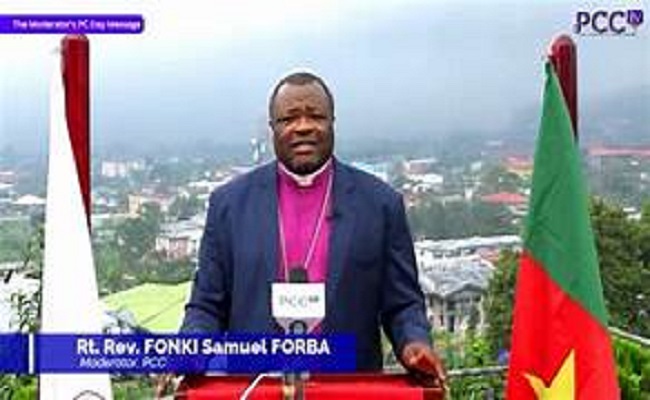
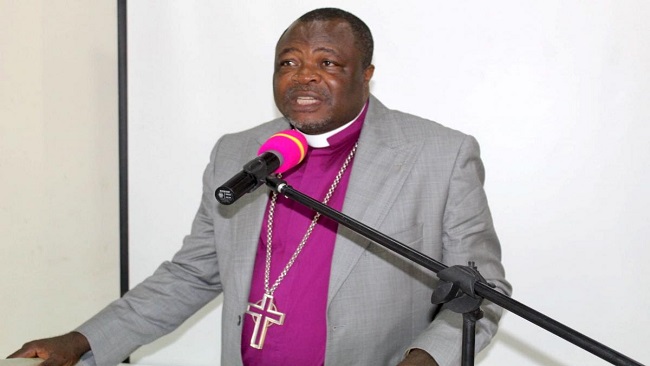
The deformation of the PCC: The Theology of Rev Fonki Samuel Forba 0
My fellow Presbyterians of the Presbyterian Church in Cameroon ( PCC) ,
“Fear Not for I am with thee” Isaiah 41: 10
“Do not be afraid” Jeremiah 1: 8
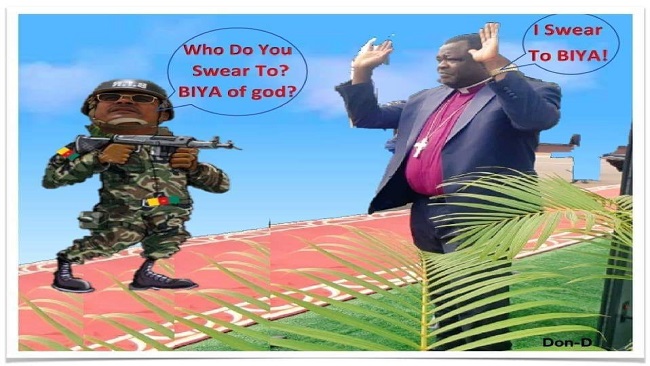
Moderator Fonki Samuel and his gang inside the Presbyterian Church in Cameroon ( PCC) have deformed the church and transformed it into a dent of thieves. They have no mercy ,no compassion and no care at all but I say to all of you fear not!
These are Pastors who have declared war against Widows, Primary School Teachers, Senior Citizens and Children living in poverty and oppression. Their cries for mercy and compassion felt on deaf ears over the years. The outcome has been violence- war and killings of people under the watch of Rev Fonki Samuel and his Synod Executive Committee. “It shall not be so amongst you.”
Still I am delighted to write to all of you to encourage one another during this long journey to defend the PCC and uphold the “Presbyterian belief” which by all account was inspired by the theology of John Calvin based on the biblical covenant of faith in Jesus Christ.
The pride and image of a Presbyterian Christian is determined by their understanding of grace, faith, justification/ sanctification, social justice and salvation through Jesus Christ per the theology of John Calvin.
In 2 Corinthians 5: 19, God is in Jesus Christ reconciling the world to Himself and caring for those in need Matthew 25: 35- 45. God was not in Christ persecuting and exploiting Christians and marginalizing.
Therefore, any church or Pastor who persecutes God’s people does not belong to the covenant of faith. These are the types to be purged from the Church. It should not be the other way around. There comes a time when we have to stop wickedness and evil because it is incumbent upon us.
As Christ followers , ✝️ we must sing this song ” Onwards Christian Soldiers marching as to war with the cross of Jesus going on before.”
Many of you Elders, Teachers and Widows and Pastors have cried out to me to help advocate for the powerless( Teachers, widows, children and Seniors) all of whom are being scammed by the PCC authorities under the Hitler of the Presbyterian Church, Moderator Rev Fonki Samuel.
This time will be very different than 24 years ago. Let me put things into proper perspective so that everyone can see where they belong even if that is against their will. Many of you who are familiar with my “craziness” know when God calls me to act , I never say NO.
I am fully aware that the PCC is divided into two camps and these divisions are nourished by a carefully crafted propaganda machine of lies, manipulation and persecution of innocent Presbyterians. These two camps are as follows ;
1. Presbyterians who are loyal to Moderator Fonki Samuel Forba orchestrated by a greedy business- minded Synod Executive secretly privatizing the PCC and profiting off the sweat and tears of mothers ,children and teachers.
2. Presbyterians who are loyal to Jesus Christ and the authoritative word of God as reflected by the theology of John Calvin. These Presbyterians see the PCC as a community of faithful stakeholders saved by Grace and justified by faith.
So I already know that I am speaking to two categories of Presbyterians here because whatever the Fonki loyalists are doing , it is important they realize that we know what has been going on since he began his theology of deformation of the PCC .
I will not repeat myself because I have spoken for the powerless Presbyterians Moderator Fonki Samuel has intentionally trampled upon and discarded them by his own ruthless and insensitive corrupt policies of marginalization
I have watched Moderator Fonki minister only to his loyalists, rewarded them and covered up for them even when they were damn wrong. I have seen it all.
He had only one objective to deal only with a select few who would allow him to have access to money at will without transparency and accountability.
Therefore, his trips overseas was designed to promote Fonki and build an empire for himself, his family, friends and his loyalists at home and abroad. He has never been out to promote Presbyterians and enhance the dignity of all Presbyterians. No effort is even met to help.
Moderator Fonki Samuel and his loyalists have become the wealthy Presbyterians overnight moving rapidly from rags into riches since they deformed responsible Christian stewardship into Fonki plundering machine (stealing, theft and embezzlement).
I do not anticipate Fonki’s loyalists to insult us as usual telling us to toe the line or leave . I hope that we do not have to endure one more insult again because the times have changed. Jeremiah exalts us to uproot evil if necessary.
The reign of tyranny in the PCC perpetuated by Moderator Rev Fonki Samuel is compounded by the reign of terror Presbyterians and co have endured with the exception of the few loyalists.
So how do we preserve the PCC and stop Moderator Rev Fonki Samuel and his gang? I have some ideas to propose to all responsible Presbyterians in my next edition.
Also all concerned Presbyterians are free to send me your ideas on how we should move forward. You can email or contact me on whatsup. I want to assure you that your name will be kept private because the Hitler of the Presbyterian Church in Cameroon drunk with greed ,power and wicked is dangerous and we will not allow them to hurt or destroy the lives of more Presbyterians. However, do not be afraid to send any information that will help me to go after them here in the USA.
This is my contact
Brother Jonathan Awasom
Email : Jonathan_light2000@yahoo.com
Whatsup number 12018785829
Facebook: Jonathan Awasom
Jeremiah 1 : 1- 19
Do not be afraid of them, for I am with you and will rescue you,” declares the Lord.
9 Then the Lord reached out his hand and touched my mouth and said to me, “I have put my words in your mouth.10 See, today I appoint you over nations and kingdoms to uproot and tear down, to destroy and overthrow, to build and to plant.”
God bless you all.









4, August 2022
When God Refuses to Speak: Random Thoughts of a Simple Christian- In Memoriam, Fr. Didimus Nformi 0
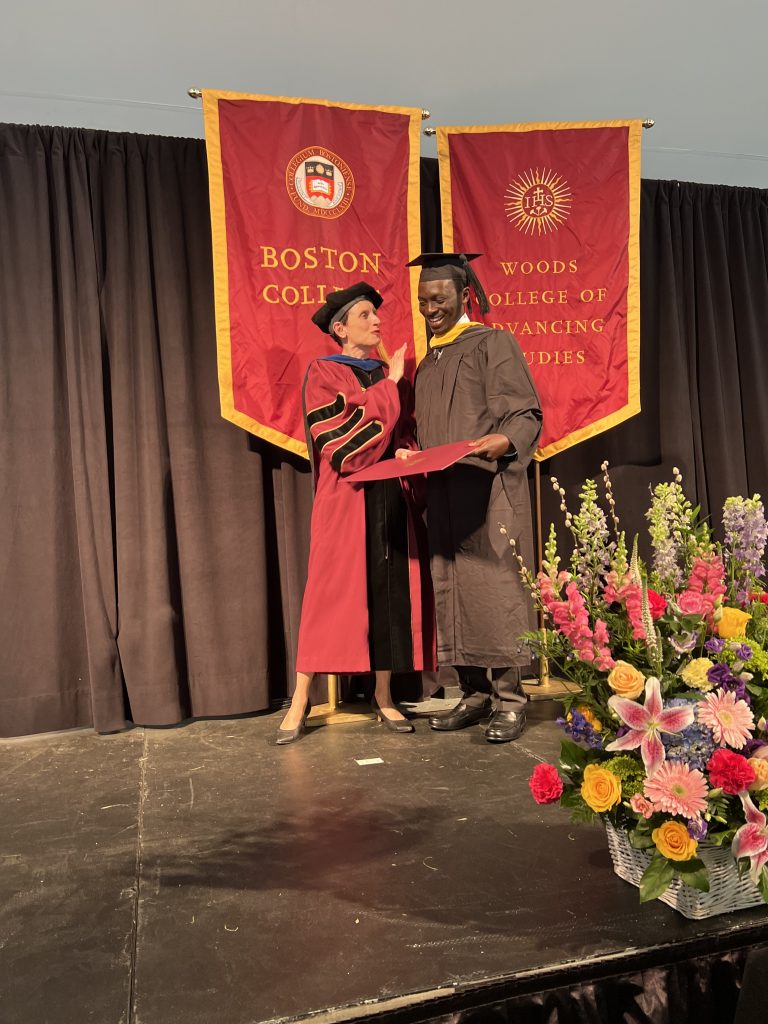
Tuesday July 19 began like any other day in Boston. After the usual early morning standing appointment with God, I embarked on the chores of the day, mainly, academic work. Around mid-morning. Everything changed. The news came that Fr. Didimus Nformi YOMBO was no more! He had died in a ghastly accident on his way to Buea, after procuring his study visa at the US Embassy in Yaoundé. At first, I thought it wasn’t true. This could not be true. He was supposed to be in Boston in August. Everything was ready for him to begin his graduate studies at Boston College. How could this be?
I met Didimus while attending a wedding in Buea in January of this year, and again in February, after the Ratzinger Conference at CATUC, Bamenda, when we stopped over in Buea on our way to the airport to visit with Bishop Bibi. He came across as very welcoming, humble and unassuming, eager to make a visitor feel at home. And I remember saying to him while leaving Small Soppo, see you in Boston and hope that you study Ratzinger when you come to Boston College! He smiled. I guess that was a mortal’s wish! After all, I am just a man, limited by finitude. A creature. It was never to be! How could I have known! Boston was never to be enriched by the presence of Didimus, a young priest, gone too soon, I would say, and under very painful circumstances.
I spent much of the day in the chapel, just staring at Jesus in the Tabernacle. Praying the breviary felt dry. No emotions. No words could express anything. Just staring at the Tabernacle was all one could do, in utter shock. I asked Jesus countless times: Why, Lord? What does this mean? What value is his death to you? Did you think of this young man’s mother? And many other questions. It was a Job-like experience, and like Job, I am not sure the Lord answered me. Perhaps I was talking to myself and not to Him. But I was in His presence. He was there. He is always there, present in the Most Blessed Sacrament. How could He not be there? He has been a Prisoner of the Tabernacle for over 2000 years. How could you be, Jesus, and you allow such a thing to happen to a young priest of yours? Why place such a promising future before him, and then not give him the opportunity to pursue it? Why show David that he is going to become king, only to leave him as a shepherd for the rest of his life? Does not Scripture say that hope deferred makes the heart sick? (Proverbs 13:12). Are you really there, Jesus, and yet are allowing such pain in the world?
At one point, my thoughts went to the question of the non-existence of God in the Summa of Aquinas. Two objections stand out supporting the non-existence of God, for Aquinas: divine omnipotence (God is all powerful), and divine omnibenevolence (God is all good). If God is all powerful and all good and yet, there is evil in the world, then we are left with a scenario of two alternatives: either God is all powerful and yet not all good because he allows for evil to inflict the world; or, God is all good but not all powerful, again, because of God’s inability to stamp out evil in the world. And the dilemma that Aquinas raises is captured by Dostoevsky The Grand Inquisitor in more stark terms: Ivan rejects or rebels against God, attempting to persuade his believing brother Alyosha, that God’s ordering of creation and Christ’s redemption are basically ineffective, based on a simple premise: God has been unable to free the world of suffering, pain and evil. Aquinas’ resolution of the impasse between Divine omnipotence and omnibenevolence leaves Ivan unpersuaded.
My thoughts further pondered Vatican II’s description of death in the Pastoral Constitution on the Church in the Modern World, Gaudium et Spes: it is when faced with death that the human being is most caught up in doubt. Human beings are tormented by the thought of their ceasing to be, and rightfully so (Gaudium et Spes, 18). And there is an underlining reason for the fear of death, as Ratzinger points out in his treatment of Eschatology, namely, the state of incommunicability regarding the foundation of human existence, that is, love. In death, we are unable to respond to love. We enter into a state of aloneness. And this, to Ratzinger, accounts for the excruciating pain that characterizes death.
Caught up in these thoughts, it occurred to me that though I had spent a good deal of time in the silence of the chapel, God wasn’t going to provide an explanation to me regarding the painful passing of Didimus. Perhaps like Job, even if God spoke, He was going to bully me into silence by posing questions that a finite mind like mine wouldn’t be able to answer. Or maybe God’s silence was his speech. He had done it before. This was not the first time that God was staying silent in the face of death. He did same one Friday afternoon on a hill outside Jerusalem called Calvary. And history is repleted with examples of God staying silent when one would have loved him to say a word. I think of the death of my own sisters, late twenty and early thirty in age, two years apart. God stayed silent. And other sufferings over the years, such as when a young child dies! Or when a young child is suffering from so much pain, hospitalized! God appears to always stay silent when we would need him to speak. Again, could God’s silence be God’s speech? Or maybe God knows that speech in such circumstances cannot resolve anything.
Perhaps the best God can do in the situation of the tragic death of Didimus is just God’s presence. He had promised in the revelation of His Sacred Name to Israel – Ehyeh Asher Ehyeh (Exodus 3:14) – I will be with you in the manner in which I will be with you. Perhaps Buber and Levinas were right after all: the Tetragrammaton was not, in the first place, about being, ontology or metaphysics. It was about presence: God will be present with Israel. God will be present with us, in life and in death. And precisely that presence, even if He does not speak, leaves the possibility for hope open. God is present, even when God does not speak. I am not alone. And so, God is presence, because God is being. That is the Ratzingerian synthesis: being and presence are not antithetical.
Like Job and like Jesus, we end where we began: God has refused to speak. God has refused to answer. God has refused to take the witness stand to provide me an explanation for why Didimus had to go so soon in such a painful way. And yet God is not nothing. God is there. Perhaps, with Newman, I could only console myself with these thoughts: “God has created me to do Him some definite service; He has committed some work to me which He has not committed to another. I have my mission. I may never know it in this life, but I shall be told in the next. I am a link in a chain, a bond of connection between persons. He has not created me for naught. I shall do good; I shall do His work (…) Therefore, I will trust Him. Whatever, wherever I am. I can never be thrown away” (St. John Henry Newman). We must learn to live with God’s silence. May the soul of Didimus, priest of God, rest in the peace of the Silent God, Amen. May he pray for us who are still on the way. See you, Fr Didimus, in the heavenly Boston College. We will discuss theology there, with Augustine, Aquinas, Bonaventure, and other great minds, not leaving out your patron saint, St. Didimus the Blind (c. 318 – 398), Dean of the Theological School of Alexandria, disciple of Origen of Alexandria.
By Fr Maurice Agbaw-Ebai