23, August 2023
Bamenda Ecclesiastical Province: Bishops unveil liturgical guidelines amid “aberrations” 0
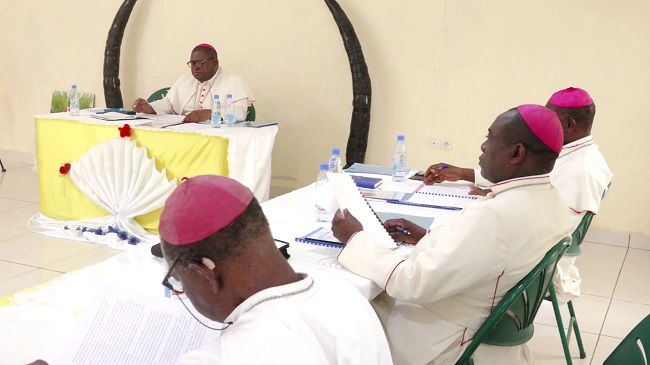
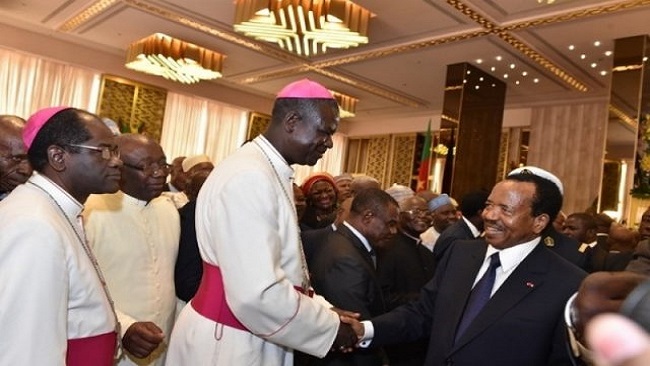
Catholic Bishops of Cameroon’s Bamenda Ecclesiastical Province have unveiled liturgical guidelines in response to lamentations about “aberrations” and practices that they have described as “foreign” to Catholic worship.
In their Tuesday, August 22 statement, members of the Bamenda Provincial Episcopal Conference (BAPEC) who include Local Ordinaries of Bamenda Archdiocese and the Dioceses of Kumbo, Kumba, Mamfe, and Buea provide five guidelines that they say are in line with Canon 835 § 1.
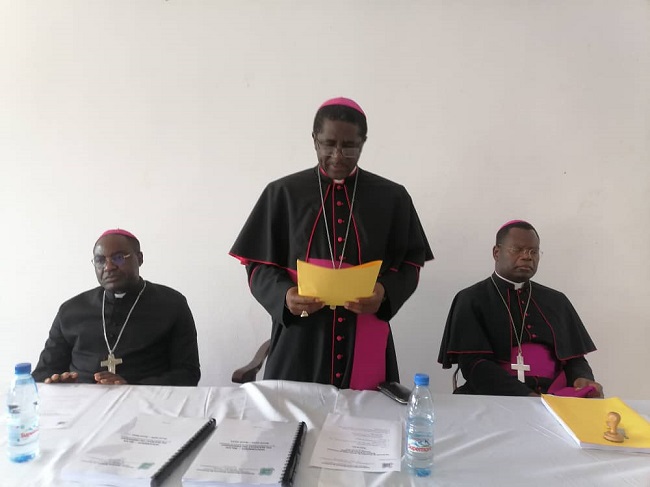
“For quite some time now, we have received numerous complaints about liturgical aberrations and the introduction of a wide range of practices which are completely foreign and even contradictory to Catholic piety and worship,” BAPEC members say in their statement following a six-day meeting at Bishop’s House in Bamenda Archdiocese.
The Catholic Bishops add, “As moderators, promoters, and guardians of the liturgical life of the Church entrusted to our care we, the Bishops of the Ecclesiastical Province of Bamenda, acting in solidum, lay down the following liturgical guidelines.”
Offerings for Mass intentions
BAPEC members urge Priests to celebrate Holy Mass for the intention of the Christian faithful, especially the needy, even if they have not received an offering.
“The Church also instructs that Separate Masses should be applied for the intentions of those for whom a single offering, although small, has been given and accepted,” the Catholic Bishops say, making reference to Canon 948.
During the six-day meeting that concluded on August 22, the BAPEC members say they find it regrettable that the amount of 2,000 CFA Franc (US$3.30) that the Ecclesiastical Province established as offering for Holy Mass is sometimes not adhered to.
“It has been reported and verified that during retreats or meetings organized by some groups, this decision of the Bishops is changed,” BAPEC members say, and add, “The amount paid for Mass offering is reduced to 1,000 CFA Franc. This practice is manifestly wrong.”
They continue, “Those who truly do not have money can meet the Priest and ask for prayers; but if they intend to offer a Mass, they should make the sacrifice of paying the full amount of 2,000 CFA Franc.”
On Tithe, Catholic Bishops of Bamenda Ecclesiastical Province say that “the foregoing obligation will be fulfilled through the Christian Contribution Card System, which requires each Christian to pay 1% of their monthly income.”
They explain, “Priests are therefore not authorized to request or receive money as tithes or the ‘sowing of seeds,’ and Christians should strictly apply what the Bishops have laid down and be satisfied that they have fulfilled their obligation to the Lord.”
Mass Intentions at Funerals
“It is the serious obligation of the Pastor of the Parish to ensure that Mass offerings collected during funeral Masses for the purpose of celebrating Masses for the deceased are properly exonerated,” BAPEC members say.
They direct Parish Priests to “ensure that separate Masses are applied for the intentions of those for whom a single offering has been given and accepted (Canon 948).”
“This is not money to be distributed to concelebrating Priests,” the Catholic Church leaders clarify.
Collections in Learning Institutions
“In the understanding of our Provincial Pastoral Plan, the school or college is a Small Christian Community of and is pastorally dependent on the Parish within whose territorial jurisdiction it is planted,” BAPEC members say.
They go on to direct, “Money collected as Harvest Thanksgiving is part of the Thanksgiving of the Parish and should be forwarded to the Parish.”
Gifts in kind, cash
In their August 22 statement, BAPEC members fault prayer groups and individual members who donate some cash to the church during Eucharistic celebrations and follow up with directives on how it should be used.
“Such gifts are meant to contribute to the good of the Church and her works, and she has provided guidelines for their proper use,” the Catholic Church leaders say.
They add, “No one, not even the priest, can unilaterally dispose of such gifts as if they were personal property.”
Culled from aciafrica















24, August 2023
Bamenda: Roman Catholic Bishops decry “alarming increase” of exam malpractice 0
Catholic Bishops of Cameroon’s Bamenda Ecclesiastical Province have decried examination malpractice in the country’s 2023 session of the General Certificate of Education (GCE).
In their Tuesday, August 22 statement following a six-day meeting at Bishop’s House in Bamenda Archdiocese, members of the Bamenda Provincial Episcopal Conference (BAPEC) call for a collective effort of all education stakeholders to end the vice, which they describe as “alarming”.
“The alarming increase in the number and types of examination malpractices registered during the 2023 session of the GCE Examination is a subject of major concern to the Bishops,” BAPEC members say in the statement issued at the end of the 75th ordinary meeting that started on August 17.
They advocate for a collaborative approach, saying, “To adequately address this problem, we need the collective efforts of teachers, parents, religious denominations, and the Ministries in charge of education for the reinforcement of education in integrity, the establishment of discipline, and a culture of hard work and merit.”
The Catholic Church leaders further urge the GCE board to ensure “a better organization of the examination” and to adopt “measures that can reduce examination malpractices.”
In the statement that the Secretary General of BAPEC, Fr. Giles Ngwa Forteh, signed, the Bishops at the helm of Bamenda Archdiocese and the Dioceses of Kumbo, Kumba, Mamfe, and Buea also reaffirm their commitment to formal education as the Central African nation prepares to usher in a new academic year.
“As we approach the beginning of the 2023/2024 Academic Year, we reaffirm our commitment to education as a basic human right that works to raise men and women out of ignorance, poverty, and level of inequalities, and ensures sustainable development,” they say in their four-page statement following the meeting that concluded August 22.
Acknowledging with appreciation stakeholders’ efforts that made the 2022/2023 academic year a success, the Bishops make “a clarion call to all communities to work together towards the reopening of their schools during the new academic year so that our children are not left behind while the world advances.”
They caution those who have in the past prevented pupils and students from going to school urging them to reconsider their decision as they are “doing an irreparable damage to humanity and to their communities.”
In the August 22 statement, BAPEC members also express concern about the disrespect of human life and dignity in the West African nation following reported killings of civilians in the country’s Bamenda region.
They note “with deep regret the continuing and unfortunate situation of wanton killing, destruction of property and the attempt to manipulate and weaponized ethnic differences for the disruption of social cohesion.”
“No one should be misled; killing is a grave sin against the commandment of God: ‘Thou shall not kill’; stealing is a sin against the 7th commandment,” the Catholic Church leaders add in reference to the book of Exodus.
They call for “a fraternal openness that allows us to acknowledge, appreciate and love each other, regardless of physical proximity, regardless of where he or she was born or lives.”
Source: aciafrica.org