4, August 2022
When God Refuses to Speak: Random Thoughts of a Simple Christian- In Memoriam, Fr. Didimus Nformi 0
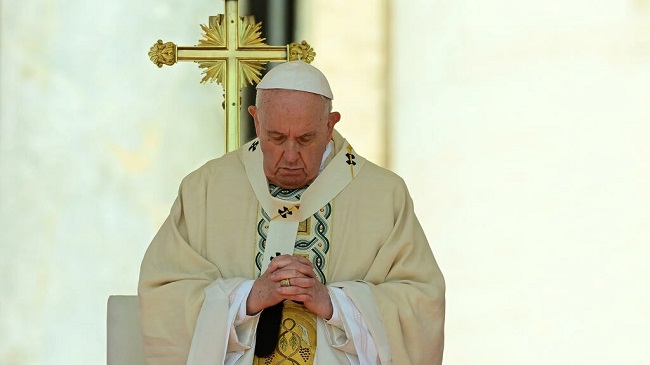
Tuesday July 19 began like any other day in Boston. After the usual early morning standing appointment with God, I embarked on the chores of the day, mainly, academic work. Around mid-morning. Everything changed. The news came that Fr. Didimus Nformi YOMBO was no more! He had died in a ghastly accident on his way to Buea, after procuring his study visa at the US Embassy in Yaoundé. At first, I thought it wasn’t true. This could not be true. He was supposed to be in Boston in August. Everything was ready for him to begin his graduate studies at Boston College. How could this be?
I met Didimus while attending a wedding in Buea in January of this year, and again in February, after the Ratzinger Conference at CATUC, Bamenda, when we stopped over in Buea on our way to the airport to visit with Bishop Bibi. He came across as very welcoming, humble and unassuming, eager to make a visitor feel at home. And I remember saying to him while leaving Small Soppo, see you in Boston and hope that you study Ratzinger when you come to Boston College! He smiled. I guess that was a mortal’s wish! After all, I am just a man, limited by finitude. A creature. It was never to be! How could I have known! Boston was never to be enriched by the presence of Didimus, a young priest, gone too soon, I would say, and under very painful circumstances.
I spent much of the day in the chapel, just staring at Jesus in the Tabernacle. Praying the breviary felt dry. No emotions. No words could express anything. Just staring at the Tabernacle was all one could do, in utter shock. I asked Jesus countless times: Why, Lord? What does this mean? What value is his death to you? Did you think of this young man’s mother? And many other questions. It was a Job-like experience, and like Job, I am not sure the Lord answered me. Perhaps I was talking to myself and not to Him. But I was in His presence. He was there. He is always there, present in the Most Blessed Sacrament. How could He not be there? He has been a Prisoner of the Tabernacle for over 2000 years. How could you be, Jesus, and you allow such a thing to happen to a young priest of yours? Why place such a promising future before him, and then not give him the opportunity to pursue it? Why show David that he is going to become king, only to leave him as a shepherd for the rest of his life? Does not Scripture say that hope deferred makes the heart sick? (Proverbs 13:12). Are you really there, Jesus, and yet are allowing such pain in the world?
At one point, my thoughts went to the question of the non-existence of God in the Summa of Aquinas. Two objections stand out supporting the non-existence of God, for Aquinas: divine omnipotence (God is all powerful), and divine omnibenevolence (God is all good). If God is all powerful and all good and yet, there is evil in the world, then we are left with a scenario of two alternatives: either God is all powerful and yet not all good because he allows for evil to inflict the world; or, God is all good but not all powerful, again, because of God’s inability to stamp out evil in the world. And the dilemma that Aquinas raises is captured by Dostoevsky The Grand Inquisitor in more stark terms: Ivan rejects or rebels against God, attempting to persuade his believing brother Alyosha, that God’s ordering of creation and Christ’s redemption are basically ineffective, based on a simple premise: God has been unable to free the world of suffering, pain and evil. Aquinas’ resolution of the impasse between Divine omnipotence and omnibenevolence leaves Ivan unpersuaded.
My thoughts further pondered Vatican II’s description of death in the Pastoral Constitution on the Church in the Modern World, Gaudium et Spes: it is when faced with death that the human being is most caught up in doubt. Human beings are tormented by the thought of their ceasing to be, and rightfully so (Gaudium et Spes, 18). And there is an underlining reason for the fear of death, as Ratzinger points out in his treatment of Eschatology, namely, the state of incommunicability regarding the foundation of human existence, that is, love. In death, we are unable to respond to love. We enter into a state of aloneness. And this, to Ratzinger, accounts for the excruciating pain that characterizes death.
Caught up in these thoughts, it occurred to me that though I had spent a good deal of time in the silence of the chapel, God wasn’t going to provide an explanation to me regarding the painful passing of Didimus. Perhaps like Job, even if God spoke, He was going to bully me into silence by posing questions that a finite mind like mine wouldn’t be able to answer. Or maybe God’s silence was his speech. He had done it before. This was not the first time that God was staying silent in the face of death. He did same one Friday afternoon on a hill outside Jerusalem called Calvary. And history is repleted with examples of God staying silent when one would have loved him to say a word. I think of the death of my own sisters, late twenty and early thirty in age, two years apart. God stayed silent. And other sufferings over the years, such as when a young child dies! Or when a young child is suffering from so much pain, hospitalized! God appears to always stay silent when we would need him to speak. Again, could God’s silence be God’s speech? Or maybe God knows that speech in such circumstances cannot resolve anything.
Perhaps the best God can do in the situation of the tragic death of Didimus is just God’s presence. He had promised in the revelation of His Sacred Name to Israel – Ehyeh Asher Ehyeh (Exodus 3:14) – I will be with you in the manner in which I will be with you. Perhaps Buber and Levinas were right after all: the Tetragrammaton was not, in the first place, about being, ontology or metaphysics. It was about presence: God will be present with Israel. God will be present with us, in life and in death. And precisely that presence, even if He does not speak, leaves the possibility for hope open. God is present, even when God does not speak. I am not alone. And so, God is presence, because God is being. That is the Ratzingerian synthesis: being and presence are not antithetical.
Like Job and like Jesus, we end where we began: God has refused to speak. God has refused to answer. God has refused to take the witness stand to provide me an explanation for why Didimus had to go so soon in such a painful way. And yet God is not nothing. God is there. Perhaps, with Newman, I could only console myself with these thoughts: “God has created me to do Him some definite service; He has committed some work to me which He has not committed to another. I have my mission. I may never know it in this life, but I shall be told in the next. I am a link in a chain, a bond of connection between persons. He has not created me for naught. I shall do good; I shall do His work (…) Therefore, I will trust Him. Whatever, wherever I am. I can never be thrown away” (St. John Henry Newman). We must learn to live with God’s silence. May the soul of Didimus, priest of God, rest in the peace of the Silent God, Amen. May he pray for us who are still on the way. See you, Fr Didimus, in the heavenly Boston College. We will discuss theology there, with Augustine, Aquinas, Bonaventure, and other great minds, not leaving out your patron saint, St. Didimus the Blind (c. 318 – 398), Dean of the Theological School of Alexandria, disciple of Origen of Alexandria.
By Fr Maurice Agbaw-Ebai


14, August 2022
African bishops lament inability to stop young people from leaving 0
In the din of Yaoundé’s traffic, thousands of youths comb various offices, documents in hand, in search of jobs.
As frustration sets in, many see a future beyond the country’s shores. That is how Jannet left Cameroon two years ago.
A recruiter told her she would have a well-paying job upon arrival in wealthy Kuwait. Her family agreed to go into debt with the recruiter to pay for airfare and other associated expenses.
But the promise of a good job turned into a nightmare in Kuwait. A member of the recruiter’s network confiscated her passport, mobile phone and other personal documents and took her to the home of a wealthy family, where Jannet had to work long hours with little food.
“I wake up at 5 a.m. and go to bed at 1 a.m., at times no food,” she told Catholic News Service.
For over two years, Jannet slaved for that family, sleeping on the kitchen floor. She said she was forced to use the “toilets” reserved for cats.
“I used to call them (the cats) my brothers,” Jannet recalled, because “they were the only family I had out there.”
Hers is not an isolated story. Beatrice Titanji, vice president of Cameroon’s Trauma Centre for Victims of Human Trafficking, said these modern-day slave markets can be found throughout the Gulf states.
“They actually have booths as you would have in the market, and (people) are sold and bought for domestic service,” said Titanji.
“So they move them to their various owners as negotiated before, because there are linesmen here in Cameroon who actually negotiate, get money, sell them at higher prices, sell them depending on the outlook of the victim, as it happened 200 years ago during slave trade. Our children are sold and bought today in the Middle East.”
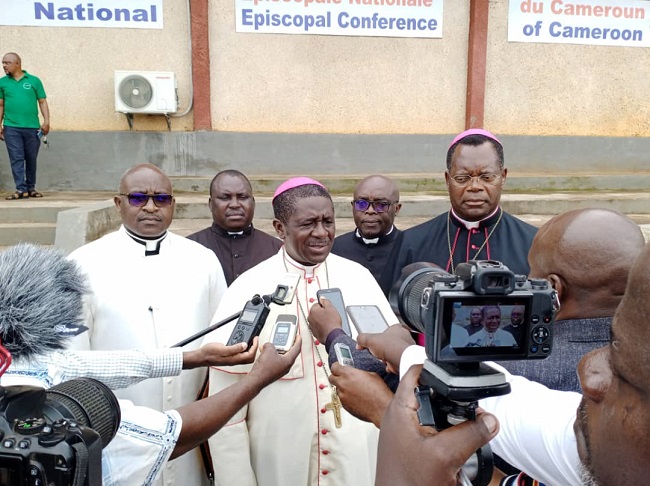
The situation has caught the attention of members of the Symposium of Episcopal Conferences of Africa and Madagascar.
Meeting in Accra, Ghana, July 25-Aug. 1, the bishops examined the causes of migration, the risks involved — particularly when it comes to irregular migration — and what the church needs to be doing to help.
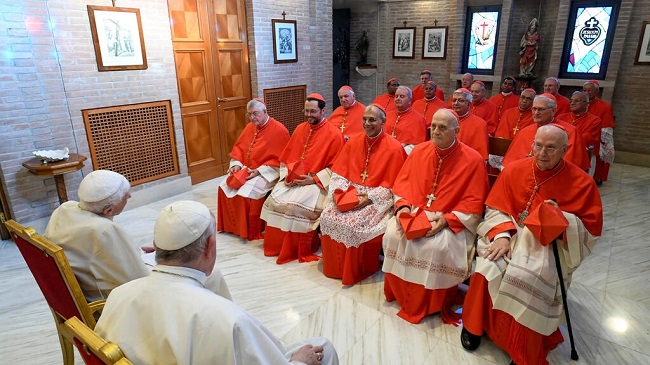
“Migration is a normal social phenomenon that is linked to the history of humankind,” the bishops said in a statement signed by Cardinal-designate Richard Kuuia Baawobr of Wa, Ghana, president of SECAM.
“This is why migration cannot be considered illegal but could be irregular,” they added. They said while the suffering of migrants is not linked to migration as such, migration can involve suffering: “abuse of the social status … exploitation, ignorance” and fear of poverty.
“We wish to express our pain in seeing our youth leaving our countries, knowing that they are going to suffer and possibly lose their lives, and we lament our inability to stop them from leaving,” the bishops said.
They urged young people willing to exercise their right to migrate “to do so in a manner that is administratively acceptable and with full knowledge of the challenges that await them.”
“We encourage our youths not to lose hope and to hold on to God through a life of holiness.”
The church leaders also called on governments to put in place structures and conditions that discourage irregular migration, such as good governance, employment opportunities, multifaceted security, political and social inclusion, promotion of social justice.
“We urge transit and host countries to respect the rights and human dignity of migrants.”
They also challenged Christian communities to “develop an active pastoral care for migration” that should involve welcoming migrants, protecting them, promoting them and integrating them into society.
Jannet eventually returned to Cameroon, sick and frail, with nothing other than the clothes she was wearing. She said when she became sick, her slavers threw her onto the streets.
As she roamed the streets of Kuwait, not knowing exactly where she was going, Jannet eventually came across the Embassy of the Central African Republic. Embassy staff took her to a hospital, helped her replace her stolen passport, and paid for her flight back to Cameroon.
Still, young people in Cameroon say they will continue to risk leaving.
George Atanga, who has a master’s degree in chemistry, said he has been looking for a job for the past five years.
“Whether I get a visa or not, I have to leave this country,” he told Catholic News Service as he waited in line to take photos for his passport.
“If I don’t get a visa, I will travel through Algeria and see if I can get to Spain. My future lies out there,” he said.
It’s a trend across Africa, a continent where 51% of young women and 43% of young men are unemployed.
Source: Crux