13, December 2023
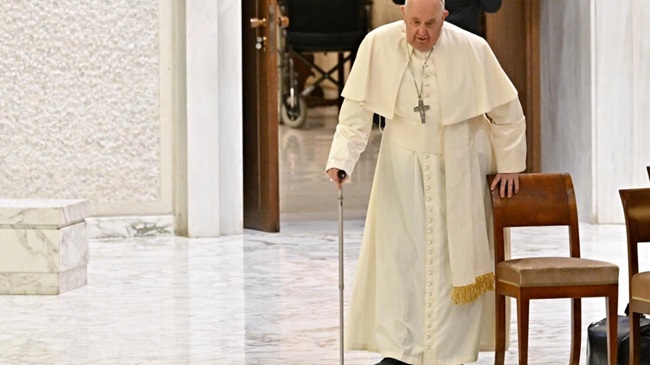
Pope Francis has chosen his tomb — in Rome, not Vatican 0
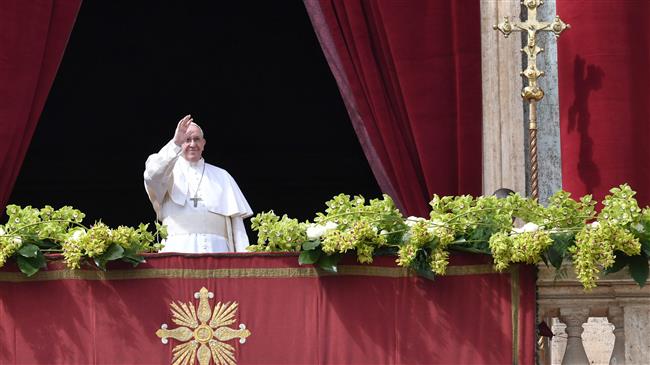
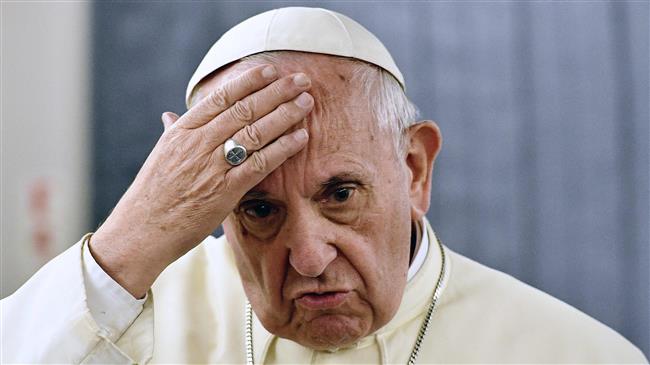
Pope Francis has chosen to be buried not in St Peter’s Basilica alongside his immediate predecessors but in a basilica in Rome, he revealed in an interview broadcast on Wednesday.
“The place is already prepared. I want to be buried in Santa Maria Maggiore,” the pontiff, who turns 87 this weekend, told Mexican broadcaster Televisa’s N+ streaming service.
In the same interview, he revealed he planned to visit Belgium in 2024, and also hoped to visit his native Argentina and Polynesia.
Francis’s decision means he would become the first pope to be buried outside the Vatican for more than 100 years.
The last to eschew a tomb in St Peter’s was Leo XIII, who died in 1903. His remains lie in the basilica of St John the Lateran in Rome.
Santa Maria Maggiore is one of the four papal basilicas in Rome, and one with which Francis said he felt a “special connection”.
He would often go there on a Sunday while visiting Rome before becoming pope. Since his election in 2013, he prays there before and after taking a trip, and has also prayed there after undergoing surgery.
Seven popes have previously been laid to rest in the basilica, according to the Vatican News official media outlet.
The pontiff has suffered from increasing health issues in recent years, and was forced to cancel a visit to COP28 climate talks in Dubai due to bronchitis.
In his interview recorded on Tuesday, in which he appeared much better, he paid tribute to his predecessor Benedict XVI for having had “the courage” to step down when his health was failing him.
The German pontiff in 2013 became the first pope since the Middle Ages to resign.
Benedict died on December 31, 2022, and after a funeral in St Peter’s Basilica in the Vatican — led by Francis — his body was buried in the tomb under the church.
It was the same tomb that held former pope John Paul II’s body before it was moved for his beatification in 2011.
Francis has said he would be open to following Benedict’s example if he could no longer perform his duties, but has said stepping down should not become a “normal thing” for popes.
Source: AFP









24, December 2023
Bethlehem deserted, Christmas celebrations suspended over Israel-Hamas war 0
The normally bustling biblical birthplace of Jesus resembled a ghost town on Sunday, as Christmas Eve celebrations in Bethlehem were called off due to the Israel-Hamas war. The festive lights and Christmas tree that normally decorate Manger Square were missing, as were the throngs of foreign tourists who gather each year to mark the holiday.
The gift shops were slow to open on Christmas Eve, although a few did once the rain had stopped pouring down. There were few visitors, however.
“This year, without the Christmas tree and without lights, there’s just darkness,” said Brother John Vinh, a Franciscan monk from Vietnam who has lived in Jerusalem for six years.
He said he always comes to Bethlehem to mark Christmas, but this year was especially sobering, as he gazed at a nativity scene in Manger Square with a baby Jesus wrapped in a white shroud, reminiscent of the hundreds of children killed in the fighting in Gaza. Barbed wire surrounded the scene, the grey rubble reflecting none of the joyous lights and bursts of color that normally fill the square during the Christmas season.
“We can’t justify putting out a tree and celebrating as normal, when some people (in Gaza) don’t even have houses to go to,” said Ala’a Salameh, one of the owners of Afteem Restaurant, a family-owned falafel restaurant just steps from the square.
Salameh said Christmas Eve is usually the busiest day of the year. “Normally, you can’t find a single chair to sit, we’re full from morning till midnight,” said Salameh. This year, just one table was taken, by journalists taking a break from the rain.
Salameh said his restaurant was operating at about 15% of normal business and wasn’t able to cover operating costs. He estimated that even after the war ends, it will take another year for tourism to return to Bethlehem as normal.
The cancellation of Christmas festivities is a severe blow to the town’s economy. Tourism accounts for an estimated 70% of Bethlehem’s income — almost all of that during the Christmas season.
With many major airlines canceling flights to Israel, few foreigners are visiting. Local officials say over 70 hotels in Bethlehem have been forced to close, leaving thousands of people unemployed.
Over 20,000 Palestinians have been killed and more than 50,000 wounded during Israel’s air and ground offensive against Gaza’s Hamas rulers, according to health officials there, while some 85% of the territory’s 2.3 million residents have been displaced. The war was triggered by Hamas’ deadly assault Oct. 7 on southern Israel in which militants killed about 1,200 people, most of them civilians, and took more than 240 hostages.
The fighting in Gaza has also affected life in the West Bank. Since Oct. 7, access to Bethlehem and other Palestinian towns in the Israeli-occupied territory has been difficult, with long lines of motorists waiting to pass military checkpoints. The restrictions have also prevented tens of thousands of Palestinians from exiting the territory to work in Israel.
Source: AP