30, May 2018
FIFPro Africa Division: Geremi Njitap en route to Zimbabwe 0
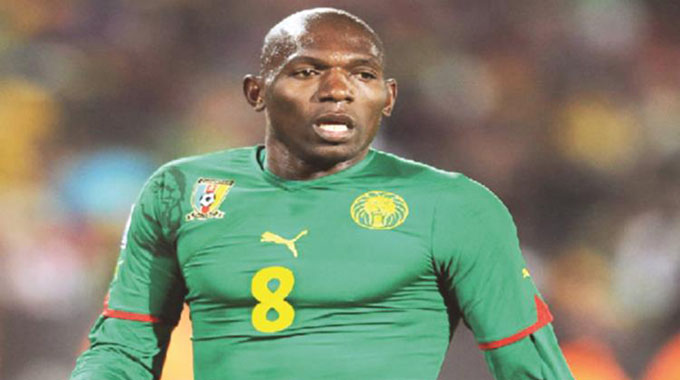
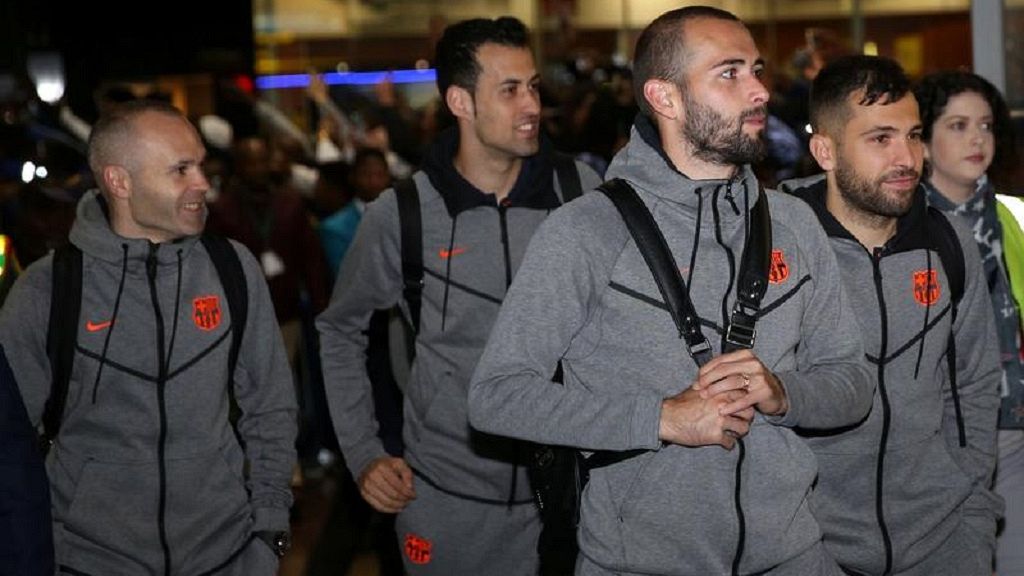
CAMEROON legend Geremi Njitap and CAF deputy secretary-general Anthony Baffoe will headline a host of the game’s former stars who will converge in Victoria Falls for the annual FIFPro Africa Division Congress that bursts into life tomorrow.
In a first for the country, the Footballers Union of Zimbabwe, are hosting this year’s congress of the African Division of the World Footballers Association, which will run from tomorrow to Saturday.
FUZ president Desmond Maringwa revealed yesterday that Njitap and Baffoe will be among the 40 delegates expected to start trooping into the country today for the indaba that is key to the welfare of professional footballers across the continent.
The maiden congress to be staged by FUZ comes following a successful bidding by Maringwa’s leadership.
The former Dynamos and Zimbabwe midfielder has been working tirelessly to ensure the country’s footballers also receive the same kind of attention and treatment in line with current global trends. Maringwa said FUZ had deliberately chosen to stage the congress in Victoria Falls to also market brand Zimbabwe.
Sports Tourism has been on the ascendancy in Zimbabwe with a number of international football and other sporting legends visiting the country’s various resort areas. In the next few days, the spotlight will fall on Zimbabwe in as much as the focus will be on the leaders of player unions around Africa as they gather for their round table.
“The different FIFPro Divisions whether it is Europe, Asia or South America hold these congresses in their respective zones and I am glad that our bid to hold the Africa Division Congress was successful and hence we have 40 delegates coming to Victoria Falls.
“I think it is in recognition of the work that we have been doing of late that we were granted the right to host the congress and we are very happy about it as this also puts the country on the right map.
“We decided to host it in Victoria Falls as part of marketing our country and Africa at large and we believe that after the congress the delegates will be able to go back to their respective countries and talk about Victoria Falls and Zimbabwe as well as return with family and friends to visit our tourist resorts,’’ Maringwa said.
Maringwa also urged local footballers to take FUZ activities seriously and follow the other countries.
“We have come a long way in terms of our governance hence we are now able to host such a congress. I would urge local players to be members of this union and be part of the global village’’.
Maringwa, while not at liberty to reveal much about the topics they will discuss, hinted that “a lot of the key issues are internal but will be centred on player welfare and the strategies that will be used going forward’’.
ZIFA and Premier Soccer League officials are also expected to grace the opening ceremony of the congress tomorrow after which the delegates would go into closed door sessions.
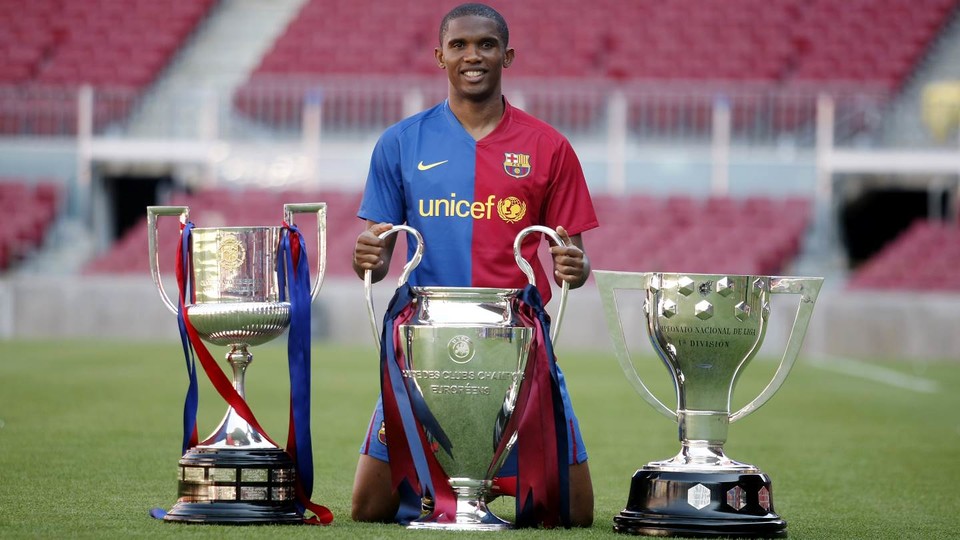
Njitap, who won the UEFA Champions League with Real Madrid in 2000 and featured for a number of English clubs including Chelsea and Newcastle, completed a memorable season that year when he captained the Cameroon squad to Olympic gold at the Summer Games in Sydney, Australia.
He also featured 108 times for the Indomitable Lions while his club football record includes stints in Paraguay and Turkey.
Baffoe, who resisted attempts to lure him to play for Germany and stuck with his native Ghana, has seen his administrative profile grow in leaps and was on November 16, 2017, appointed CAF deputy general-secretary in-charge of football and development.
The former defender was also part of the Black Stars squad that finished second in the 1992 Africa Cup of Nations in Senegal and played alongside the likes of three-time Africa Player of the Year, Abedi Pele another legendary striker, Anthony Yeboah, and incumbent head coach of Ghana James Kwesi Appiah.
After his playing career, Baffoe used his broad popularity to set up and front a new TV magazine show devoted to youth football.
He was successful on German television in various sport programmes and also acting as host of Viasat One’s UEFA Champions League show in Ghana.
Legendary former Egyptian midfielder Magdi Abdelghani Sayed Ahmed, the first African player to score a penalty kick in the World Cup when helping the Pharaohs to a 1-1 draw against the Netherlands at the 1990 show-piece in Italy, will also be in Victoria Falls.
Source: herald.co.zw


















1, June 2018
As Cameroon prepares for the African Cup of Nations, trees fall 0
“Cameroon’s ability to host the 2019 Africa football Cup of Nations depends on the availability of adapted modern infrastructure,” said Oumarou Tado, secretary general of Cameroon’s Ministry of Sports and Physical Education.
“It is regrettable that many of these new projects have led to vast deforestation – but we had to meet the strict (guidelines) of the African football confederation,” he told the Thomson Reuters Foundation.
In Yaounde, the capital, about 34 hectares of trees were cut to build the new Olembe stadium, about 13 km from the centre of the city. In Limbe, 30 hectares of forests were removed to create space for a stadium and a sport training facility.
Much more land has been cleared to build other facilities related to the 2019 competition, including roads, hotels and large new tracts of housing, environmentalists say.
Part of what has driven tree cutting, Tado said, is that specifications for Cup of Nations infrastructure improvements require the new facilities to be built in areas that are easily accessible but without traffic problems.
“These specifications were found in forested areas on the outskirts of major cities,” he said.
Cameroon’s legendary World Cup soccer player Roger Milla, a sports ambassador for the country, said forested areas had to give way to improve the country’s sporting facilities, noting that “to make omelets one has to break eggs”.
“Cameroon is a lead football nation in Africa but paradoxically without modern sports infrastructure. We have been waiting for this for a long time,” said Milla, whose foundation Coeur d’Afrique has taken part in tree planting efforts in Yaounde since 2016.
‘A BIG THREAT’
Environment experts, however, have criticised the decision to build on forested areas, saying urban trees must be protected if the country is to avoid worsening impacts of climate change, including flooding and droughts.
“Forests are very important in regulating city climate, thus their loss or degradation is a major source of emissions of carbon dioxide, which contributes to climate change and is a big threat to the livelihood of the population,” said Samuel Nguifo, executive director of the Centre for Environment and Development, a Yaounde environmental non-profit.
He said forests act as “air conditioners” for cities, cooling residents suffering increasingly hot weather.
Cameroon has in recent years seen large areas of forest cut for mining projects, new ports, hydroelectric dams and other projects under the country’s Vision 2035 project.
That economic development plan aims to slash widespread unemployment and cut Cameroon’s poverty rate from 40 percent in 2007 to less than 20 percent by 2035.
More than half of all the tree losses were in the Centre, South, East and Littoral regions where most new investment projects are concentrated, the data showed.
Adding football infrastructure has now made the pressure on Cameroon’s existing “deforestation hotspots” worse, forest experts said.
“These new sports infrastructure projects will only increase the susceptibility of these cities to the effects of climate change,” said Julius Chuezi Tieguhong, a forest researcher with the African Forest Forum.
The cities of Douala, Yaounde and Limbe have in recent years faced worsening water shortages, floods and rising temperatures – all problems likely to become worse as forest is cut, Tieguhong said.
In 2017, some roads and buildings in Cameroon’s economic hub, Douala, were submerged following days of heavy rains, while in Yaounde the sight of women and children trekking across the city to fetch scarce drinking water has become increasingly common.
REPLANTING PUSH
Cameroon’s government, however, is hopeful that teaming up with city authorities to plant more urban trees can offset some of the damage.
Jules Doret Ndongo, the country’s Ministry of Forestry and Wildlife, this month signed a deal with 15 city councils in 10 regions of the country to plant more city trees and create new parks.
The effort “is a combined forest, floods, drought and water shortage protection effort,” he said.
The government says city councils will receive over 600 million FCFA ($1 million) annually to help curb deforestation.
According to Bruno Mfou’ou Mfou’ou, director of forestry in the Ministry of Forestry and Wildlife, tree planting efforts will target areas particularly suffering flooding or drought.
“Targeting vulnerable areas is critical in the fight against climate disasters,” he said. The city tree project comes on top of a 2017 government project that aims to restore 12 million hectares of deforested land in the country, Mfou’ou Mfou’ou noted.
Source: Reuters