25, January 2022
Africa Cup of Nations: Mane ends goal drought as Senegal overcome nine-man Cape Verde 0
Liverpool star Sadio Mane ended a 243-minute Senegal goal drought by scoring in a 2-0 win over nine-man Cape Verde in a fiery Africa Cup of Nations last-16 clash in Bafoussam on Tuesday.
The goal came on 63 minutes after the islanders had goalkeeper Josimar ‘Vozinha’ Dias and midfielder Patrick Andrade sent off.
Mane was forced to leave the field soon after breaking the deadlock as his face was swollen following a collision with Vozinha, which led to the second red card.
Bamba Dieng, who replaced Mane, added a second goal two minutes into added time after a breakaway left a single Cape Verde defender facing two Senegalese attackers.
Senegal, seeking to win the flagship African competition for the first time after twice finishing runners-up, will meet Mali or Equatorial Guinea on Sunday in the quarter-finals.
Before the kick-off, the teams and match officials stood still and silent in memory of the eight people who died in a crush at Olembe Stadium in Yaounde on Monday before Cameroon defeated the Comoros.
Cape Verde welcomed back head coach Pedro ‘Bubista’ Brito, who had to watch the group stage in the island nation as he recovered from coronavirus.
In the opposite dugout was Aliou Cisse, a Cup of Nations runner-up as a player in 2002 and as a coach in 2019.
Having failed to score in their last two group matches against Guinea and Malawi, Senegal almost took the lead 40 seconds into the match through Mane.
Major blow
Following a move down the left flank, the ball ran loose in the box and the reigning African Footballer of the Year unleashed a thunderbolt that cannoned off the far post.
Senegal seemed determined to end their goal drought early in the match and continually put pressure on the Cape Verde defence at Stade Kouekong in the western Cameroon highlands.
Cape Verde suffered a major blow on 21 minutes when Andrade was sent off for stamping on the leg of Pape Gueye.
The Algerian referee initially produced a yellow card, then upgraded it to a red after watching replays of the incident on the touchline VAR monitor.
Despite being numerically disadvantaged, Cape Verde contained Senegalese attacks until Mane came close to breaking the deadlock six minutes before half-time.
A slick exchange of passes inside the box set Mane free, but Vozinha and Steven Fortes combined to block his attempt to score.
As if facing one of the tournament title favourites with 10 men was not sufficiently difficult, Cape Verde were reduced to nine men when Vozinha was sent off 12 minutes into the second half.
The goalkeeper and Mane collided as they chased a long pass and after going to the monitor again, the referee brandished his red card to the goalkeeper, who had left the field suffering from concussion.
Marcio da Rosa, who plays in the Portuguese third division, took over as goalkeeper with forward Garry Rodrigues taken off.
Senegal were quick to take advantage of having two extra outfield players as Mane scored with a superbly placed shot into the roof of the net when a corner was only partially cleared by Nuno Borges.
Source: AFP


25, January 2022
Africa Cup of Nations 2021: Lessons to be learned 0
The Africa Cup of Nations is usually a moment of joy and friendship; a time when people from all parts of Africa and other continents of the globe come together to enjoy a major feast of football and camaraderie.
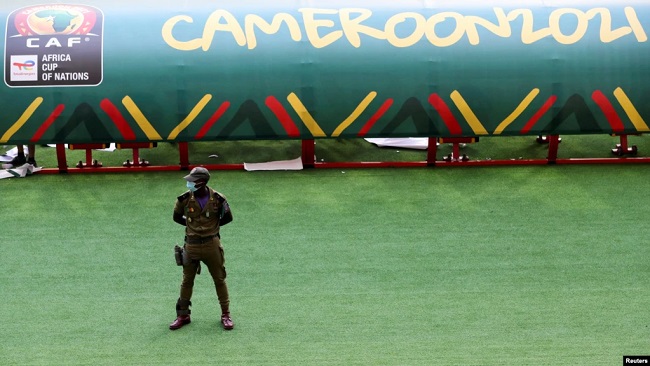
The 2021 Africa Cup of Nations has generated the same enthusiam and joy despite the presence of a global pandemic which has threatened to upend the event.
Another issue which called into question the ability of the country’s authority was the state of preparedness which caused the Confederation of African Football to move the 2019 AfCON to Egypt. This was really a black eye for a country that is known for its footballing prowess.
But Cameroon has succeeded to build the stadiums despite the delays and numerous doubts. The sports infrastructure is world-class and the population is once more developing faith in the country’s football authorities.
But many things are not going as planned. Some details were ignored during the preparatory phase and this negligence points to the fact that some lessons still need to be learned.
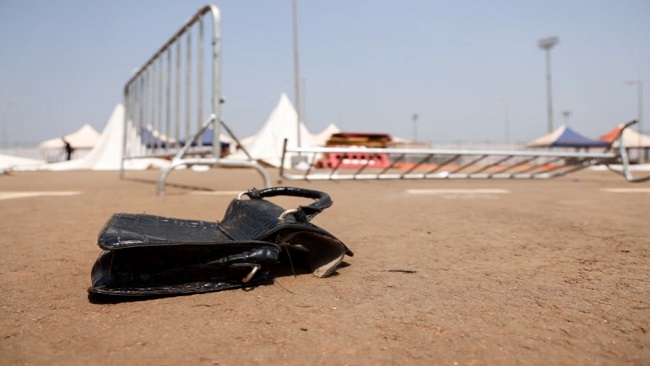
Prominent anong those lessons is crowd management which was not taken seriously during the preparations. The consequences of this weakness reared their ugly heads yesterday during the Cameroon – Comoros game which resulted in the death of some 16 people while more than 40 are still recovering in hospitals in the country’s capital, Yaounde.
The government understands how Cameroonians love football and with young Cameroonians seeking to be at the center of this moving feast of football, it was supposed to have taken the right crowd management measures.
Many roads were supposed to have been blocked to ensure that there were no massive gatherings around the Olembe Stadium. The organizers were supposed to have anticipated lots of things, especially the pouring of crowds to the center of action.
Besides, the crowd should have been advised that only those with tickets would have access to the stadium and more police officers or gendarmerie officers should have been deployed to ensure security did not deteriorate very fast.
These measures were not taken and many young men without tickets walked long distances to the stadium only to be told that they would not be allowed into the stadium.
The decision of the few police officers on duty caused the crowd to breach the security perimeter, resulting in a stampede that led to many people losing their lives.
Crowd management remains a lesson to be learned, but it is not the only lesson. Traffic management is also one issue which is blighting the lives of the residents of the country’s major cities and this is only getting worse during the football festival.
Town planning and the building of road infrastructure are major issues in Cameroon and these problems have gotten worse as the country’s national team keeps winning its games.
The road leading to the Olembe Stadium where the host country’s national team has been playing is unbelievable narrow and this is causing massive traffic problems and the CAF president had to have a taste of what many Yaounde residents deal with on a daily basis yesterday.
He was held in traffic for hours and he only got to the stadium ten minutes to the end of yesterday’s game. This is no good news and it clearly hurts the country’s reputation.
Traffic should have been controlled from Nlongkak, Essos or the Central Post Office to ensure that dignatories made their way to the stadium with relative ease.
The occurrence of this unfortunate situation demonstrates that some important details were ignored during the preparatory phase.
These unfortunate situations have generated lessons and these lessons must be taken seriously if similar situations must be avoided, especially as Cameroon has qualified for the next phase of the competition.
By Joachim Arrey