Featured
 Ambazonia Crisis: latest on Sisiku Ayuk Tabe’s arrest, trial and conviction
  2025 Africa Cup of Nations: Patrice Motsepe should go and go now!
  Changes in the Senate and National Assembly: who becomes next head of state?
  Yaoundé: Hon. Theodore Datoua is new Speaker of the National Assembly
  Ambazonia Interim Gov’t reacts to Pope Leo’s visit
Most Commented Posts
 4 Anglophone detainees killed in Yaounde
18 comments Chantal Biya says she will return to Cameroon if General Ivo Yenwo, Martin Belinga Eboutou and Ferdinand Ngoh Ngoh are sacked
13 comments The Anglophone Problem – When Facts don’t Lie
12 comments Anglophone Nationalism: Barrister Eyambe says “hidden plans are at work”
12 comments Largest wave of arrest by BIR in Bamenda
10 comments
Featured
-
Iran says 55 enemy targets go up in smoke as it unleashes 70th wave of Op. True Promise 4
-
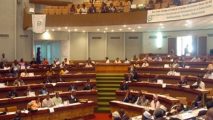
CPDM Crime Syndicate: regime delays parliamentary elections, lawmakers to stay until end 2026
-

Iran debuts multi-warhead ‘Nasrallah’ missile to strike Israel’s oil refineries
-

Smarter Water Use Could Feed 10 Billion and Create Nearly 250 Million Jobs
-

Yaoundé: Catholics invited to throng Pope Leo XIV’s procession
-

Indomitable Lions: Pagou unveils squad for 2026 FIFA Series
-

Ambazonia Crisis: latest on Sisiku Ayuk Tabe’s arrest, trial and conviction
6, November 2025
Goodbye National Episcopal Conference of Cameroon 0
by soter • Cameroon, Editorial, Headline News, Religion
The Episcopal Conference of the Democratic Republic of Congo and the National Episcopal Conference of Cameroon (NECC) are the national assemblies of Catholic bishops in the Democratic Republic of Congo and the Republic of Cameroon, charged with providing collective guidance on issues of faith, morals, social justice and public life. The similarities end there.
While the Episcopal Conference of the Democratic Republic of the Congo successfully got the Congolese dictator President Kabila out of power in Kinshasa, our NECC has only been issuing press releases, pastoral letters and holding seminars with a convoy of Prado jeeps parked outside without ever examining the Roman Catholic Church’s engagement with the Cameroonian society.
Like in the Democratic Republic of Congo and neighboring Nigeria where the Holy Roman Catholic Church remains a powerful moral voice, influencing society and the political and economic environment, the National Episcopal Conference of Cameroon has been acting like an institution trapped in economic and social stagnation.
Cameroonian bishops have described corruption as a “persistent cancer”, and deplored weak public infrastructure despite large budget allocations. But they have avoided naming and shaming the predominant Roman Catholic government running the crime syndicate in Yaoundé. None of their pastoral letters have ever commented on the huge number of Roman Catholic Cameroon government ministers and general managers of state-owned companies jailed for corruption.
The crisis in Anglophone Cameroon has made matters worse and has significantly strained the Roman Catholic Church’s pastoral, humanitarian and moral engagement.
Roman Catholic government officials in Cameroon have been criticized by NECC for issues such as vote-buying. But these same government ministers continue to receive Holy Communion from the hands of Bishops. The Bishops need to sit and think and rethink things.
Regularly, NECC issues powerful statements but the translation into concrete change ranges from plain fiction to the most absurd. For example, despite repeated warnings about corruption orchestrated by a Roman Catholic-led Biya administration, the situation remains largely unchanged.
On the electoral front, NECC remains a prominent and successful failure with its pastoral letters coming out as vague and only relying on moral exhortation rather than concrete proposals.
For those who do not know, for any institution to be influential, public credibility and clarity matters. Recent statements by the Archbishop of Douala, the Bishop of Bafoussam and lately the Bishop of Bafang, shows internal governance weaknesses in NECC and a sharp decline in NECC’s moral authority.
Now that all the Roman Catholic Bishops are saying their own things on the post election violence, the NECC simply has no place and faithful and citizens are becoming disengaged. This begs the question: where is the President of the National Episcopal Conference of Cameroon?
Given the severe post election crisis, was there a need for His Grace Archbishop Andrew Nkea, President of the National Episcopal Conference to make the pilgrimage trip to Rome?
Other actors such as civil society and international organizations are slowly but surely filling the advocacy and monitoring gap and correspondingly, they are diminishing the Roman Catholic Church’s unique position in the Republic of Cameroon.
A stitch in time saves nine
By Soter Tarh Agbaw-Ebai