9, September 2018
Turkey urges nations to form united front against US 0
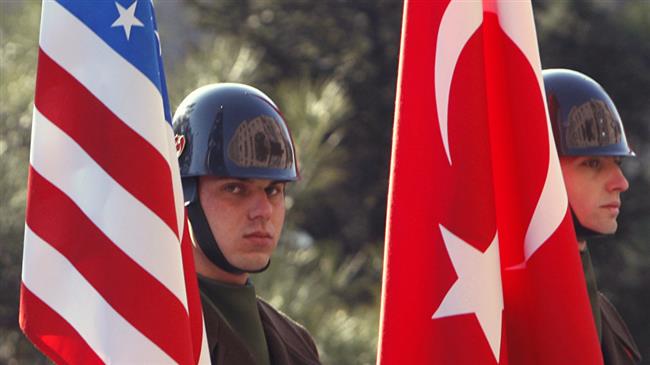
Turkey has called on world nations to form a united front against the US which has imposed sanctions on Ankara, a close ally of Washington in the Middle East.
Turkish Treasury and Finance Minister Berat Albayrak said US President Donald Trump is using sanctions and tariffs to sabotage the economy of other countries.
“It is clearly in the interest of most countries to cooperate in resisting unilateral economic decisions by powerful actors that are motivated by narrowly defined national interests,” he wrote in an article published on the Foreign Policy magazine.
“By acting together with Turkey now, other countries can also help it create a common strategy to avoid artificial crises in the future,” read the article titled America Can’t Be Trusted to Run the Global Economy.

The US has imposed sanctions on two Turkish ministers and doubled steel and aluminum tariffs, which have led to a sharp decline in Turkey’s currency.
Washington took the punitive measures in protest at Ankara’s detention of American Pastor Andrew Brunson, who has been accused of having links with terror organizations in Turkey.
The lira has fallen more than 40 percent against the dollar this year, driving up the cost of food and fuel and sending inflation soaring to 18 percent, its highest in a decade and a half.
To put a floor under the lire, the government ordered exporters last week to convert 80 percent of their foreign exchange revenue into lira. Turkey’s exports totaled $157 billion last year, according to official data.
In his article, Albayrak said the chaos which has afflicted financial markets has nothing to do with economic fundamentals, adding the turmoil has been driven by Washington.
Last week, Turkish President Recep Tayyip Erdogan lashed out at the US for behaving like “wild wolves,” saying Ankara would pursue non-dollar transactions in trade with Russia, Iran and other countries.

Governor of the Central Bank of Iran said on Saturday the Islamic Republic, Russia, and Turkey had agreed on a number of economic measures like removing the US dollar from their mutual transactions.
The agreement was made on the sidelines of a key trilateral summit on Syria held in Tehran on Friday and attended by Iranian, Russian and Turkish presidents.
Last month, Russia’s Deputy Foreign Minister Sergei Ryabkov said Moscow was stepping up efforts to abandon the US currency in its transactions with other countries.
“The time has come when we need to go from words to actions and get rid of the dollar as a means of mutual settlements and look for other alternatives,” Ryabkov said.
Like Iran and Turkey, Russia has been slapped with sanctions by the United States, prompting retaliatory measures by Moscow.
Leader of the Islamic Revolution Ayatollah Seyyed Ali Khamenei told President Vladimir Putin on Friday that US sanctions against Russia, Iran and Turkey create a strong common ground for expanding cooperation, including trade without using the US dollar.
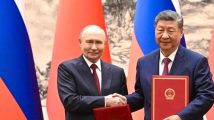
The Russian president said the Americans are making a “major strategic error” by restricting financial transactions for short-term political gains as this will eventually diminish trust in the dollar and weaken the currency.
Source: Presstv













9, September 2018
Another Rwanda is silently playing out in Cameroon and the AU is doing nothing 0
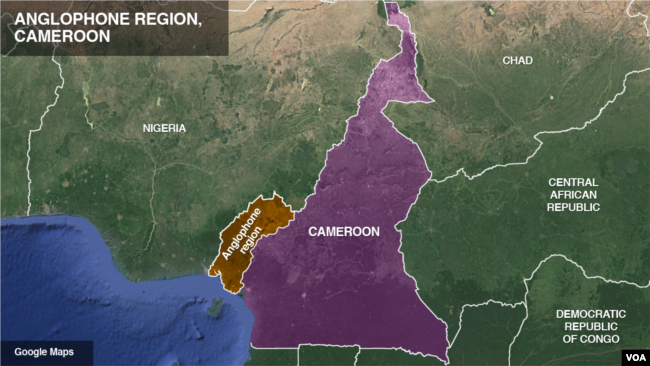
For close to two years, the situation in Southern Cameroons has continued to deteriorate and nobody, not even the government, believes that it is time to change course.
The killings have continued on both sides, but the government still holds that a swift military victory is possible before the presidential election that will take place next month. The hardship in the two English-speaking regions of the country has increased exponentially over the last year and all what is on the minds of government authorities is keeping the people in check.
Yaoundé authorities seem to be frozen in time. In other places, the rule is for dialogue to ensure that things do not deteriorate, but ever since the conflict started, the government has kept on insisting on using an iron fist instead of an olive branch.
Many analysts are wondering when the killing and madness will come to an end. They hold that a different approach could have produced different results and this issue could have been laid to rest a long time ago.
The little infrastructure the two regions possess is deteriorating on a daily basis as both parties do what they can to prove that they have an upper hand. Today, the road leading to Bamenda from East Cameroon has been destroyed by Southern Cameroonian fighters and this is going to cost the region a huge fortune.
Many people agree that Southern Cameroonians have suffered a lot, but the killing of fellow Southern Cameroonians by Ambazonian fighters and the willful destruction of roads and other economic infrastructure has left many people wondering.
Some observers are calling for those in charge of the fighters on the ground to take a second look at their strategies. The burning and destruction of scarce infrastructure is clearly affecting innocent civilians and it is calling into question the objective of those who are committing this act.
The prime suspects in this are usually the Amba boys. It is believed that they want to wreak as much havoc as possible in order to bring the government to the negotiating table. But there are also some doubts as the government has been caught several times in the act of destruction in order to wreak havoc on innocent people.
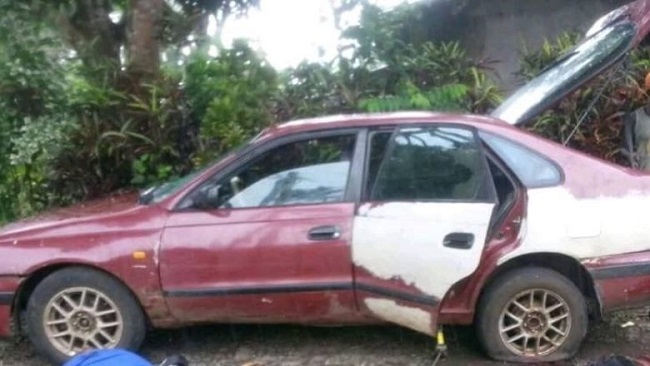
Many people have been asking lots of questions. First of all, why would Amba boys commit such an act on a Sunday morning? Why would Real Amba Boys Attack travelers and make themselves hated as the Cameroon Army whose modus Operandi has always been to disrupt movement in fake claims of checking and enforcing security?
However, while these acts must be strongly condemned, the condemnation should be put in perspective. These extreme measures by the fighters are a reflection of the people’s frustration with a regime that has for long despised its own people.
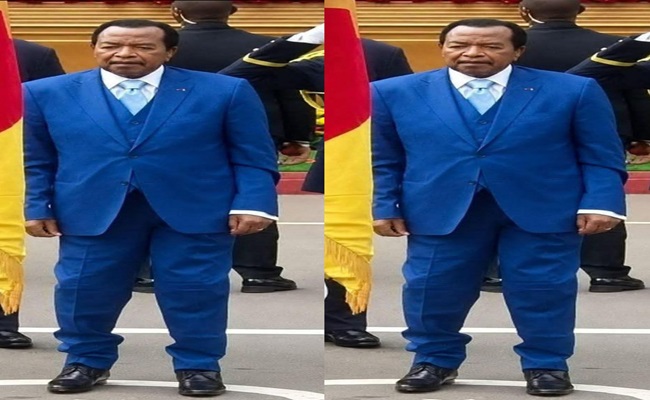
Ever since the crisis started, many eminent people across the world have called on the government to change its strategy but the president of the country, Paul Biya, and his collaborators still see military action as the only option and this is what is causing the escalation.
The devil seems to be at work in Cameroon. Power and money have caused the government to lose its decency. In normal environments, peace talks will be going on to avert the worst. In Cameroon, that is not happening. Even when the country’s economy is taking the heat, the Yaoundé regime still holds that it can only crush opposition by force.
Many state corporations are going under because of this conflict, but the regime is still not changing its position.
PAMOL, CDC and SONARA located in Southern Cameroons are all facing tough times and many employees of these corporations have lost their jobs as a result. But this is not cutting ice with the government.
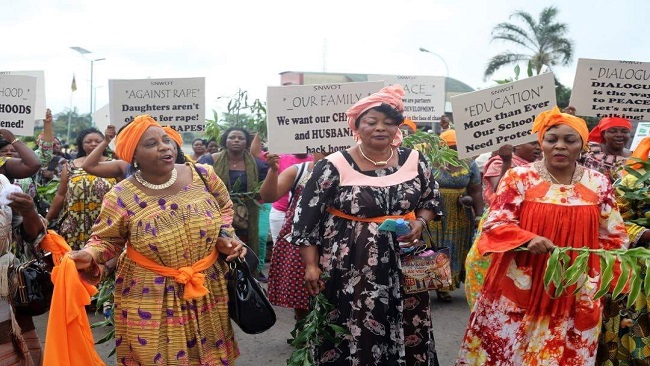
When is the government going to figure out that dialogue can produce more results than military action? When will it know that innocent civilians are being killed for crimes they have not committed?
When will it understand that to live in peace with other people, it must not use brute force? Why has the government taken a position that is not tenable? The more it wants to destroy the fighters, the more the fighters want to prove that they can stand the test.
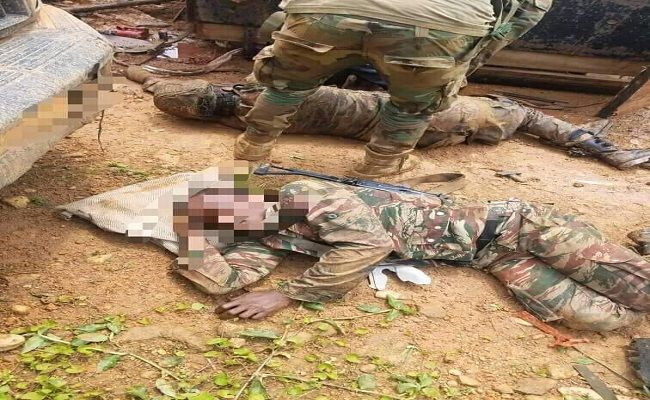
These extreme positions are not helping anybody. A shift in thinking and mentality could bring about peace and unity instead of military action. Cameroon is on the brink. The devil is at work in Cameroon. Many lives have been ruined. Many young men and soldiers have been rushed to an early grave.
Many people have been displaced and the suffering in Southern Cameroons is gradually spreading to East Cameroons as the number of displaced people increases by leaps and bounds.
The world cannot continue to play spectator to a situation that is resulting in thousands of deaths. Another Rwanda is silently playing out in Cameroon and the AU is doing nothing to check this madness that is being encouraged by the government.
Cameroon needs help. The world has to come in to stop the blood flow. The country is heading to the bottom of the abyss and if something is not done, the entire sub-region will be destabilized.
By Kingsley Betek