13, June 2018
French and Southern Cameroons Crisis: In Defence of Ambassador Peter Henry Barlerin 0
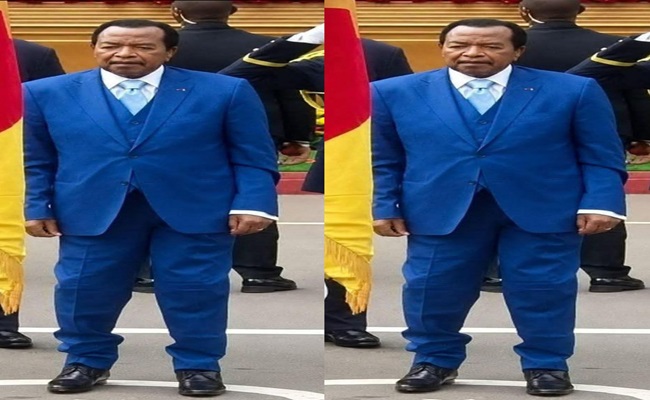
Rather than castigate the US Ambassador for advising Biya to step down after 36 years in power, Cameroonians should hail Ambassador Barlerin for speaking truth to power. It’s time for Biya to go.
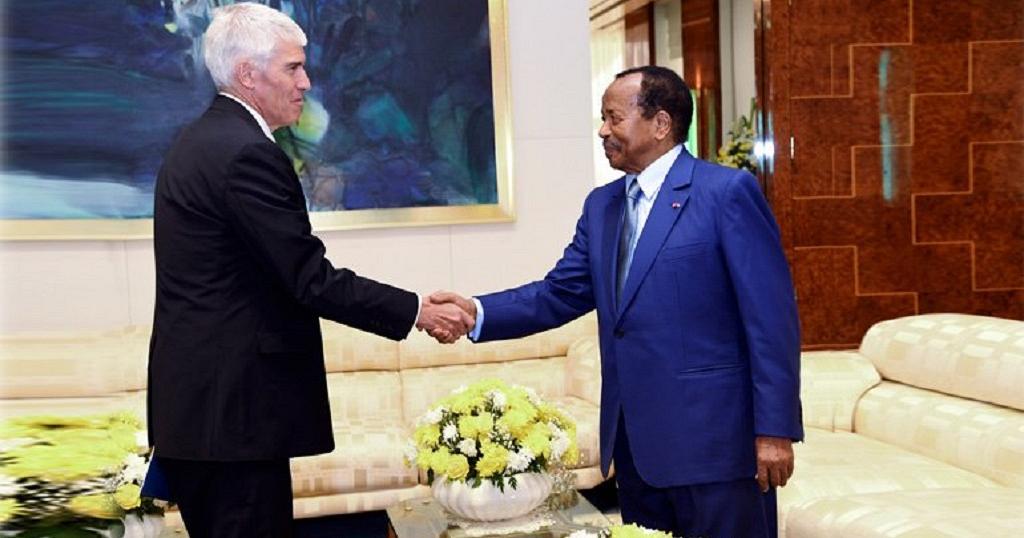
If there ever was any doubt about the abysmal level to which governance or leadership in Cameroon has fallen and how small the minds are in very high places, the utterly reckless and bizarre response to the US Ambassador, Peter Henry Barlerin, for advising President Biya to think about his legacy; a move interpreted by Yaoundé as a call for Biya to step down, is a melodrama which speaks to the intemperate desperation of Cameroon’s vampire elite in their quest for Biya to remain in power, and provide cannon fodder for their bare-face corruption and pillage of the nation’s wealth. In a readout after an audience with President Biya at Unity Palace last May 17, the US envoy said: “…the President and I discussed upcoming elections. I suggested to the President that he should be thinking about his legacy and how he wants to be remembered in the history books to be read by generations to come, and proposed that George Washington and Nelson Mandela were excellent models.” While lamenting the absence of dialogue which has escalated the Anglophone crisis, Ambassador Barlerin indicted security forces for “targeted killings, detentions without access to legal support, family, or the Red Cross, and burning and looting of villages.” Jolted by self-righteous indignation and a mundane craving to ingratiate themselves to the corridors of power, gaffing, goofing, dilatory goons, masquerading as intellectuals and opinion leaders; including fifth columnists and sundry regime apologists, took to the airwaves to castigate the Ambassador; casting banal, vituperative aspersions on his person and declaring him, persona non-grata. The bile and vitriol, including the obnoxious threat by one Banda Kani; who on live TV, said Ambassador Barlerin will return to America in a coffin, is a diplomatic sacrilege that does not edify Cameroon as a nation. Cameroon deserves better.
The impropriety of inflaming primordial sentiments against a resident ambassador is simply mind-boggling and inexcusable. And never again should it happen! The attacks, like the sycophants behind them, are not only pathetic; they are cheap and only reinforce Cameroon’s image as a banana republic with highly dysfunctional institutions where bizarre things can happen. In the event, the civic callousness by self-seeking morons who plumbed the abyss of diplomatic rascality and drag the nation to a hitherto unprecedented low; did a great disservice to the nation. This is a shame and Cameroonians deserve full explanation for this embarrassment.
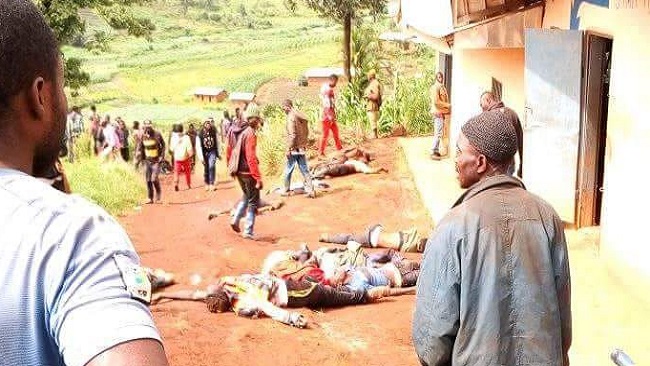
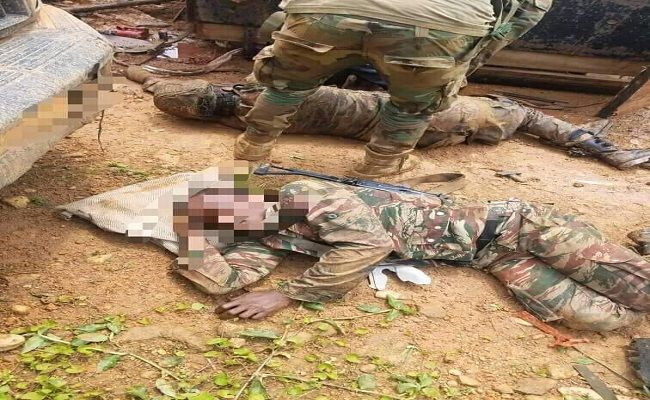
On the face of it, there is nothing the Ambassador said that has not been in the domain of public discourse. Images of arrests, torture, executions and burning of Anglophone villages have gone viral on social media. It also does not require a rocket scientist to figure out that Biya is tired. At 85, Biya is far on the left side of the average age of African Presidents which is 63; that’s pension time, or nearing it, in most countries. Put in context, the European equivalent is 55; which is also the average age of American presidents at their inauguration. Since taking office in 1982, Biya has seen five French presidents – Francois Mitterrand, Jacques Chirac, Nicolas Sarkozy, Francois Hollande and Emmanuel Macron. In the same period, Americans have elected six different presidents – Ronald Reagan, George H Bush, Bill Clinton, George W Bush, Barack Obama and Donald Trump. Biya is also Africa’s oldest president and the second longest- serving ruler; behind Equatorial Guinea’s Obiang Nguema, in power for 38 years.
The president’s frequent trips abroad for medical tourism continue to fuel speculations about his failing health. Keen observers can determine Biya is showing more wear and tear mostly in the wrinkles on his face; the deterioration in his husky voice; the alleged diapers, uncontrollable flatulence, protracted anal blasts and the declining swagger of his gait as witnessed during official outings when he can barely walk. Biya now cuts the picture of an isolated man, frail, distraught, distracted and completely out of touch. Honestly speaking, to vilify the US Ambassador for advising an 85-year-old president to step down, after 36 years, is a travesty that insults and diminishes even Biya’s own person.
Beyond the specifics of avuncular admonition and verbal castigation, the assault on Barlerin is nothing more than self-seeking, ignominious, whimsical and disdainful diplomatic brigandage; more so as it transcends the fine line between free speech and hate speech. Those sycophants, who saw Barlerin’s statement as an attack on their power and unearned privileges, must be told in whatever language they understand that Biya, like every mortal, will eventually die but Cameroon will continue to exist! They should therefore critically examine the issue of presidential succession raised rather than waste time venting needless ad hominems in the public space.
Of course, the reckless behavior of Cameroon’s ruling elite which caused the US envoy to speak truth to power as he did, are well known. A gang of tired old kleptocrats tottering on the borders of senile decay have captured and taken the nation hostage and are stealing the people blind. Cameroon is about the only country in the world where noble minds are ruled by ignoble characters; where thieves get national honors, public servants get paid to steal, and law enforcement officials are venerated for breaking the law. Despite its potential for greatness, Cameroon has aimlessly drifted to become a nation of unimaginable depravity: a forsaken nation ridden with corruption and institutionalized banditry, a people dehumanized by widespread poverty and decrepit infrastructure; and one bedeviled by tribalism, thriving opportunism and heightened insecurity. At the head of the crime syndicate called CPDM, is Paul Biya who cares not one whit about the future of the country; he only wants to be president. Biya has denigrated the presidency, transforming it into a clannish swindle and so far as one can tell, his only visible strategy is just power without a purpose. It will take a man and half to end the nation’s drift and Biya’s inability to lead illustrates a poor dimension of presidential stature and the amplification of the absence of leadership example, from a president who has nothing more to offer Cameroonians.
The point must however be made with emphasis that every nation that respects international law has a duty as well, in its very own interest, to seek the socio-economic and political stability of its host nation. Unlike Franco-Cameroon relations with a parasitic reverse umbilical cord, in which the mother (France) feeds fat on the fetus (Cameroon), US assistance to Cameroon is a one-way traffic. The US is Cameroon’s leading investor, through the Chad-Cameroon oil pipeline project. US food assistance since 2016 stands at over $80 million. From 2015 to present, US military aid to Cameroon is $192,417,258; (FCFA 110 bn), according to data from Security Assistance Monitor. Presently, there are over 300 American military personnel and civilian contractors in the Salak military base near Garoua helping the government fight Boko Haram. Through the President’s Emergency Plan For AIDS Relief (PEPFAR), the US provides millions of dollars for free anti-retroviral drugs for HIV/AIDS patients. American Peace Corps volunteers leave the comfort of their home country to work in the most remote hinterlands, where even Cameroonians refuse to go and work. Cameroon also enjoys preferential trade benefits under the African Growth and Opportunity Act (AGOA); exporting goods, tariffs free to the US market. Certainly, antagonizing the USA is a strategic mistake that cannot be in the national interest.
While some will dismiss the odious, desultory and even comical hubris from the president’s men, the deafening silence of the presidency in the face of the brazen callousness, audacity and debauchment of the US diplomat is an affront to the nation and all Cameroonians must hide their heads in shame, even as they wonder how their government can be so imprudent. If Yaoundé saw anything wrong with the threats to kill the US ambassador, it has taken them too long to make this known! The animus and intemperate verbiage reeking of self-righteous indignation, directed at Ambassador Barlerin, who spoke the minds of a majority of Cameroonians is not the most ideal way to promote friendly relations, which is one of the functions of adroit diplomacy. It has also been reasonably argued that Barlerin should not have made public his private discussions with Biya, for doing so suggests bad faith and risked inciting the public against the regime. But even if Barlerin’s statement amounted to interference, contrary to Article 41(1) of the Vienna Convention, a more dignified and mature response would be to resolve the issues diplomatically through the Ministry of External Relations. That is statesmanship.
If Biya had any sense of patriotism and respect for democracy; if Biya was not so bereft of integrity as to change the constitution to engender his life presidency; if Biya had not gone cap in hand begging for handouts from America and other nations; if Cameroon wasn’t embroiled in governance anomie, surely there would be no reason for foreigners to define terms on which Cameroon should be governed. The fact that Biya has reduced the Anglophone regions to killing fields challenges our common humanity and it would have been a dereliction of duty if Ambassador Barlerin had not called out the Biya regime for the genocide and crimes against humanity. Therefore, rather than waste time hurling insults at the US diplomat for speaking truth to power, all patriotic Cameroonians should hail Ambassador Barlerin for acting as a self-imposed moral ombudsman and conscience of a drifting nation. However ill-conceived the Ambassador’s statement might be in content and delivery, it is once again another reminder that history is beckoning on Paul Biya and giving him a chance at winning the battle for both self-redemption and national rebirth. The choice is patently Biya’s to make.
By Valerian Ekinneh Agbaw-Ebai


















13, June 2018
Italy: Protesters slam Salvini’s migrant crackdown in Milan 0
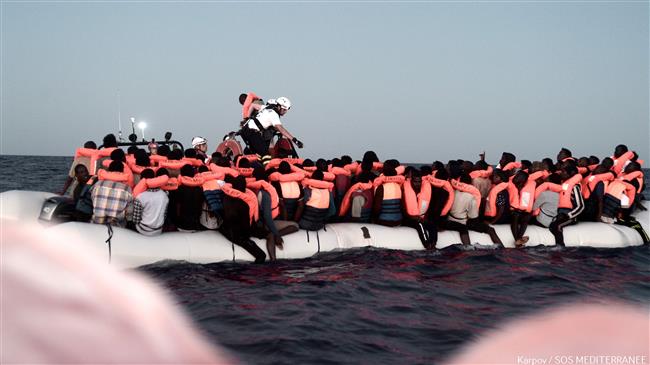
Close to one thousand protesters filled Milan’s Piazza della Scala on Tuesday in protest against the Italian Interior Minister Matteo Salvini’s decision to close Italian ports to migrant rescue ships.
“We ask to solve problems on the land, not the sea. The sea is the place to rescue people, as soon as possible.” said Giorgia Linardi, a member of Sea Watch, a non-profit organisation which carries out rescue operations in the Mediterranean.
The migrant rescue ship Aquarius rescued 629 people in two different operations with help from the Italian coastguard. They were due to dock in Sicily, but Salvini responded by closing Italian ports and said Malta should take the boat. Spain has since offered ‘safe harbour’ to the migrant rescue ship.
Source: Ruptly