4, May 2023
Football: PSG fans protest over Messi saga, disappointing form 0
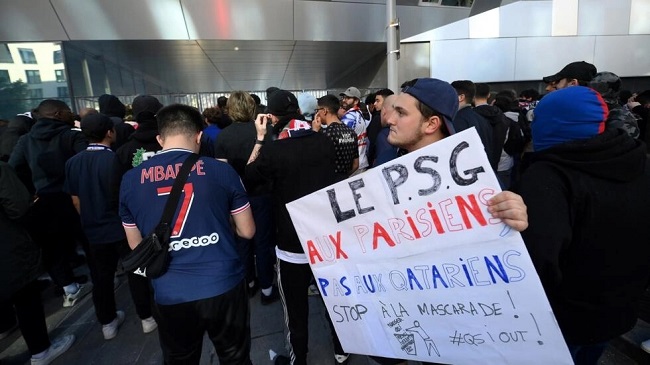
Hundreds of fans gathered at PSG on Wednesday to protest over the club’s current form and the Messi saga, as the Argentinian superstar’s future at PSG was plunged into doubt following his suspension, after he travelled to Saudi Arabia without the club’s permission.
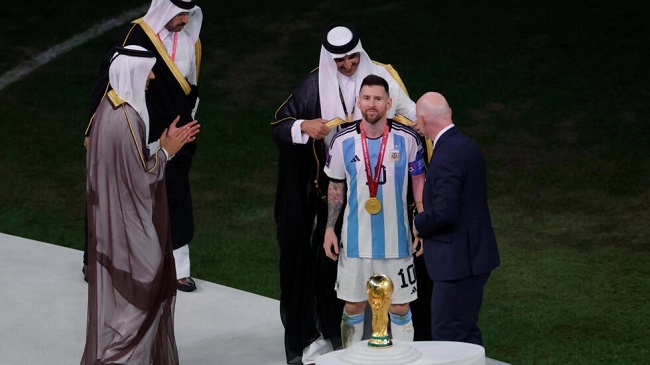
When Lionel Messi arrived from his beloved Barcelona in 2021, PSG fans hoped he would transform the club into a Champions League powerhouse. But Messi has struggled to reproduce his best form at Qatar-backed Paris – even though he has scored 31 goals in 71 appearances in all competitions.
“We’re fed up with mercenaries! We must sack Messi! We must sack Nasser Al-Khelaifi (the club’s Qatari president),” supporters chanted.
“We are sincerely worried about the future and the sustainability of our club,” the team’s ‘ultras’ supporters said in a statement, adding “is there still a pilot on the plane?”
Meanwhile, several videos posted on Twitter appeared to show a group of supporters, dressed in black gathered in front of the home of Neymar, shouting abuse at their injured Brazilian superstar.
Declining form
This came after Messi was jeered by a section of the PSG support, who see him as a symbol of all the club have done wrong in focusing on superstar signings while failing to build a genuinely competitive team.
Messi’s form since leading Argentina to World Cup glory in Qatar has declined along with that of most of the PSG team.
Their insipid performance against Lorient was a sixth defeat in 17 Ligue 1 matches in 2023.
They remain five points clear of Marseille at the top of the table with five games left, and are therefore still on course for a record 11th French title.
However, they were knocked out of the Champions League in the last 16 by Bayern Munich and also went out of the French Cup at the same stage to Marseille.
A source with knowledge of the disciplinary procedure told AFP that Argentina’s 35-year-old World-Cup winning captain, who is out of contract at the end of the season, would be sidelined for “several days”, while various media in France reported that he would be suspended for two weeks
“He cannot train, cannot play, and will not be paid while disciplinary measures are in place,” the source added.
Another source, also speaking on condition they were not identified, indicated that the seven-time Ballon d’Or winner would “probably” be sidelined for a fortnight, noting that “nobody is more important than the club”.
Messi played the whole game in PSG’s 3-1 home defeat by Lorient in Ligue 1 on Sunday.
He then travelled to Saudi Arabia to fulfil commercial commitments in his role as a tourism ambassador for the Gulf state.
The Saudi Tourism Authority said in a press release on Wednesday that Messi had “returned to Saudi for a second time, this time with his family” and had been treated to a demonstration of palm weaving and had fed Arabian gazelles.
As a result of the trip, Messi missed a training session scheduled for Monday following the weekend defeat.
The PSG squad were given a day off on Tuesday and Messi did not take part in training on Wednesday either.
‘Fed up with mercenaries’
PSG are due to return to league action away at struggling Troyes on Sunday, a game that Messi may now miss.
If he were to be sidelined for two weeks he would also sit out a home match against Ajaccio on May 13.
The disciplinary measures make the prospect of Messi staying in the French capital after his two-year deal expires at the end of this season even more remote.
Having at one point looked set to extend his stay for another year, a source close to the club told AFP last month that he was now “much more likely” to depart.
Source: AFP










4, May 2023
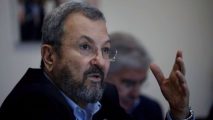
Ukraine War: White House says Kremlin ‘lying’ about US role in drone attack 0
The White House on Wednesday denied any involvement in an alleged drone attack on the Kremlin, after Russian spokesman Dmitry Peskov accused Washington of guiding Ukraine to launch the assault.
“We had nothing to do with this,” said John Kirby, spokesperson for the White House National Security Council, on MSNBC. “Peskov is just lying there, pure and simple,” he added.
Russia alleges that Ukraine carried out a “terrorist attack” overnight Tuesday into Wednesday with two drones, aiming to kill President Vladimir Putin, a charge which Kyiv has denied.
Kirby reiterated in his interview to MSNBC on Wednesday that Washington does not support or condone attacks by Ukraine outside its borders.
“We’ve been clear with them publicly and we’ve been clear with them privately that we do not encourage nor do we enable them to strike outside Ukraine,” he said.
Source: France 24