5, November 2022
World Bank Approves $497 Million in Financing to Lower South Africa’s Greenhouse Gas Emissions and Support a Just Transition 0
The World Bank Group Board of Executive Directors approved South Africa’s request for a $497 million project to decommission and repurpose the Komati coal-fired power plant using renewables and batteries. The project will also create opportunities for the affected workers and communities. This is in line with the government’s efforts to transition the country toward a low carbon development path with reliable, affordable, and sustainable energy for all.
Addressing energy poverty and transitioning toward lower carbon development requires a reliable power sector to underpin inclusive economic growth. The Komati Project aims to help mitigate climate change, enhance energy security, and support economic opportunities in the Komati area. The project is aligned with the country’s Just Transition Framework, which aims to minimize the socio-economic impacts of the climate transition, improve the livelihoods of those most vulnerable, and embrace the opportunities stemming from the transition.
The decommissioning and repurposing of the Komati coal-fired plant is a demonstration project that can serve as a reference on how to transition fossil-fuel assets for future projects in South Africa and around the world. The project will provide learning experiences through a cycle of piloting, monitoring, assessing, documenting, and information sharing.
“Reducing greenhouse gas emissions is a difficult challenge worldwide, and particularly in South Africa given the high carbon intensity of the energy sector,” said World Bank Group President David Malpass. “Closing the Komati plant this week is a good first step toward low carbon development. We are cognizant of the social challenges of the transition, and we are partnering with the government, civil society, and unions to create economic opportunities for affected workers and communities.”
The decommissioning of the Komati coal-fired plant will result in reduced carbon emissions and improvement of ambient air quality in the vicinity of the plant. The power sector is a major contributor to greenhouse gas emissions in South Africa, accounting for 41 percent of its CO2 emissions. This is due mainly to Eskom’s fleet composition. Its 15 coal-fired power plants, with an average age of 41 years, provide 38.7 GW of the country’s 52.5 GW installed capacity.
“This project is critical to our understanding of the sustainability of decommissioning, repurposing, and mitigating the socio-economic impacts for workers and communities before we scale up the move of the power sector into a low-carbon path,” said South Africa Minister of Public Enterprises, Pravin Gordhan. “It is part of implementing the country’s Integrated Resource Plan 2019 to gradually retire 12 GW of our old and inefficient coal-fired power fleet by 2030 and to scale up private sector-led renewables of 18 GW during the same period.”
The repurposing of the plant will enhance energy security in South Africa with the installation of a combination of 220 MW renewable energy solutions (including 150 MW solar PV solar and 70 MW wind) and 150 MW batteries, which together will help to improve the quality of electricity supply and grid stability.
Under the Komati project, the workers will be supported through a comprehensive transition plan, elaborated jointly with inputs from staff and unions. Options for the affected workers will include transfers to other Eskom facilities, re-skilling, and upskilling for deployment to the renewable energy plants.
A portion of project financing will be devoted to creating economic opportunities for local communities, which is expected to benefit approximately 15,000 people. Community-driven projects, skills training, incubation support, and business development services for new and existing micro, small, and medium enterprises are expected to create jobs in agriculture, local manufacturing, and digital technology. Activities will be carried out in coordination with local government, civil society organizations, and the private sector.
The Komati Just Energy Transition Project is financed jointly through a $439.5 million World Bank loan, a $47.5 million concessional loan from the Canadian Clean Energy and Forest Climate Facility (CCEFCF), and a $10 million grant from the Energy Sector Management Assistance Program (ESMAP).



















5, November 2022
40 years in power: What is Mr. Biya’s legacy? 0
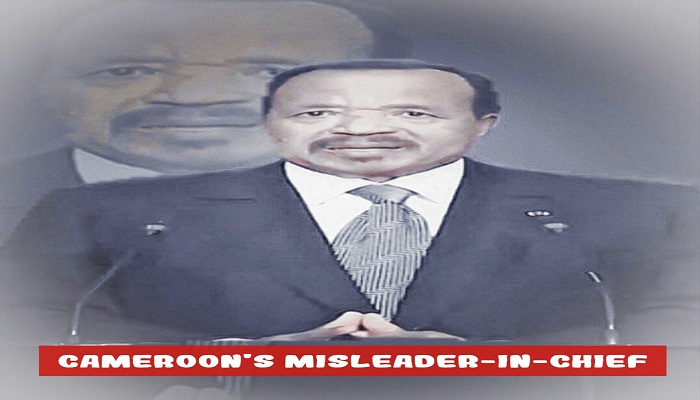
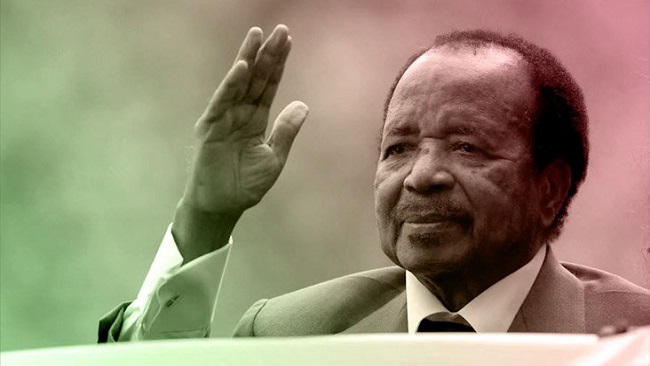
Cameroon’s eternal president, Paul Biya, has been in power for 40 years and his supporters will be celebrating a milestone they claim is important in the lives of many Cameroonians. The Cameroon Concord News Group has been monitoring things and has decided to focus on the failings and achievements of a man who many hold has not brought much to Cameroon, though he has been a major beneficiary of what Cameroon has to offer.
Education
Cameroon is noted for the quality of its education. Cameroonians are all over the world and they have proven their academic worth wherever they have been. Since coming to office forty years ago, Mr. Biya has created many primary and secondary schools albeit on paper and this has given many young Cameroonians access to education. Under him, many universities have also been created and this has endowed the country with a large pool of educated people.
Mr. Biya can take credit for this although many of the graduates are either unemployed or have left the country, enabling the country to have a huge Diaspora whose remittances are helping to change things in the country.
Politics
Politically, Mr. Biya’s supporters claim that he has reformed the country politically and thanks to him, multiparty politics is a reality in Cameroon. Mr. Biya inherited a single party state from his predecessor and due to intense political pressure in the early 1990s, he had to bow to the will of the people by opening up the political scene to other political parties. But before opening up the political arena, Mr. Biya had to kill thousands of Cameroonians and send many to jail for demonstrating against his brutal dictatorship.
Multiparty politics was finally granted in 1992 only when Mr. Biya and his dishonest politicians had found a way of rigging elections to perpetuate their stay in power and they have, indeed, been in power for forty years by rigging and stealing every single election in Cameroon.
Every constitutional amendment only comes to consolidate Mr. Biya’s grip on the nation. He appoints every single official in Cameroon, including night-watch men to ensure that everybody in Cameroon is loyal. The military is his toy, and his ministers are just a bunch of slaves he uses to achieve his personal goals and if any of them nurses any high political ambitions which he does not like, he simply sends him to the Yaounde Maximum Security Prison which is holding many of his former ministers who have either robbed the country or displayed the forbidden ambition of succeeding him.
For the political opposition, Mr. Biya and his ruling CPDM have worked hard to destroy all efforts which might threaten Mr. Biya’s power. Political opponents are permanently being jailed, especially after every election because the results which always favor Mr. Biya usually get manufactured even before the real election.
Mr. Fru Ndi, the leader of the Social Democratic Front was held in his home for three months in 1992 in a presidential election in which Mr. Biya lost woefully but ended up being proclaimed the winner.
The entire Northwest region was under a state of emergency in 1992 because Mr. Biya had stolen an election and the population was determined to stop him from taking what was not his. But the crooked CPDM did not yield, and Mr. Biya has been in power ever since.
In 2018, it was the turn of Professor Maurice Kamto, the winner of the 2018 presidential election, to taste Mr. Biya’s wrath. He was locked up for eight months when he refused to acknowledge that Mr. Biya had won the election.
Mr. Kamto had clearly beaten Mr. Biya, but the old and ailing Biya is not someone who throws in the towel. He has never won an election and he was not ready to accept that someone else would be the country’s president while he was alive.
That is the multiparty democracy Mr. Biya has brought to Cameroon and that will be one reason why his supporters will be celebrating on November 6. They have institutionalized and legalized electoral fraud in Cameroon, a great achievement which needs to be celebrated by his supporters.
Economy
For forty years, Cameroon’s economy has been struggling despite support from multilateral development banks and other global financial institutions. Corruption has become the country’s hallmark and all government institutions have been struggling as Mr. Biya’s one-man rule has destroyed the very foundation of those institutions. Parastatals are all suffering, as corruption has reduced them to empty shells. Recently, SONARA and SNH have been caught with their hands in the cookie jar.
The Glencore scandal has demonstrated how the Biya regime is corrupt and how officials of government-owned institutions use their power to enrich themselves. In a British court, trading giant Glencore admitted recently that it transported money via a private jet to bribe senior officials in Cameroon, using a Nigerian agent.
The Nigerian agent transported money by private jet to Cameroon where a Glencore trader used it to bribe officials of the state oil and gas company and the state refinery. Cameroonians are now waiting to see what will happen in the days ahead. However, many informed Cameroonians know that not much will happen as corruption is the CPDM’s life blood. This is how the CPDM government operates, and 40 years of corruption is something very important to be celebrated.
Unemployment
Youth unemployment has become a massive issue in recent times. The government’s job-creation policies have failed the country’s youths, leaving many university graduates unemployed. The civil service has become a place where people never retire, especially if they are loyal to the ruling party.
The deep-rooted corruption, nepotism and tribalism are bleeding the civil service. People of Ewondo, Bulu and Eton descent have become the lords of the Biya kingdom, and their languages have become national and official languages in Cameroon and those who do not speak the languages get excluded from many opportunities.
The Betis – Mr. Biya’s ethnic group – who account for less than 7% of the country’s population, account for 80% of senior positions in the civil service and they are doing a good job of embezzling state funds. A look at those who are currently being held in state prisons for embezzlement will clearly reveal that the Betis are adept at stealing.
Many of them have multiple civil service numbers, thus earning multiple civil service salaries. Some senior government officials have included their family members and girlfriends in the civil service even when they have no business being there.
Despite multiple operations and investigations to rid the civil service of those ghost workers, many Cameroonians, some living abroad, continue to earn salaries they do not deserve. Mr. Biya’s brand of corruption runs very deep and it is hard to be uprooted. This is a massive achievement for Mr. Biya. This is the Cameroon he has engineered and will bequeath to future generations.
Unemployment remains a huge problem and it has caused many young Cameroonians to look outward, causing the country to become a net exporter of human capital. Today’s youths do not suffer fools gladly and they are taking their destinies into their own hands. Many are leaving the country, using whatever means that are available to them.
Thousands of Cameroonians fleeing economic hardship at home have ended up in the Sahara Desert and on the high seas, but this has not caused the corrupt regime to change the way it runs the affairs of the state. Will Mr. Biya’s supporters really celebrate the economic hardship they have brought onto Cameroonians?
Infrastructure Development
In terms of infrastructure, Cameroon is among the least developed countries on the continent. Its roads are death traps and its hospitals have become consultation clinics. In forty years, Mr. Biya has not built a single dual carriage highway in Cameroon.
Thousands of Cameroonians die every day on the death traps which pass off as highways in Cameroon, but the number of deaths has not triggered any transportation policy change in the country. If Mr. Biya had been building a highway every five years, the country would have had about eight major highways. The roads which had been built before he took over are today eyesores.
Regarding railways, those built under the country’s first president, Amadou Ahidjo, have been left to rot due to a lack of resources and a maintenance culture. Today, the country’s towns and cities are like landfills. Lack of planning over the last forty years has reduced the towns and cities to slums. Yaoundé, the nation’s capital, is an Augean Stable begging for a thorough cleansing.
Political Stability
For decades, Cameroon was considered as an oasis of peace in a desert of chaos, but over the last 20 years, much has gone wrong in the country and the peace many people knew the country for has simply evaporated. Mr. Biya’s corrupt and incompetent rulership has transformed the country into a tinder box. Nepotism and overt injustice have resulted in the alienation of people from other regions of the country.
Over the last six years, the country’s English-speaking minority has been threatening to walk away from the lopsided union with French Cameroon which has only brought death, poverty and destruction to many English-speaking Cameroonians, although other French-speaking Cameroonians are also feeling the heat of Mr. Biya’s failed economic and political stewardship.
After fifty years of marginalization, the country’s English-speaking minority in 2016 complained about its unfortunate fate. Instead of listening to the people, the Biya government threatened to kill those who ever thought of complaining. Since the Biya government only believes in military violence, it promptly dispatched its forces to the country’s two English-speaking regions to teach the population a bitter lesson.
Little did the ailing and dying Biya know that his own troops would be caught up in a quagmire as the English-speaking minority would not take the threats lying down. When the troops started massacring the people, the English-speaking Diasporans, most of whom are based in the United States, Canada, the United Kingdom, Germany, South Africa and Nigeria, immediately mobilized resources and acquired weapons for those who were on the ground and were willing to fight the ‘army of occupation’ which was spreading death and destruction in the two English-speaking regions of the country.
A war Mr. Biya and his generals thought would end in weeks has gone on for six years and there is no end in sight. More than ten thousand Cameroonians have lost their lives as a result of the war including some four thousand soldiers and many are still struggling with physical and mental scars due to the war.
A conflict, which started with a demonstration by teachers and lawyers, has finally become a war of secession. The Biya government is not willing to negotiate, and the separatists are in no mood to down their weapons despite repeated calls by the government for the separatist fighters to abandon their positions and return to the fold.
Even calls by the international community for a negotiated peace settlement have fallen on deaf ears, as the government is stuck to its position, especially as Mr. Biya also known as the ‘Monarch’ had declared that the form of the state was non-negotiable.
However, it is not only the English-speaking minority that wants to walk away. Northerners are also prepared to walk away if power does not return to the North. They have a bunch of grievances, and they are ready to revenge on the Betis who killed many northerners after the 1984 coup d’état.
Cameroon is today more fragmented than it has ever been. It is indeed a ticking time bomb which if not diffused in time, could destabilize the entire sub-region when it goes off. Tribalism and nepotism have replaced patriotism. Most Cameroonians now hold that Cameroon is not a country worth dying for.
As the country’s ruling party prepares to celebrate Mr. Biya’s achievements, it should be asking itself many questions. One of those questions should be: What are we celebrating? The party has been in power for forty years just like Mr. Biya, but there is nothing to show for the long stay in power. Does the ruling CPDM and its leader, Paul Biya, really think they can convince Cameroonians that they have got a good deal in life?
By Soter Tarh Agbaw-Ebai