
14, September 2020
French Cameroun Ministers can no longer count on Camair-Co 0
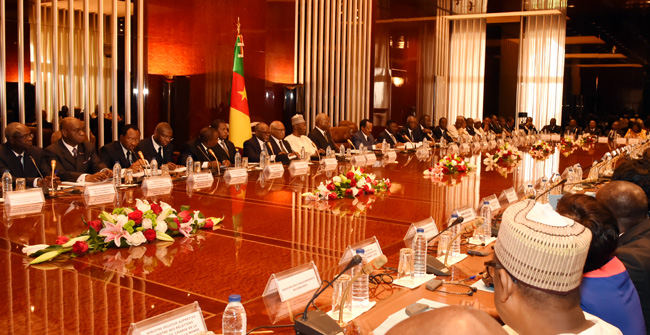
Short of viable planes, Camair-Co is under some form of CPDM pressure after ministers’ road accident in the Far North Region of French Cameroun.
The three French Cameroun members of government were forced to travel by road for want of available Camair-Co aircraft and ended up in a river. The accident puts the national carrier’s management in a bind, reported Africa Intelligence.



















14, September 2020
Yaoundé says patients at risk as COVID scares away blood donors 0
Cameroon says it urgently needs more than 2,000 pints of blood to save the lives of about 300 people, including hemodialysis patients, in the central African state’s troubled English-speaking town of Bamenda.
Health workers say the fear of COVID-19, coupled with increasing attacks by separatist fighters, has scared away most blood donors. People wounded in the separatist crisis and dialysis patients are being rushed to hospitals in French-speaking towns.
Ngum Sirri, 55, was being rushed to the General Hospital in Cameroon’s capital, Yaoundé, in the hospital’s ambulance. The hemodialysis patient was brought in from the English-speaking town of Bamenda by her family members. She says she is in search of blood to save her life.
“When you give blood you save lives, so we are pleading with the population to help us donate blood in the general hospital. There are vulnerable people in the hospital who need blood, like those with dialysis, those with sickle cells. We have blood shortage in the hospital,” she said.
Sirri is one of the 30 patients from the English-speaking northwestern town of Bamenda who have received emergency assistance at the General Hospital within the past six days.
Fidelis Ako, head of the blood transfusion unit of the Regional Hospital in Bamenda, confirmed that patients are leaving for French-speaking towns. He said blood banks are becoming empty in English-speaking towns. He said the separatist conflict led many blood donors to escape to safer localities and blood scarcity has now become acute with COVID-19 scare.
“The socio-political crisis (separatist conflict) has scared many of our donors away and then now the COVID-19. Since the hospital is a [COVID-19] treatment center, many people think that when you come here you will have coronavirus, and so we could not have persons coming to the hospital to donate blood and as well we could not organize mobile voluntary blood donation campaigns. People should not be afraid of coming to the hospital to make their blood donations because coronavirus is not injectable,” he said.
Ako says the blood bank of the Bameda hospital has not been able to help 40 patients in need within seven days.
“Last week we received over 70 requests for blood units, but we have been able to transfuse just 31 units of blood. Before the crisis we were transfusing over 4,000 units of blood per year, but as of now, we have not been able to transfuse up to 2,000 units so it shows that we are going to lose more patients because we don’t have blood units at the blood bank,” Ako said.
Cameroon said several patients have died as a result of the blood shortage and that its hospitals are finding it difficult to treat civilians wounded in the separatist conflict. Many of the injured are moved to hospitals in French-speaking towns like Bafoussam, Douala and Yaoundé.
Ako said health authorities last week announced incentives to encourage blood donation. Civilians who donate blood will have a 50% reduction in their medical bills when they become sick.
Non-governmental organizations have been encouraging people to donate blood. Feka Parchibel of the NGO Hope for Vulnerables and Orphans says many children they help also need blood.
“Our people are in dire need of blood. I am calling on all blood donors in the North West and the South West regions to help by rushing to the hospitals to donate blood to save lives. All we need is to practice all the preventive measures,” Parchibel said.
Cameroon has reported more than 20,000 COVID-19 cases, with 415 deaths since March 5, when the first coronavirus case was reported in the central African state, according to Johns Hopkins University data.
Source: VOA