
11, September 2020
Bundes: Germans view Donald Trump more frightening than coronavirus 0
Germans are more concerned with the policies of Donald Trump than the coronavirus pandemic, according to an annual survey that says the respondents believed the US president’s policies would make the world a more dangerous place.
An annual survey, entitled “Fears of Germans,” said some 53% of those asked put the US president on the top of the list of their worries.
The survey did not give details on which aspects of Trump’s policies worried Germans.
According to political scientist Manfred Schmidt of the Ruprecht-Karls-University in Heidelberg, Germans are concerned over Trump’s foreign policy.
The US says it will withdraw about 12,000 of its troops from Germany and place them in other European countries to counter Russia.
“Particularly notable are the trade-war-like conflicts with China and trade and security policy attacks against allies, including Germany,” he said.
“In addition, the withdrawal of the United States from international cooperation and the confrontation with Iran,” Schmidt added.
The survey that was conducted in June and July said rising living costs, the economic situation and the cost to taxpayers of European Union debt came second, third and fourth for traditionally cautious Germans.
Thousands of people reportedly signed up to attend the demonstration against coronavirus measures before it was banned by city authorities.
The coronavirus, which has wreaked havoc on Germany, has concerned Germans much less than Trump’s policies.
Only around a third of those asked in the survey said they were concerned that they or someone they knew well would get COVID-19, the disease caused by coronavirus.
The new infections are rising again, with health authorities having recorded a total number of 258,107 cases of infection and 9,419 coronavirus related deaths.
Source: Presstv

















12, September 2020
As Southern Cameroons Crisis continues, U.S. officials struggle to exert positive influence 0
On September 8, U.S. Senators Jim Risch and Ben Cardin, joined by an impressive bipartisan group of cosponsors, introduced a resolution calling for an end to the violence in Cameroon and for inclusive dialogue to address the underlying political tensions that are at the root of the conflict between the state and anglophone separatists. They are the latest in a large and diverse group of senior U.S. officials who have worked to highlight the crisis in Cameroon. Assistant Secretary for African Affairs Tibor Nagy has engaged in direct and personal diplomacy aiming to influence the situation. Congresswoman Karen Bass, chair of the House Foreign Affairs Subcommittee on Africa, has been resolute in condemning abuses, and has worked on a bipartisan basis to clearly communicate U.S. concerns and support for peace talks to Biya’s government, including in a resolution introduced in the House of Representatives last year. The Trump Administration removed Cameroon from the list of countries eligible for trade benefits under the African Growth and Opportunity Act, and has scaled back military assistance to the country.
But Cameroon is a case in which concern in Washington does not translate into effective influence. In Cameroon itself, little political progress has been made as various factions grapple for control of the talks and sometimes competing lines of effort stop and start. Meanwhile, the people of Cameroon continue to suffer despite calls for a ceasefire in light of the COVID-19 crisis.
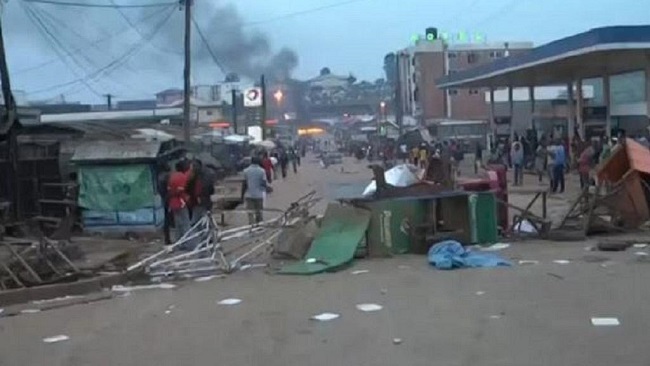
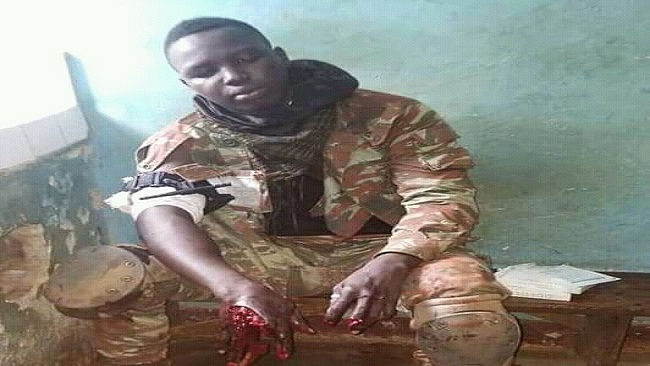
Just this week, the army launched a new campaign in Bamenda, ostensibly to bring law and order to the city. The BBC reported that the operation involved house-to-house searches, seizures of citizens’ property, and even indiscriminate shooting. Residents of the city largely stayed home, caught between the government and separatists who have called for citizens to stay home as a form of protest, in an all-too-familiar impossible situation. This summer the Norwegian Refugee Council named Cameroon the world’s most neglected displacement crisis, noting that half a million people have been forced from their homes.
It can be painful to reckon with the limited capacity of the United States, or of any external power, to bring seriousness of purpose to urgently needed political dialogue. But ultimately civil conflicts with political roots cannot be resolved without domestic will and leadership, and Cameroon’s ossified political class has thus far failed to muster either. But the efforts of U.S. officials still matter. Should those vital domestic ingredients emerge, the United States is well-positioned to support a process that prioritizes the urgent needs of civilians and gives all parties in a tremendously diverse country greater opportunity in the future.
Source: Council for Foreign Relations