28, February 2020
WHO upgrades global risk of coronavirus spread to ‘very high’ 0
WHO upgrades global risk of coronavirus spread to ‘very high’
28, February 2020
WHO upgrades global risk of coronavirus spread to ‘very high’
28, February 2020
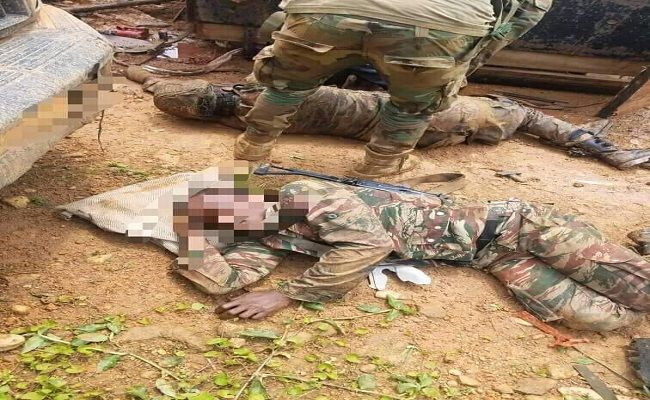
The commander of the Ambazonia Restoration Forces in the Manyu County has defended recent decision to seek financial support from the business community in the constituency, saying the Manyu Ghost Warriors Odeshi will be able to fight and survive as a self defense body without help from the disorganise diaspora.
The commander whose names we are withholding also said in an audio released on Thursday that he would stand by a decision announced late last year by Vice President Dabney Yerima that all Ambazonia Restoration Forces should have a central command.
In the audio message that was aired in the Kenyang language, the commander was heard wondering aloud if the Federal Republic of Ambazonia really needs the corrupt leaders in the USA to survive as a nation. “Do we need … the lies from the US to defend our homeland and protect our people? “The Federal Republic of Ambazonia, its leader Sisiku Ayuk Tabe and its Restoration Forces have all said no we don’t it” the Manyu commander said.
In a passionate appeal to Vice President Yerima and the Ambazonia Security Council (ASC) the commander of the Manyu Warriors noted that “If after 4 years, we still cannot force every business organization in Southern Cameroons to pay their taxes to the Ambazonian treasury, then we have no business being a republic,” the commander opined. “Ambazonians both in Ground Zero and in the diaspora might as well choose. We can be a French Cameroun colony with special status or our Northern and Southern Zones can be provinces administered from West and Littoral regions by the ruling CPDM crime syndicate.”
Senior officials deep within the regime in Yaounde have been murmuring privately that things have deteriorated to a point where regime insiders are scared and there are fears thatsomething terribly bad could happen, especially as the economy has been caught in a downward spiral.
The 87 year old French Cameroun dictator is totally absent while his aides are taking all the wrong decisions. The war in Southern Cameroons has finally highlighted how the leadership of the so-called one and indivisible Cameroon is ineffective and inefficient.
A baron of the regime to who spoke to Cameroon Intelligence Report recently in Yaounde observed that “What is of importance to those at the helm is just the power. They don’t care about the country. It is like their goal is to make money while the rest of the country continues to head to the bottom of the abyss.”
By Chi Prudence Asong with additional editing from Oke Akombi Ayukepi Akap in Glasgow
28, February 2020
Nigerians took to social media to celebrate the first goal scored by Odion Ighalo for Manchester United since he joined the English club in January.
Ighalo, who made his first start for United because of an injury to regular forward, Anthony Martial, scored in the 34th minute, tapping in a pass from Juan Mata.
United went on to win the match against Belgian side Club Brugges with five unanswered goals and qualify for the next round of the UEFA Europa League.
The result however spelled the end of the journey for South Africa’s Percy Tau, whose side lost 6-1 over the two legs.
Another African striker, Pierre-Emerick Aubameyang also scored for his club side Arsenal, but the English club were eliminated by the away goals rule, having concede two goals at the Emirates Stadium. The tie against Greek side Olympiakos ended 2-2 on aggregate.
Source: African News
28, February 2020
Nigeria’s economic hub Lagos confirmed a case of new coronavirus on Friday, stirring memories of the fears sparked six years ago when West Africa’s Ebola epidemic hit the chaotic megacity of 20 million.
The health minister said the first confirmed case of the virus in sub-Saharan Africa was an Italian citizen who had returned from Milan earlier this week.
“The patient is clinically stable, with no serious symptoms,” Ehanire said, adding that the patient was being treated at a hospital for infectious diseases in Lagos.
The low number of cases so far across Africa, which has close economic ties with China, the epicentre of the deadly outbreak, has puzzled health specialists.
Prior to the case in Nigeria, there had been just two cases on the continent — in Egypt and Algeria.
– Vulnerable country –
Nigeria, Africa’s most populous country with some 190 million people, is viewed as one of the world’s most vulnerable to the spread of the virus given its fragile health system and high population density.
In 2014, the first case of Ebola confirmed in the city from the outbreak that swept West Africa set off alarm bells across the globe and unleashed a wave of panic among residents.
In the end Lagos escaped relatively lightly and only seven people died from a total of 19 infected, a number dwarfed by the overall toll of 11,000 deaths across the region from 2013 to 2016.
The World Health Organization (WHO) hailed the containment of Ebola in Lagos as a major success given the potential for a rapid spread in the city’s closely packed and poorly sanitised neighbourhoods.
The Lagos state health authorities reacted quickly, medical experts from international organisations in the country deployed from the capital Abuja and the disease was confined to the upscale neighbourhoods in the city.
This time around officials insist that the country has made its preparations for a potential coronavirus outbreak.
“I can tell you that in Nigeria we have a costed plans as part of preparedness for this epidemic,” deputy health minister Olorumibe Mamora said earlier this month.
Mamora said quarantine centres had been established in Lagos and Abuja and were being set up in the southern oil hub of Port Harcourt and the biggest northern city of Kano.
“We would do everything we need to do if the situation arises in respect of the safety of our citizens,” the official said.
Nigeria’s Centre for Disease Control says that three laboratories in the country have the capacity to diagnose the virus and that health officials have been meeting daily to share intelligence.
– ‘Lessons from Ebola’ –
The director general of the West African Health Organisation Stanley Okolo has insisted the region had “learnt from the lessons of Ebola”.
He said members of the Economic Community of West African States (ECOWAS) bloc agreed recently to come up with a “regional cost plan” and estimated that up to $50 million was required.
“The devastation of an epidemic affects everybody,” he said.
Situated in a tropical regional not far from the equator, Nigeria has had to face the threat of multiple contagious diseases.
An outbreak of Lassa fever, which is spread mainly through rat faeces and urine, has killed over 100 people across the country since the start of the year.
Experts say the oil-rich economic powerhouse is better prepared to deal with any disease epidemics than some of its poorer neighbours in the region.
But the government is criticised for not spending enough on health and crumbling infrastructure, corruption and the departure of doctors to better paying jobs abroad have eaten away at the sector.
Source: AFP
28, February 2020
Ambitious, exhilarated and a little nervous, a freshly elected Democratic congressman was buzzing with the possibilities of his new office when he first encountered Bernie Sanders. “You do realise this place is a complete waste of time, don’t you?” growled the independent senator from Vermont, by way of welcome to Capitol Hill. And, to be fair to Mr Sanders—and to the millions of Americans who set such great store by his integrity and plain speaking—he could not have summed up his own legislative history better. Mr Sanders has grumbled persistently about real problems—a broken health-care system and inequitable college education above all—while rarely making any headway in fixing them. During 30 years in Congress he has been primary sponsor of just seven bills that became law, two of which concerned the renaming of post offices in Vermont. An uncharitable observer might consider this the record of a blowhard.
Mr Sanders has taken his preference for speechifying to the big time. With only momentary interruptions, he has spent five years campaigning to be president—ever since he decided to play spoiler to Hillary Clinton’s coronation. America’s most famous socialist is running for the presidency on more or less the same set of problems he has emphasised for all those many years (plus a more recent focus on climate change). Though his proffered solutions, in the form of fantastical reforms and vast spending pledges, look ruinously expensive and unlikely to pass Congress, a committed faction of Democratic voters like them enough to have made Mr Sanders the indisputable front-runner. A candidate could scarcely have hoped for better results in the all-important early-primary states. Betting markets give him a 60% chance of winning the nomination. If he does well on March 3rd, Super Tuesday, when 14 states vote and one-third of delegates will be allocated, he will be uncatchable.
That worries many Democrats. Mr Sanders is a 78-year-old self-described socialist pulling his party hard to the left in an election in which the centre is wide open. Among those who feel the Bern, Mr Sanders’s ideological consistency over his three decades in Washington is usually the first thing they mention. Jeremy Corbyn’s supporters had similar feelings about their candidate, before he led the Labour Party off a cliff in Britain’s most recent general election. In some ways, Mr Sanders’s proposals are more radical than Mr Corbyn’s were. If he got his way, all American residents, including undocumented immigrants, would receive free health care, child care and education at state universities. Workers would have a jobs guarantee, seats on corporate boards and receive 20% of the equity of large firms. Billionaire clout would be broken by a wealth tax.
There are two hurdles to achieving all this: a general-election contest against Mr Trump, and gaining control of Congress.
Like a Goliath company swallowing start-ups to preserve its dominance, Mr Sanders has embraced all the new progressive-sounding ideas that have recently emerged—borrowing heavily from the innovations of Elizabeth Warren in America and Mr Corbyn in Britain. From Ms Warren, he has taken on the idea of a wealth tax—though with higher rates set at 8% at the top—co-determination of corporate boards, and the creation of federal charters for big corporations. From Mr Corbyn, he has borrowed the idea of national rent control and the forcible expropriation of corporate wealth to workers (though he has doubled Mr Corbyn’s suggested 10%, to 20%). The Green New Deal, proposed by climate activists and espoused by Alexandria Ocasio-Cortez, a first-term representative, has found a welcome home in his agenda.
Promises are expensive. Our accounting shows Mr Sanders proposing $52trn in additional spending over a decade—although some plans, like a federal jobs-guarantee, are impossible to price. He has proposed some revenue-raisers: the wealth tax, and a significant rise in payroll taxes for the middle class. But these look likely to cover just $24trn of the cost. Even this estimate is rosy. It assumes that nationalising the generation of clean electricity, rather than costing money, will raise $6.4trn; $4.4trn from a wealth tax that the European experience shows the rich are good at avoiding; and $2.4trn from a financial-transactions tax (the Tax Policy Centre, a think-tank, estimates that the maximum possible revenue is one-quarter as much).
Perhaps the Green New Deal is not as grand as all that, and the 20m jobs he anticipates do not materialise. Taking his maths as given, however, Mr Sanders seems to be setting himself up for additional annual deficits of $2.8trn per year, or 13% of current gdp. Given that one of his senior economic advisers is Stephanie Kelton, a proponent of “modern monetary theory” whose forthcoming book is called “The Deficit Myth”, this may not be a concern.
All these plans would need assent from Congress, which looks highly unlikely at the moment. But though Congress can tie the hands of the president on domestic matters, foreign affairs are less circumscribed. Some Democrats bristle at the thought of Mr Sanders at the helm of the national-security apparatus. Like old-school leftists, Mr Sanders has appeared blind to the horrible things left-wing governments have done to their own citizens in the name of solidarity—a tendency that will be a gift to Republican makers of attack-ads if he becomes the nominee. In the 1980s he campaigned for the Socialist Workers Party, which sought “the abolition of capitalism.” Mr Sanders wrote praise to the Sandinistas in Nicaragua, and attended a rally there on a visit in 1985 featuring the chant, “Here, there, everywhere, the Yankee will die.”
More recently, Mr Sanders has pledged not to use America’s military might for regime change, either overtly or covertly. Nor would he use it to secure American oil supplies. He has promised to use force only with congressional approval. His scepticism of America’s global role echoes Donald Trump’s, and has led some to caricature him as a left-wing isolationist.
That is not quite right. On the stump and in campaign materials, Mr Sanders has called for a foreign policy centred on human rights, economic fairness, democracy, diplomacy and peace. For voters of a certain age, that rhetoric may conjure up echoes of Jimmy Carter’s human-rights-focused foreign policy. But some of his advisers say Mr Sanders’s foreign policy would be more like Barack Obama’s.

He shares Mr Obama’s belief in talking to America’s opponents, and said he will continue Mr Trump’s personal dialogues with Kim Jong-un, North Korea’s leader. He also wants to re-enter the nuclear deal with Iran. He would probably try to reset—to use an unlucky word—America’s relationships with Russia and China. Like his Democratic rivals, he has vowed to re-join the Paris Climate Agreement, and wants America to take a leading role in combating climate change. He does not share Mr Trump’s hostility towards nato, and is unlikely to set out to further erode the country’s alliances. Mr Sanders has recently said that he would honour Article v commitments to nato members, including for countries that do not meet their commitment to spend 2% of gdp on defence.
The president is also relatively unfettered in matters of trade policy. Like Mr Trump, Mr Sanders has been sceptical of America’s trade deals for decades. He seems never to have found one he liked. Not only did he vote against the deal that ultimately brought China into the World Trade Organisation (wto), but he also voted for America to leave the wto altogether. He has pledged to “immediately” renegotiate the recently signed usmca and to “fundamentally rewrite all of our trade deals to deals to prevent the outsourcing of American jobs and raise wages.”
Mr Sanders is a more nuanced protectionist than Mr Trump. His criticisms of the uscma include its omission of any references to climate change. Mr Sanders frames his attacks on past trade deals as reflecting his concern with labour, environmental and human-rights standards. Though he may be less erratic than Mr Trump and have purer intentions, his trade policies may not have better outcomes. Protection from foreign competition will make it easier for domestic companies to fatten their profit margins while providing worse services. If and when other governments retaliate by restricting their own markets, American workers will not be immune. His tenure in office might continue the country’s inward turn.
The presidency comes with other policy-making perks that Mr Sanders would wield: executive action gives considerable leeway in some domestic arenas. Some would be the standard stuff of Democratic administrations. Many of the Trump executive actions would be countermanded. Those that loosened environmental protections, attempted to destabilise health-insurance markets and tightened immigration restrictions would be the first to go. That might all be welcome. Mr Sanders has signalled he would also go further, banning the export of crude oil, legalising marijuana and allowing the import of prescription drugs. He would appoint heads of federal agencies from outside the Democratic mainstream. Taking a page from Ms Warren (who might occupy a post in a Sanders administration), he could appoint zealous enforcers for antitrust, consumer protection and labour-relations posts.
Mr Sanders’s supporters argue that this programme is not electoral suicide but strategic brilliance. Head-to-head polling against Mr Trump shows Mr Sanders ahead by 3.6 percentage points nationally. In pivotal states like Michigan and Wisconsin, which Ms Clinton narrowly lost, he looks ahead by slim margins of five and one points, respectively.
Mr Sanders, his supporters argue, would expand the electorate, bringing in new and disengaged voters. His showings in the first three states give no evidence of such a stampede to the polls. A recent paper by David Broockman and Joshua Kalla, political scientists at Berkeley and Yale respectively, found that Mr Sanders would fare worse against Mr Trump than a moderate Democrat would, in part because he drives wavering voters away. To make up for that loss, he would have to raise youth turnout by 11 percentage points. To put it another way, the proportional increase among young voters would need to be significantly larger than the Obama-inspired African-American voter bump in 2008—far above historically plausible levels.
So far Mr Sanders has dealt only with primaries and caucuses, where his fellow Democrats have treated him comparatively gently, refraining from criticising his character and preferring to disagree with his policy. Mr Trump will be less kind and restrained—and will amplify his attacks with $1bn-worth, or more, of negative advertising. Whether the monied Democratic donors that Mr Sanders so evidently detests would put up enough cash to counteract this onslaught of digital and television advertisement is an open question. The fact that Mr Sanders once seemed enamoured enough of the Soviet Union to honeymoon there, that he plans to ban fracking (vital to the economy of Pennsylvania, a swing state), or that he would like to eliminate private health insurance and raise taxes to pay for undocumented immigrants to get free coverage, all seem untapped veins for negative advertisements. Whereas Mr Trump’s liabilities are well-covered and relatively well-known, Mr Sanders’s may not yet be known by less attentive voters—meaning that his slim lead in national polls could slip away. Drawing the contours of the coming general-election contest is a necessarily speculative exercise, but for Democrats it does not inspire confidence.
The choice could not look starker. Should Mr Sanders win the nomination, November’s election will pit a right-wing nativist with authoritarian tendencies who wants to Keep America Great against a democratic socialist who wants to turn it into the Sweden of the 1970s. The horseshoe theory of politics holds that the extreme left and extreme right sometimes resemble one another more than might be thought. Mr Sanders does not share Mr Trump’s contempt for the rule of law, which is important. But they do share a populist dislike of elites. As Mr Trump was, Mr Sanders is deeply distrusted by party stalwarts. The contempt between that camp and Mr Sanders’s is mutual. A day before his Nevada triumph, he tweeted: “I’ve got news for the Republican establishment. I’ve got news for the Democratic establishment. They can’t stop us.”
A further worry among moderate Democrats is that a Sanders-led ticket could doom their plan to seize control of Congress—it already looks unlikely because of the combination of Senate seats that are up for election this year. In 2018 Democrats engineered a takeover of the House by running moderate candidates focused on kitchen-table issues such as health care—not promising Medicare for All, but preserving and expanding the aca. That resulted in a 36-seat majority, including victories in 31 districts that Mr Trump won in 2016. One first-term Democrat believes that “the easiest way to hand most of [those seats] back is to put Bernie Sanders at the top of the ticket.” Matt Bennett of Third Way, a centrist Democratic think-tank, warns that Medicare for All and Mr Sanders’s intent to provide free health care to undocumented immigrants “take an advantage that Democrats have on health care and turn it into a liability.”
Socialism may play well in cities and on college campuses, but not in the suburbs, which are vital to the current House majority. Some have already started to speak out. Joe Cunningham, who in 2018 flipped a South Carolina congressional seat last won by a Democrat in 1978, said earlier this month that “South Carolinians don’t want socialism,” and said he would not support “Bernie’s proposals to raise taxes on almost everyone”. In the wake of favourable comments he made about Fidel Castro on February 23rd, virtually every elected Democrat in Florida, a perennially important state in presidential elections, distanced themselves from him. Mr Sanders has a history of fringe political views (though so does Mr Trump). The fact that he even now seems incapable of muting his admiration for Cuban social policies worries Democrats. It risks turning what should be a referendum on Mr Trump, which should be a winning argument, into one on socialism, which could well be a losing one.
The odds of Democrats winning the Senate, which are already long, could look even worse with a radical at the top of the ticket. Down-ballot Democrats could try to distance themselves, but Republicans will not let them. Martha McSally, a vulnerable incumbent Republican senator from Arizona trailing her Democratic challenger, Mark Kelly, in the polls, recently released an ad titled “Bernie Bro”, linking Mr Kelly to Mr Sanders’s unpopular policy to give free health care to undocumented immigrants. Doug Jones, the Democratic senator from Alabama, might find his chances of victory narrowed to zero. Against a candidate as unpopular as Mr Trump, Mr Sanders might still achieve victory—only to find that there are insufficient Democrats left on Capitol Hill to carry out his revolutionary marching orders.

Sandernistas often vacillate between the idea that their agenda is the one, true route to restoring the American dream and the idea that it is merely a maximalist opening bid in the bruising negotiations with Congress. Rather than Medicare for All, for example, they might end up with a government agency that could provide public health insurance, if they wanted it, to middle-class people who did not qualify for Medicare. Mr Obama got so little done, the story goes, because he compromised with himself, rather than playing hardball. “The worst-case scenario?” asked Ms Ocasio-Cortez, not usually known for her pragmatism, in an interview with the Huffington Post. “We compromise deeply [on Medicare for All] and we end up getting a public option [which means allowing people to buy government-run health insurance]. Is that a nightmare?” Asked about it, Mr Sanders did not yield, saying that Medicare for All was “already a compromise”.
“There will be absolutely no difference between what Bernie has been fighting for in the primaries, in the Senate and in the House and what he will be fighting for as the Democratic nominee, and more importantly in the White House,” wrote Warren Gunnels, a longtime adviser on economic policy to the senator. Mr Sanders’s idea for how he would achieve victory, given the hard political maths facing the Democrats, is not terribly convincing. He says that he would use the bully pulpit of the presidency to shame Republican senators into voting for the good of their constituents. That is naivety befitting a novice, not a 30-year legislator. Mitch McConnell, the Republican majority leader in the Senate, has proved himself happy to halt all lawmaking for years, if necessary. The Sanders revolution would not shake his resolve.
The likeliest outcome for a Sanders presidency would therefore be a slew of ambitious legislative plans all gleefully thwarted by Mr McConnell. Should his political revolution take him inside the gates of the White House, it is likely to stop there. Perhaps after four years of this, Mr Sanders would kvetch to his successor that it, like Congress, is a lousy place to work.
Culled from The Economist
27, February 2020
Ever since French President, Emmanuel Macron, expressed his frustration with the Yaounde government’s inability to address the issues that have triggered the fighting in the country’s English-speaking minority, the relationship between the two countries seems to be falling apart. The Ngarbuh Massacre seems to be the tipping point. The French have repeatedly called on the Yaounde government to explore other options, but the Yaounde old regime seems to be stuck in the past.
In the government’s opinion, only military violence can bring about peace in that part of the country. Unfortunately, after close to four years and billions of dollars poured into the fighting, the situation has only gotten worse, with the country’s economy taking a nosedive.
The government has been in dire straits for a long time, but Macrons public statements have clearly sent the beleaguered Yaounde government into a tailspin. The Yaounde government never expected the French to throw it under the bus. It is completely taken aback.
No man will continue to support a bad child until his death. If a child chooses to be ineffective, he must be cut out at one point and this is what appears to be playing out between France and its struggling former colony – Cameroon.
The French have stood behind the corrupt and ineffective government ever since the fighting in Cameroon started. The corrupt government’s insistence on using violent military action to wrap up the insurgency and its establishment of tribe-based militia to kill thousands of people in the two English-speaking regions have turned out to be the wedge that will separate it from its French masters who now believe that at 87, Paul Biya, Cameroon’s second president, clearly belongs to a different and distant epoch.
It takes a lot of courage and determination to speak the truth in public. The French are noted for their diplomatic double-speak and nobody could imagine that Emmanuel Macron would speak about Biya in such despicable and demeaning language. The cat is out of the bag. The Yaounde government has not only been receiving money from Paris, it has also been receiving firm instructions from the Elysee Palace on how to run the country.
Macron’s statement has really angered and weakened the Yaounde government. The hastily organized protests in front of the French Embassy in Yaounde and in other parts of Cameroon are clear testimonies to the desperation into which Mr. Macron has dumped the Yaounde government.

soldiers supporting anti French protesters in Yaounde
Generally, in Cameroon, demonstrations are not tolerated. But since Monday’s demonstrations were organized by regime surrogates, there was no tear gas and no riot police to beat, maim and kill peaceful protesters. The Yaounde regime has simply evolved from a struggling democracy into a full-blown dictatorship that has no regard for human rights and human life.
The disappointment of the Yaounde government is so glaring that even Cameroon soldiers of Beti extraction could be seen trampling on the French flag right in front of the French Embassy. This has touched some raw nerves in Paris and many French officials are already talking of sanctions against the Yaounde government that has reluctantly been talking of its sovereignty. Indeed, there is no love lost between France and Cameroon.

Cameroon soldiers of Beti extraction trampling on the French flag right in front of the French Embassy
This faux-pas made by the Yaounde regime will certainly cost it a ton of money and its reputation. Its leading donor and backer, France, is angry and there will be consequences for Yaounde’s refusal to obey instructions from the Elysee on how to deal with the Southern Cameroons crisis.
The government is aware of this and government ministers have been working overtime to see if things could be repaired before they get out of hand. Cabinet ministers in Yaounde have been calling their contacts in France to see if they can help repair the damaged relationship.
A source at the Unity Palace in Yaounde said that the Presidency has been transformed into a call center, with government officials working the phones all day long in a bid to find a genuine solution to the situation that has left cracks on the Franco-Cameroon wall of unity.
But the French are not buying into whatever excuses President Biya’s ministers are giving. Paris wants a sustainable solution to the Southern Cameroons crisis that has torn the country apart. It also wants the country’s authorities to find a solution to the socio-political crisis that was triggered by the fake presidential elections in 2018 which gave Mr. Biya another 7-year term.
Paris needs genuine solutions and not cosmetic arrangements which have become the hallmark of the beleaguered Yaounde regime.
The French president is sick and tired of being embarrassed everywhere he goes. He is being accused of aiding and abetting the criminal regime in Yaounde and this is not reflecting well on him, especially as a leader whose democracy is predicated upon democracy and human rights.
The French will be going to the polls sometime next year and the French president wants to go into the polls knowing that he has no blemishes on him. Cameroon’s multiple problems have become another Coronavirus and Mr. Macron wants to distance himself from this virus that might mar his re-election next year.
For the moment, the French are focused on finding a more viable option to Mr. Biya. He has fallen short of the international community’s expectation and he must be made to leave the political scene which should be full of young energetic Cameroonians who can engineer real and long-term solutions to the issues facing the country.
The world does not need leaders who are driven by their egos. The world needs leaders who can display a lot of flexibility when faced with tough challenges. While Mr. Biya may be the head of the corrupt regime, the crowd around him must be axed too as those are some of the people who are spreading extremism and ordering the killing of other young Cameroonians just because they want to perpetuate themselves in the corridor of power.
The cleanup will be challenging, but it must be done if Cameroon, Central Africa’s engine of growth and stability, must know long-lasting peace. The journey ahead is long, but everything is doable. With Kamto eroding the government’s credibility abroad and Southern Cameroonians sapping the economy of its vitality, it is clear that before long, the Biya regime will be on its knees just like its wobbly economy.
Cameroonians must continue to pile the pressure on the crumbling government. With the French walking away from the establishment, it is obvious that Mr. Biya and his people will soon be in the disgraceful past.
By Soter Tarh Agbaw-Ebai in the United Kingdom
27, February 2020
Preaching a message of peace in a conflict-ridden region, Archbishop Andrew Fuanya Nkea took over the Archdiocese of Bamenda in Cameroon on Feb. 22.
Bamenda is the capital of Cameroon’s North West Region, which together with the South West Region, forms the English-speaking regions of the majority French-speaking nation. Bamenda is the metropolitan archdiocese for all of Anglophone Cameroon, making Nkea the de-facto leader of English-speaking Catholics in the country.
Before being appointed to the archdiocese by Pope Francis in December, the 54-year-old had headed the Diocese of Mamfé, in the South West Region.
“I come to you as a shepherd, not as a politician,” Nkea said during his installation Mass.
“I come to you as a priest, not as a businessman. I come to you as a father, not as a policeman. I come to you as a message of peace, not as a warmonger. I come to you as a crusader for justice, not as a supporter of injustice. I come to you in spirit and in truth, not in flesh and with lies. I come to you in the name of Jesus Christ,” Nkea continued.
The archbishop told those gathered in the metropolitan cathedral that he hadn’t earned his position by merit.
“It’s a choice from God. I was appointed by the Holy Father, Pope Francis. I don’t know exactly why he chose me, but God must have a reason, and I just have to open myself to his will, and through the spirit of discernment, know what God wants me to do in Bamenda,” he said.
Nkea’s appointment comes at a very precarious time for Cameroon, and especially Cameroon’s Anglophone regions.
The population of the two English-speaking regions make up about 20 percent of the country’s total, and traditionally use a school system based on England as well as the common law legal system.
In 2016, a protest by Anglophone lawyers and teachers over attempts to change the education and legal systems by the central government quickly degenerated into an armed rebellion with many English speakers demanding for outright independence, with separatists declaring their new country was called “Ambazonia.”
The conflict has killed at least 3000 people, and left over 700,000 others displaced, according to the United Nations.
In October 2019, the central government hosted a “Major National Dialogue” in which they promised to give “special status” to the Anglophone regions with a limited amount of autonomy.
The separatist leaders refused to attend the meeting and have refused to abide by its conclusions.
In November, Nkea lead a “peace caravan” to the South West Region to explain the terms of the deal, and to urge separatists to lay down their arms. Cardinal Christian Tumi, the emeritus Archbishop of Douala, led the caravan to the North West region.
“We are tired of war. We are tired of running in the bushes. We think that peace should come back,” the archbishop told Crux after his installation Mass.
“I am coming to Bamenda at a very difficult time, a time when the socio-political crisis has hit the whole ecclesiastical Province of Bamenda,” Nkea said. “We have seen a lot of suffering; we have seen a lot of killing and violence.”
Nkea said religion was a key to peace in the region.
“It’s only through the Gospel that we can permeate all the spheres of society, and like the motto of my Episcopal Ordination says, ‘In spirit and in Truth.’ Therefore, whatever we do in this archdiocese, we do it, guided by the Holy Spirit, and for the Truth, and only the Truth,” he told Crux.
During his homily at the Mass, Nkea said anything other than preaching the Gospel is “a distortion” of ministry.
I come to preach the Gospel of Jesus Christ who is the way, the truth and the light. I come to preach the Gospel of Jesus Christ who is the Prince of Peace,” he said.
The Mass was attended by leaders of other Christian denominations, as well as by Islamic leaders.
“We shall continue to work together in a spirit of ecumenism and inter-religious dialogue,” the archbishop told them.
The papal representative to Cameroon and Equatorial Guinea, Archbishop Julio Murat, also called for dialogue during the event.
“Nothing is lost with peace, but all is lost with war,” Murat said.
Source: Crux
27, February 2020
Cameroon attacker Christian Bassogog has announced he will donate 10m CFA Francs ($16,000 or £13,000) to Cameroonian students living in areas of China stricken by the deadly coronavirus.
The 24-year-old, who joined the Chinese Super League club Henan Jianye in 2017, is currently in Yaounde while football is suspended in China due to the virus.
Cameroon’s embassy in China says there are close to 300 Cameroonians, mainly students, living in Hubei Province, considered the epicentre of the coronavirus epidemic.
Of those around 200 are currently in the city of Wuhan which has been under quarantine since 23 January.
“China has a special place in my heart and that’s where I ply my trade,” Bassogog said after meeting with Cameroon’s minister delegate of external relations in charge of the Commonwealth.
“This money is aimed at helping Cameroonian nationals living in China especially the students.
“It’s important that we come together in such periods and show such support and love to the needy.
“We want more Cameroonians across the world to reach out and support not just their country men but also China as a nation.”
His donation comes after the central African nation’s president Paul Biya ordered for 50m CFA Francs ($82000 or £65,000) to be made available to the country’s embassy in Beijing, to provide assistance to Cameroonians living in the affected areas.
Bassogog, who burst into recognition after being named the Player of the Tournament at the 2017 Africa Cup of Nations as Cameroon won the title, says he hopes his donation can spur more Cameroonian athletes to pay attention to the medical crisis in China.
Earlier this month, a Cameroonian student Kem Senou Pavel Daryl, was discovered to have contracted the disease in Zhengzhou, Henan province.
After two weeks of treatment, the 21-year-old showed no trace of the ailment, becoming the first African person known to be infected with the deadly coronavirus and the first to recover.
Source: BBC
27, February 2020
Firefighters were called out to Holland Park in Kensington this afternoon (Wednesday, February 26) after a protester attempted to set herself on fire outside the Cameroonian High Commission.
A protest was taking place outside the embassy in reaction to the Ngarbuh massacre, which took place on February 14.
A Metropolitan Police said: “At around 2.10pm officers became aware of a woman attempting to douse herself in petrol and set herself on fire during a pre-planned event in Holland Park.
“Officers who were present immediately intervened and safeguarded the woman, who was not successful in igniting her clothing.
“The London Fire Brigade and the London Ambulance Service also attended – medics assessed the woman at the scene and she was not found to be injured.”
At least 22 civilians were killed in the massacre which has been blamed on government forces in Ngarbuh, in the north west of the African country.
Reports on the incident state that at least 13 children and one woman were killed in the attack.
Source: My London
2025 is the year when Biya’s long rule finally lost its last convincing justification
Young Cameroonians: Build social capital to succeed
Eulogy for HRH Nfor Professor Teddy Ako of Ossing
Will Fr. Paul Verdzekov recognize the refurbished and rededicated Cathedral in Bamenda were he to return today?
Cameroon apparently under a de facto federalism
4 Anglophone detainees killed in Yaounde
Chantal Biya says she will return to Cameroon if General Ivo Yenwo, Martin Belinga Eboutou and Ferdinand Ngoh Ngoh are sacked
The Anglophone Problem – When Facts don’t Lie
Anglophone Nationalism: Barrister Eyambe says “hidden plans are at work”
Largest wave of arrest by BIR in Bamenda
28, February 2020
Southern Cameroons-French Cameroun Crisis: CPDM inner circle collapses – Biya to step down 0
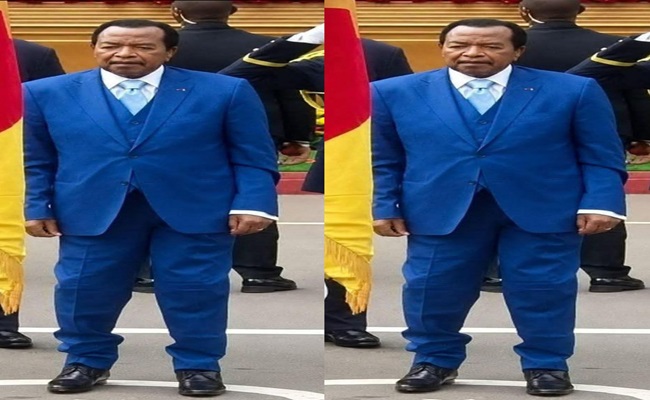
President Biya’s Francophone dominated Beti Ewondo government has been rocked by the Ngarbuh massacre and French President Macron’s acknowledgement that intolerable rights violations were taking place in Cameroon. Cameroon Intelligence Report has gathered that the numerous waves of wrong decisions and crimes committed by Cameroon government army soldiers in Southern Cameroons have prompted the Elysée Palace to seek regime change in Yaoundé as the 87 year old President Biya scrambles to repair his image, tainted by a string of economic and political missteps.
A string of high profile arrests including current minister of defense, Joseph Beti Assomo is expected soonest as Biya’s continued stay in power is now being undermined by claims from the international community that his leadership style is aloof and autocratic.
A number of ministers have been prevented from travelling out of the country and those from the Far North region are reportedly planning to exit Biya’s all-stripes cabinet. A well-placed source in Etoudi who spoke to our Yaoundé City reporter made a mockery of the situation by observing that “Every cabinet minister is now a government spokesman.”
Yaoundé confirmed that Biya recently ordered an investigation into the Ngarbuh killings. However, Cameroon Intelligence Report understands President Macron’s office sent an emailed statement asking the dictator to step down without naming Biya’s possible successor.
Millions of Cameroonians are unemployed, and many major corporations are not really doing well. The country is dealing with many crises and the impact of these crises is hitting the population like a ton of bricks. The French can no longer continue playing spectator to an insidious genocide that is playing out in Southern Cameroons.
Unemployment, crime, dishonesty, corruption and mismanagement seem to have taken up residence in Cameroon because of a regime that has overstayed its welcome. President Macron has turned a new page following his conversation with the Cameroonian activist in France. Another one will be written soon and very soon.
By Soter Tarh Agbaw-Ebai