
6, June 2019
Interim Government of the Federal Republic of Amabazonia Press Briefing 0
Item 1: Atrocities in Wum, Menchum County:
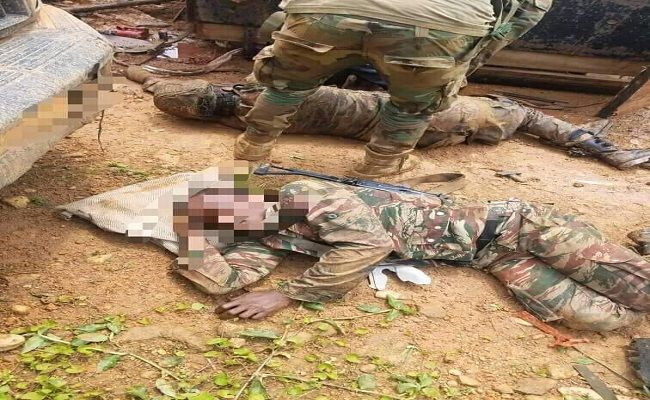
On Monday the 3rd of June 2019, we were stunt by a video on social media. It clearly showed the Cameroon military coordinating and inciting an armed gang of young men in Wum, Menchum County. These armed men purporting to represent the Bororo community, attacked their neighbours, the local Aghem people. They claimed these were revenge for previous attacks on their community in Naikom village by our Restoration Forces.
Eyewitnesses also report of soldiers from the Cameroon military base in Wum providing backup for the revenge attacks.
First of all, I want to extend our heartfelt condolences to the families of the victims of the Naikom village shooting and the Wum attacks. We must state that Cameroon soldiers who were on video fomenting thisattacks, and whom went on videotape the victims of the attack, were hailed by their Governor, Adolphe Lele Lafrique. We strongly condemn his actions!
This is clearly an attempt by the French neocolonial regime in Cameroun to kindle intercommunal violence in our communities. This is an effort to change the narrative of a war of extermination being waged against Ambazonians for matching on the streets with peace plants to demand their fundamental rights.
We saw this kind of escalation of provocation by the French neocolonial regime in Ivory Coast in 2011. In that country, French neocolonial pro-Ouattara forces went out of their way in Duekoue to make parents watch them chop off their children’s heads, in a desperate effort to trigger intercommunal violence. It worked in Ivory Coast but we must make sure it doesn’t work in Ambazonia.
Our mainly Muslim Borroro Brothers and Sisters have lived together in harmony with our predominantly Christian Aghem people for hundreds of years. These communities have intermarried and share several cultural values and practices.
As your Interim Government, we call for maximum restraint and vigilance from all in the affected communities.
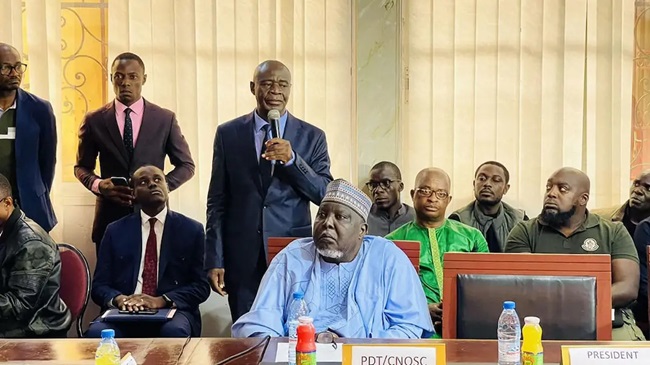
We have reached out to Muslim and Christian leaders in Wum. This is their message for all of us especially our fellow compatriots in and around Wum – ‘Ambazonia is a country for all faiths living peacefully one with the other’.
We wish a blessed Eid to all Muslims and pray Allah accepts the Ramadan worship.
Item 2: Updates on SONARA Incident and Health Risk
We wish to express our gratitude to the Ambazonia Comrade in the ranks of the occupation regime who quickly publish on social media the preliminary measures from the smoke coming from the refinery after the fire, saving our people from the hazards of exposure.
We have confirmed the human and environmental risk, and restate the recommendations of the preliminary measures as advised:
• our children in and around Victoria should stop bathing under the rain. • we should stop harvesting and drinking rainwater in the near future. •we should avoid drinking any surface water like wells and streams for now. •those living really close to the refinery should try to use facemask
The crude oil that is burning now is said to contain Hydrogen Sulphide, Benzene, Phenols, Nitrates , Sulphates and Carbonates which burns to oxides (NOx, SOx and COx ). The oxides dissolves in rain to form Nitrous and Notric acid, Sulphurous and Sulphuric acid, and Carbonic acids.
The resulting acid rain as its known, is very caustic and corrosive. It will affect human bodies if bathed with it and can cause permanent lung damage if breath in. The probability of wounds is highly likely. If consumed it will reduce the pH of our body since it is acidic. Please advise and educate your neighbors.
As the situation develops, your Interim Government will do all it can to keep you and your family updated with critical information.
Item 3: Response Regarding UN Security Council Briefing
Much to our consternation, yesterday 4 June, 2019, at the UN Security Council Briefing, the former prime minister of the French neo-colonial regime of Lansana Conté in Guinea and current Special Representative and Head of the UN Regional Office for Central Africa (UNOCA) François Fall, continued in his shameful tradition of cover ups and championing of French neo-colonial policies in Central Africa, particularly the Cameroon regime.
An open letter from leading Human Rights Organizations called on “the Security Council to formally add Cameroon to its agenda as a regular stand-alone item,” following the ever growing ”…violence, especially abuse by [Cameroon]state forces…”, and for “[t]he Cameroon government [to] allow unhindered access to international and national human rights organizations”. We want to express our full support for the demands in this letter.
Human Rights and democracy are so unimportant to Mr. Falls he did not used both words in his speech to the council. Instead he droned ceaselessly about stability.
To the Potemkin institutions and total lack of commitment to solving the Ambazonia-Cameroon conflict described by the US Assistant Secretary of State for African Affairs to congress a few days ago, Mr. Falls said He “took note of efforts by the Cameroon government to find a lasting solution to the Crisis…” and asked the UN to fund the Potemkin institutions.
Mr. Falls claimed the situation has improved. His evidence being “a number of high profile visits and public statements .” Except this public statements are by Dion Ngute the new prime minister. In previous security council briefings Mr. Falls had indicated that similar pointless statements by the former prime minister Yang were signs of progress.
Fall goes on to repeat the pointless talking point of the Cameroon regime, that the world should allow the regime to find a solution by itself even as he ignored UNOCHA’s April 2019 report of more than 4.3 Million people affected by the conflict.
We want to add our voice to that of sixteen major human rights organisations and civil society organizations who signed the 7 February, 2019, petition, calling on the UN to Mandate an International Independent Fact Finding Mission to stop the killings, establish the facts on the ground and begin the process of ending the conflict.
Item 4: We Unequivocally Stand with our Political Prisoners in their fight against Isolation by the Cameroon Regime
I want to end this briefing with an emphasis on our firm stand with our Ambazonia political prisoners in their resistance to isolation efforts by the Cameroon regime via efforts to transfer individual prisoners to unknown destinations. Like the failed efforts to Transfer 62 years old Pa Ngwa Ngaling Joseph to Mbalmayo.
Sign:
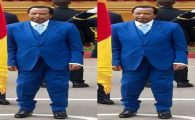
Vice President
Dabney Yerima















6, June 2019
Cameroon tops list of world’s most displacement crises 0
The world’s 10 most displacement crises—rendering millions of people homeless– have continued to worsen due either to political neglect, a shortage of funds or lack of media attention, according to a new report released by the Norwegian Refugee Council (NRC).
NRC Secretary-General Jan Egeland says humanitarian assistance should be given based on needs– and needs alone. However, every day millions of displaced people are neglected because they have been struck by the wrong crisis and the dollars have dried up.
The countries faced with displacement crises last year were largely in Africa, with Cameroon heading the list, followed by the Democratic Republic of Congo (DRC), the Central African Republic, Burundi, Mali, Libya and Ethiopia.
The remaining three, according to the NRC, were Ukraine, Venezuela and Palestine.
“This depressing list must serve as a wake-up call for all of us. Only by drawing attention to these crises, learning about them and placing them high on the international agenda, can we achieve much needed change,” said Egeland, a former UN Under-Secretary-General for Humanitarian Affairs and Emergency Relief Coordinator
Dr Martin Scott, from the University of East Anglia, UK, and lead author of a recent report into The State of Humanitarian Journalism, told IPS although reports like this are an important first step in raising the profile of these crises – but it is not enough to simply lament the lack of coverage.
“What’s needed is a clear-headed assessment of why these displacement crises receive so little coverage. Partly, it’s a reflection of the broken business models of most international journalism – which means news outlets often struggle to provide consistent coverage of real public value,” he argued.
But it is also a reflection of the political priorities of powerful countries – which news outlets often reflect, Dr Scott added.
These reports, he pointed out, also draw attention to what’s not working, in general, within international journalism.
“But there are news outlets which do, regularly, report on crises like these – such as Devex, News Deeply, The New Humanitarian and Inter Press Service (IPS),” he noted.
“It is important to highlight their work – so that audiences know there is coverage of these crises out there,” he declared.
Singling out Cameroon, Egeland said the international community is asleep at the wheel when it comes to the crisis in Cameroon. Brutal killings, burned-down villages and massive displacement have been met with deafening silence.
He said conflict has so far uprooted half a million people in South-West and North-West Cameroon. Hundreds of villages have been set ablaze. Hospitals have been attacked. Health workers fear being abducted or killed.
Over 780,000 children have seen their schools close and thousands of people, currently hiding in the bushes, have received no humanitarian relief. Still there has been no major mediation efforts, no large relief programmes, minimal media interest and too little pressure on parties to stop attacking civilians.
“This culture of paralysis by the international community has to end. Every day the conflict is allowed to continue, bitterness is building and the region edges closer towards full-blown war,” said Egeland, who recently visited the central African country.
The Norwegian Refugee Council is calling for increased attention to the crises on the list to prevent the suffering of millions of vulnerable people.
“This depressing list must serve as a wake-up call for all of us. Only by drawing attention to these crises, learning about them and placing them high on the international agenda, can we achieve much needed change,” Egeland said.
Asked if the United Nations and the international community were lagging behind in their support, NRC’s Tiril Skarstein told IPS: “We believe that the international community is not doing enough to solve these crises. The lack of political will to find solutions to these crises is often a result of lack of geopolitical interests in the area.”
However, he pointed out, there are also some countries on the list where several world powers have competing interests, leading to a deadlock and a lack of political solutions for people on the ground,–like for example in Palestine and Ukraine.
Asked if the shortfall in funding is due to neglect on the part of Western donors or domestic economic and financial constraints within donor nations, he said humanitarian assistance should be given based on needs alone.
Still, it is easier to attract humanitarian funding to some crises than others. Often, “ we see a close link between the amount of media attention a crisis receives and the amount of humanitarian funding. Some of the crises at the neglected crises list were less than 40 percent funded last year.”
But there is also a general funding shortfall, he conceded.
Last year, only about 60 percent of the total humanitarian appeals by UN and partner organizations were funded.
“This means that we need all donors to increase their humanitarian support so that we can meet the actual humanitarian needs, and we also need new donors, including several emerging economies, to step up.”
Asked why these crises were affecting mostly African nations, compared to Asian and Latin American nations, Skarstein told IPS “unfortunately, the crises on the African continent seldom make media headlines or reach foreign policy agendas before it is too late.”
The lack of funding and political attention has devastating consequences for the civilians who receive neither protection against attacks, nor the necessary relief when they have had to flee their homes in search of safety, he argued.
Most of those who flee head towards neighboring countries or are displaced within their own country. “However, the fact that most of these people do not turn up at our doorsteps here in Europe, for example, does not remove our responsibility to act,” he noted.
According to NRC, the crisis in Cameroon has its root in the country’s troubled colonial history. After World War One, the former German colony was split between a French and British mandate.
The country has now both English and French as official languages, but people in the English-speaking parts have been feeling increasingly marginalized, NRC said.
And in 2016, civilians took to the streets, and a heavy crackdown by security forces led to widespread violence and the formation of armed opposition groups.
Culled from Inter Press Service News