7, January 2021
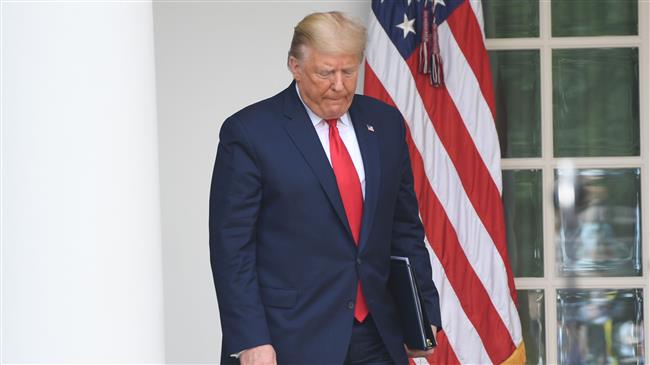
A President Unhappy: 4 people died during the siege, more than 50 people were arrested 0
President Donald Trump said there would be an “orderly transition on January 20” after Congress concluded the electoral vote count early Thursday, certifying President-elect Joe Biden’s victory, hours after he appeared to excuse the violent occupation of the US Capitol by his supporters. A woman was fatally shot, windows were bashed and the mob forced shaken lawmakers and aides to flee the building, shielded by Capitol Police.
Lawmakers formally certified Biden as the winner of the presidential election Thursday morning, clearing the way for his inauguration on January 20. Republican Vice President Mike Pence certified the Electoral College count of 306 electors in favour of Biden against 232 in favour of Trump.
Trump promised Thursday there would be an “orderly transition on January 20” after Congress concluded the electoral vote count. On Wednesday he told the crowd at a so-called Save America rally that he would “never concede” the 2020 election. He urged supporters to gather at the Capitol building to support the Republican lawmakers who had vowed to challenge Biden’s win.
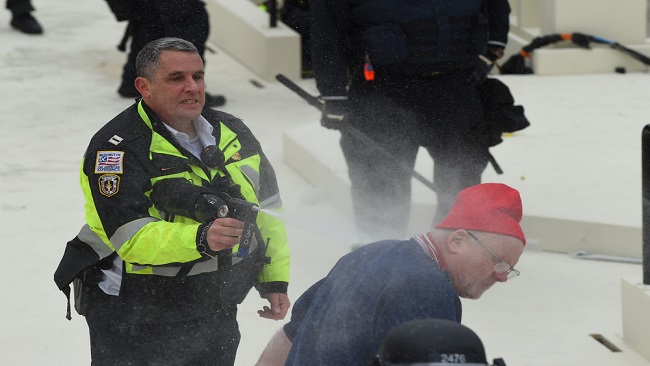
Trump supporters fought with Capitol police and then forced their way into the building, breaking windows and scaling the outside walls. Several officers were wounded and the National Guards of several nearby US states were mobilised to provide support.
DC police said four people died during the siege – one woman was shot by police and died in hospital while three others had medical emergencies. More than 50 people were arrested.
As Trump supporters besieged the Capitol, President-elect Joe Biden called on Trump to go on national TV to denounce the “insurrection”, calling the scenes “disgraceful”.
Trump eventually gave a statement via a recorded video, repeating his false claim that the election was stolen but asking supporters to “stay peaceful”. Several hours later he called for the crowd to “go home” before adding: “We love you. You’re very special.”
Facebook, Twitter and YouTube removed the video from their platforms over Trump’s false election claim. Twitter said his account would be locked for the next 12 hours and threatened him with “permanent suspension”. Facebook announced it would block him from posting for 24 hours.
Other riots instigated by Trump supporters were staged outside legislatures in states including Georgia, New Mexico, Ohio and California, leading some to be evacuated. Some scuffles broke out but most demonstrations were small and led to only a few arrests.
Culled from France 24
















8, January 2021
African Nations Championship: Zambia, Guinea, Namibia and Tanzania ‘not safe’ in Southern Cameroons 0
The Southern Cameroons Interim Government has warned CAF that the city of Limbe is a war zone and unfit for African Nations Championship matches.
These matches include pool D games involving Namibia, Zambia, Guinea and Tanzania. The tournament is due to run from 16 January to 7 February across three cities. Other tournament venues are in Yaoundé and Japoma Douala.
“With regards to the forthcoming Africa Cup of Nations, Ambazonia Intelligence Service (AIS) has briefed the Interim Government on sophisticated new strategies that would be employed to defend our national interest. We have informed French Cameroun and nations participating in this tournament that any attempt to bring its activities to Ambazonia would be considered a deliberate violation of our sovereignty, and our response will be prompt and definite” the Vice President of the Southern Cameroons Interim Government Dabney Yerima cautioned.
Many football fans around the continent have been expecting a reaction from the government in Yaounde. Cameroon Concord News understands that it is still unclear to the tournament organizers if the Ambazonia threat is authentic.
Other Southern Cameroon front line movements have unanimously backed the Interim Government and have strongly advised the African football governing body to immediately terminate any plan to play any game in Victoria (Limbe) or to host any team anywhere in the territory of Ambazonia for safety and security reasons.
The people of British Southern Cameroons have often claimed they are being unfairly treated by Paul Biya’s French-centred government. Paul Biya has held the reins in Cameroon for nearly four decades (and was prime minister before that).
This resulted in militant secessionist groups symbolically proclaiming the independence of a new nation — including the two Anglophone regions — called the Federal Republic of Ambazonia, which lies between Nigeria to the west and French Cameroon to the east.
The Interim President of Africa’s newest nation, Sisiku Julius Ayuk Tabe, and other members of his cabinet are in French Cameroonian prisons where they have been sentenced for life.
It is a conflict which is scarred by violence and severe human rights violations from both security forces and armed groups, Amnesty International reported.
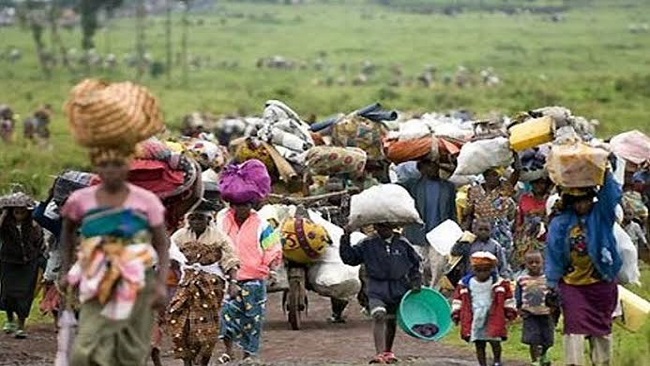
Over 6 000 people have died and close to half a million have been displaced. Multiple separatists groups have formed in the southwest and northwest of the country.
At least five people died and five more were wounded on Wednesday after a roadside bomb exploded in Momo County in the Northern Zone of Southern Cameroons.
By Isong Asu in London with files from Namibian.com