
10, March 2026
Manyu Solidarity Group: understanding its modus operandi 0
Ma Druscillia Achuo, a respected and committed member of the Manyu community in London, once delivered a line that has since taken on near-philosophical status among Manyu people in the UK. She said, “When you get die, and you know say £10,000 di come for support you, the cry di different”. Translated loosely, it means, the tears will fall during grief, but at least the panic lessens. Her words may sound humorous, but they capture a truth many Manyu people in the diaspora understand all too well. When someone dies in the West, grief rarely travels alone. It arrives with invoices from funeral directors and in some cases outstanding bills and unpaid debts. It is not an exaggeration to say, in many circumstances, dead of a loved one has even become thornier and embarrassing.
For many in Europe, the loss of a loved one sets off a chain reaction of difficult questions. Do we hold the funeral in Europe, or do we repatriate the body to Cameroon? If the answer is repatriation, the next question arrives immediately, how do we pay for it? And how do we support the family back home with expenses? Sorrow, in other words, quickly transforms into worry, stress and a long list of problems that seem to arrive precisely when people are least equipped to deal with them.
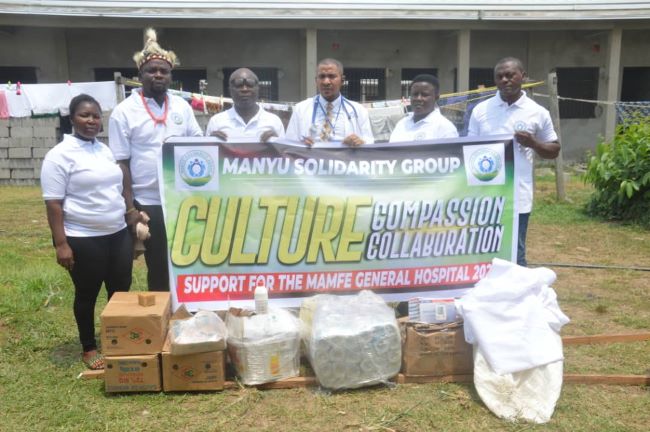
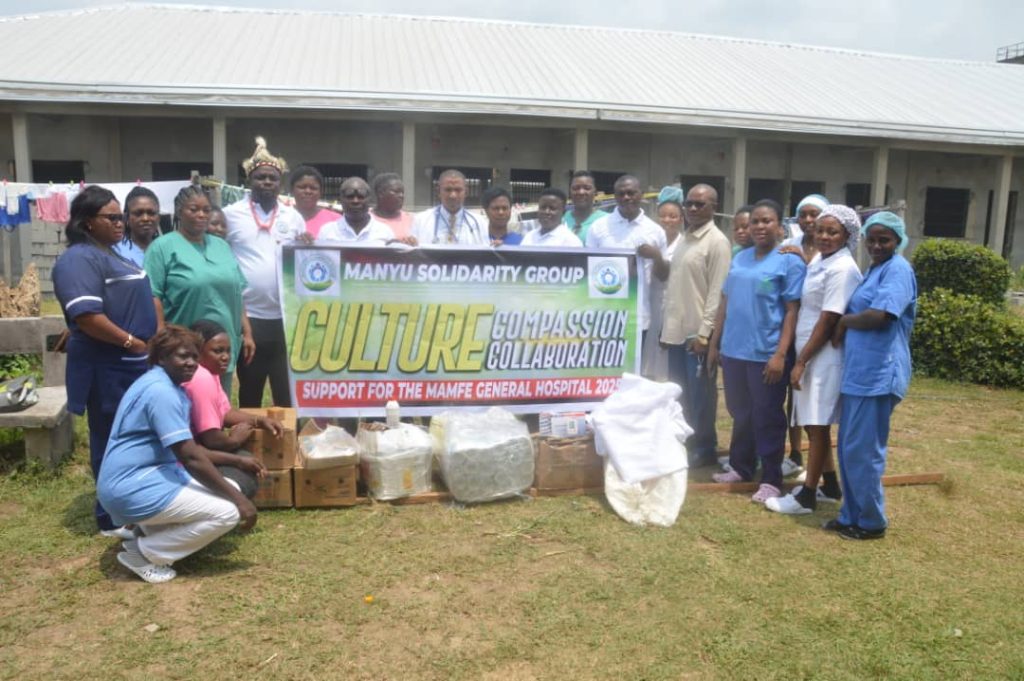
This is where organizations like the Manyu Solidarity Group quietly step in. Manyu Solidarity Group, founded in 2021 by Manyus and friends of Manyu in Europe, offers practical support before the funeral of a fallen member. While many bereavement associations prefer to present their financial package during the wake or funeral itself, often with ceremonial speeches, Manyu Solidarity Group has adopted a refreshingly simple approach. They send the money early.
Manyu Solidarity Group delivers £10,000 to the bereaved member’s nominated next-of-kin at least two weeks before the funeral with no dramatic presentations. Funeral homes cost and the cost of the wake require payment before service. Therefore, offering financial support during the wake is like arriving at Douala Airport with a plane ticket after the Camair-co flight has already departed. It may be well intentioned, but its practical value is somewhat limited.
Manyu Solidarity Group releases the funds early so that families can organize dignified funerals without scrambling to raise money while still processing their loss. So far, this approach has already made a tangible difference. In less than three years, the group has provided £30,000 in bereavement support to three different families. That may not make headlines in the world of billion-pound transactions, but within the Manyu diaspora community, it is significant.
Grief is already overwhelming, so Manyu Solidarity’s philosophy with its Manyu Bereavement Support Fund (MABSOF) is simple; support should actually support. The organization is the classic community safety net, but perhaps the most notable aspect of the system is its refusal to turn grief into a public spectacle. The Board of Manyu Solidarity understands that loss is not just emotional; it can also be financially devastating. Manyu Solidarity Group is a community in its most practical form and perhaps that is why Ma Druscillia Achuo’s remark continues to resonate. Her observation may have been delivered with her typical smile, but its wisdom is difficult to dispute. Knowing that help is coming does not erase grief, it does not bring the deceased back, but it does remove one layer of anxiety at a moment when people are already carrying more than enough.
At its core, the principle guiding Manyu Solidarity Group is beautifully straightforward. Families need help in organizing wakes and funerals, give them the support before, not during the wake or burial because compassion is not measured by how publicly it is displayed, it is measured by timing, dignity and quiet common sense.
To this I put my name
Soter Tarh Agbaw-Ebai

















10, March 2026
Francis Ngannou returns to MMA against Philipe Lins on Netflix 0
MMA superstar Francis “The Predator” Ngannou is set to make a highly anticipated return to the cage on May 16, 2026, in Los Angeles.
According to a press release from Most Valuable Promotions on March 9, Ngannou will face Brazilian heavyweight Philipe “Monstro” Lins in a headline bout that will be broadcast globally on Netflix. This event, titled “Rousey vs. Carano, Ngannou vs. Lins,” is historic as it marks the first time a live mixed martial arts event will be streamed on the platform.
Ngannou, a former UFC heavyweight champion, remains one of the most feared strikers in combat sports history, renowned for a career defined by devastating knockouts, including seven finishes within the first two minutes of the opening round. His opponent, Philipe Lins, a 2018 Professional Fighters League heavyweight tournament winner, brings his own reputation as a formidable finisher to the cage. Promoters expect a high-stakes clash between the two, noting that they hold a combined total of 22 knockout victories.
In his statement, Ngannou addressed his time away from the sport, describing his silence as the sound of a predator approaching and framing his return not merely as a comeback, but as a reconquest of the heavyweight division. The fight card will also feature a landmark women’s featherweight bout between MMA pioneers Ronda Rousey and Gina Carano, further elevating the profile of the evening.
This announcement follows closely on the heels of the formal conclusion of Ngannou’s partnership with the Professional Fighters League (PFL) on March 6, 2026. After joining the PFL in May 2023 to help drive the organization’s international expansion, Ngannou competed just once under their banner, securing a first-round victory over Renan Ferreira in October 2024. During his tenure with the league, Ngannou also pursued high-profile crossover boxing matches against heavyweight titans Tyson Fury and Anthony Joshua.
Culled from APA News by Queen Besumbu Agbaw