16, March 2026
Ambazonia commander killed in Bafut 0
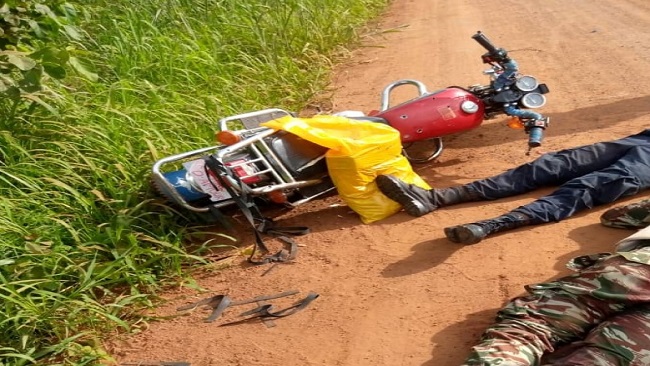
Two separatist fighters, including a commander, were killed when Cameroonian government forces struck their hideout in the country’s war-torn Anglophone Northwest region, local and security sources said on Sunday.
The operation, as confirmed by a military official in the region who requested not to be named, was launched late Saturday in Bafut, a locality in the region.
A key separatist commander who called himself “General Jakaban” was killed in the operation.
“The separatist terrorist general was a coward who attacked civilians and kidnapped them for ransom. He has terrorized people in Bafut for years, killing civilians and soldiers,” the official said.
Cameroon’s army has deployed additional troops to the region, which is expected to welcome the pontiff of the Roman Catholic Church, Leo XIV, next month.
Fighting between government forces and separatist fighters has persisted in Cameroon’s two English-speaking Northwest and Southwest regions since 2017, when separatists attempted to establish an independent nation in these regions.
Source: Xinhuanet















16, March 2026
Bishop Nkuo says government must protect young Cameroonians from traffickers 0
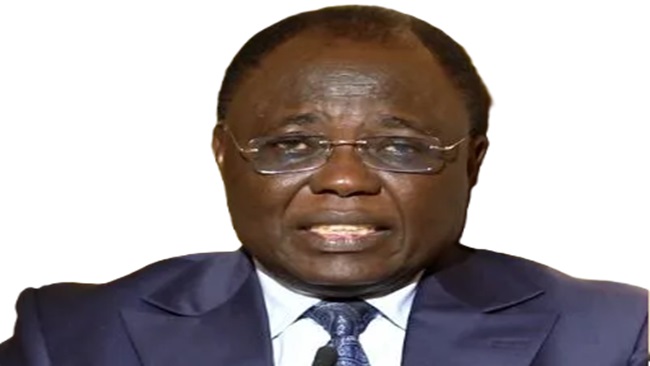
A bishop in Cameroon’s war-torn North West region petitioned the government to act on the alarming number of Cameroonians trapped in human trafficking camps in Nigeria.
Bishop George Nkuo of Kumbo said the Justice and Peace Commission of his diocese has confirmed that over 3,000 Cameroonians are trapped in nine traffickers’ camps in Nigeria.
Speaking to The Tablet shortly after handing over a confidential petition to authorities and consular services in Yaoundé, he said further indicators suggest there could be as many as 40 camps affecting over 7,000 Cameroonians.
Like many parts of Cameroon’s English-speaking North West and South West regions, the Diocese of Kumbo has become accustomed to the phenomenon of human trafficking, but the separatist war afflicting both regions has caused an alarming escalation.
“The most critical factor is the closure of government schools. In Bui Division [the administrative area that covers parts of the diocese] alone, 42,000 children were attending government schools. Now, all those schools are closed. These children have nowhere to go – they are left idle and helpless,” Bishop Nkuo said.
“Traffickers are taking direct advantage of this vulnerability. With children out of school and families struggling, people are luring them away with false promises. They tell the children they will provide them with jobs, an education or a ‘better life’ in a ‘greener pasture’. For a child with no school and no prospects, these offers are dangerously appealing. The situation is spiraling out of control.”
He continued: “Our youth should be in classrooms and not in camps. They should be on farms and in industries, not in bondage. They should be in seminaries, workshops and families, not on exploitation expeditions.”
“The promises made to them are entirely false,” said Isidore Njodzeven, deputy head of the diocese’s Justice and Peace Commission.
“They cannot return home because their documents are taken away upon arrival. They can only make calls at designated times, while those monitoring them create a false sense of normalcy.”
Bishop Nkuo said he has written to the governments of Cameroon and Nigeria, drawing their attention to the trafficking crisis: “We believe they are committed to resolving it.”
He said a more sustainable solution depended not just on bringing an end to the separatist crisis, but also creating the conditions for young people to thrive in Cameroon.
Source: The Tablet