14, August 2026
Food insecurity threatens 2.6 million Cameroonians outside conflict zones 0
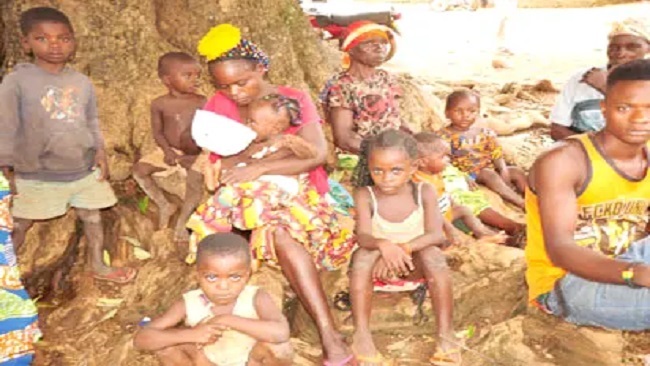
Food insecurity in Cameroon now extends well beyond regions affected by armed conflict, with about 2.6 million people in relatively stable areas exposed to acute food insecurity risks, according to a report published by the National Institute of Statistics (INS) on August 7, 2026.
Of the roughly 4.5 million people identified in at-risk areas between January and March, 1.8 million lived in regions directly affected by conflict, particularly the Far North, Northwest and Southwest. The remaining 2.6 million lived in areas relatively spared from those security crises.
The figures show that food vulnerability cannot be explained solely by population displacement, insecurity or disruptions to economic activity caused by conflict. It also affects areas where markets function better and agricultural production is considered more stable. According to the INS, the affected populations account for 17% and 13%, respectively, of the populations in the two categories of areas.
Less Severe but Persistent Vulnerability
Conditions remain less severe in areas unaffected by conflict. About one in five households there has inadequate food consumption. The INS attributes this relative resilience to better market access, more stable agricultural production and greater diversification of food sources.
Trends over the three-month period also point to relative stability. In eight of Cameroon’s 10 regions, the share of households with inadequate food consumption showed no significant change. Only the North and Northwest recorded a slight increase in the number of affected households.
Stability, however, does not mean improvement. The INS warned that the relatively stable national picture masks localized deterioration that could emerge in areas under greater pressure, particularly in the North.
For areas unaffected by conflict, the institute expects current conditions to persist, with no significant improvement but no major deterioration either. This raises the risk that a substantial share of the population could remain trapped in persistent food vulnerability even outside areas affected by security crises.
5.4 Million People at Risk on Average in the First Quarter
At the national level, indicators improved over the course of the quarter. The proportion of the population considered at risk fell from 22% in January to 16% in February, according to the INS. Across the first quarter of 2026, however, the rate averaged 18%, equivalent to about 5.4 million people. The figure points to significant vulnerability despite temporary improvements in some indicators.
That estimate must be distinguished from the 4.5 million people who lived in areas identified as exposed to acute food insecurity risks between January and March. The two figures refer to different statistical indicators and populations and should not be treated as equivalent.
The INS findings broaden the issue beyond the humanitarian emergency in Cameroon’s conflict-affected regions. In relatively stable areas, persistent food insecurity also raises questions about household incomes, families’ ability to absorb higher prices and the effectiveness of food production and distribution systems.
The relative stability recorded in the first quarter therefore does not eliminate the threat. Instead, it indicates that a significant share of the population remains close to the vulnerability threshold and could fall into greater food insecurity after a shock to prices, harvests or household incomes.
Source: Business in Cameroon































14, August 2026
Battle For Etoudi: Tchiroma announces ‘imminent’ return 0
Issa Tchiroma Bakary, the self-proclaimed “elected president” of Cameroon, in exile in The Gambia since November 2025, say his return to the country is imminent.
Tchiroma lost the October 12, 2025 presidential election to veteran leader Paul Biya.
The opposition leader said his return to Cameroon is near after initiating legal proceedings in France and Switzerland against alleged perpetrators of the post-election repression.
He did not specify a date for his return.
In its statement, his team indicated that several people had suggested dates for his return and that some had even expressed “malicious intentions.” After consultations, the opposition leader stated that he wants to finalise the necessary arrangements for a return that he hopes will be “orderly.”
He called on Cameroonians residing in the country and in the diaspora to “remain mobilised and ready” to welcome the man he continues to present as “the people’s choice.”
Issa Tchiroma Bakary maintains that the institutional situation in Cameroon since October 12, 2025, strengthens his resolve to return “as soon as possible” to take over the leadership of the country.
The statement, however, does not give a precise return date, merely mentioning ongoing preparations.
The announcement comes a few weeks after the filing of two criminal complaints with the Swiss courts, based on universal jurisdiction, targeting, according to him, the alleged perpetrators of violence and acts of repression committed after the contested presidential election of October 12, 2025.
In a statement, Issa Tchiroma Bakary asserts that these proceedings concern “massacres and other acts of repression” that he attributes to the Yaoundé government against Cameroonians contesting the election results.
The former minister indicated that this action in Switzerland was a continuation of complaints filed on June 12, 2026, with the French courts, also based on universal jurisdiction.
He added that similar procedures were being considered in other countries that are party to international conventions on combating torture and enforced disappearances.
According to him, the choice of Switzerland is particularly significant because of President Paul Biya’s regular visits to the country.
The opposition leader presented these steps as a way to combat impunity for those allegedly responsible for post-election violence.
Source: Apanews