Featured
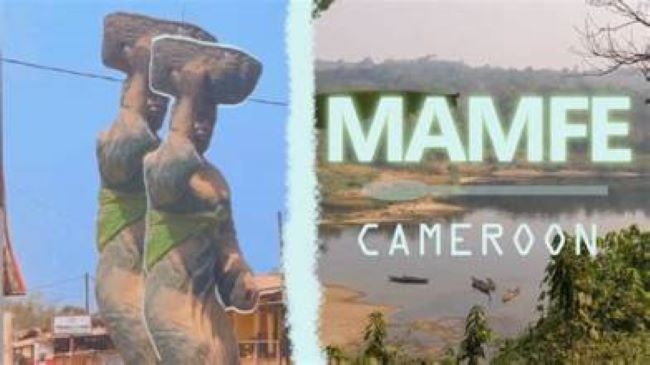 Mamfe and the anger of the ancestors: have we forgotten the dead who built our tomorrow?
 The role of the diaspora in Cameroon’s development efforts
 44 years of Biya: a nation held hostage by unanswered questions
 Parliamentary and Municipal Elections: Cameroon needs a new president not another election cycle
 Federal Republic of Ambazonia: APLA demands release of Sisiku Ayuk Tabe
Most Commented Posts
 4 Anglophone detainees killed in Yaounde
18 comments Chantal Biya says she will return to Cameroon if General Ivo Yenwo, Martin Belinga Eboutou and Ferdinand Ngoh Ngoh are sacked
13 comments The Anglophone Problem – When Facts don’t Lie
12 comments Anglophone Nationalism: Barrister Eyambe says “hidden plans are at work”
12 comments Largest wave of arrest by BIR in Bamenda
10 comments
Featured
-

Mamfe and the anger of the ancestors: have we forgotten the dead who built our tomorrow?
-

French billionaire Pierre Castel nears sale of 82% stake in Cameroon sugar firm
-

Tehran will strike US bases in Europe if used to attack Iran
-

Yaoundé: Minister Hamadou Moustapha dies, aged 81
-

Cameroon faces worse power outages in 2027
-

US: Democrat Scott Colom is Mississippi first Black senator
-

CPDM Crime Syndicate: Supreme Court transfers MTN–Danpullo cases from Douala to South Region
14, November 2026
Mamfe and the anger of the ancestors: have we forgotten the dead who built our tomorrow? 0
by soter • Editorial, Headline News, Society
There are certain decisions a community takes in the name of development that may bring immediate economic benefits but leave behind wounds that generations struggle to understand. Some decisions may transform the physical landscape of a town while quietly destroying something far more important: its historical identity, cultural heritage and spiritual connection with its past. The story of the historic cemetery in Banya Quarters opposite Cetic Mamfe, is one such painful chapter in the history of Manyu.
Mamfe, the proud chief town of Manyu Division, has a rich history. It is a land of tradition, culture, courage and ancestral heritage. Its people have always understood that a community is not built only by those who are alive. It is also built upon the sacrifices, struggles and contributions of those who came before us.
Our ancestors are not merely names in family genealogies. They are the foundation upon which our present existence rests. Yet, what happened to the historic cemetery in Banya Quarters raises profound questions about our collective respect for the dead.
The Mamfe Rural Council under the leadership of the then Mayor Ashu, decided to convert the historic cemetery into an industrial zone. Mechanics and garage operators were directed to relocate to another site, which became the official Mamfe cemetery. In the process, graves were destroyed, ancestral resting places were disturbed and workshops and other structures emerged where human remains had once been laid to rest. And life went on.
Frankly speaking, there was celebration. There was talk of development. There was excitement about a new industrial location and the economic opportunities it could create. But in all that excitement, a Manyu citizen the late Maurice Pius Agbaw-Ebai did pause and asked the councilors what had happened to the dignity of the dead? In a conversation held with Mayor Ashu, Custom Chu and Custom Etchu, Maurice Agbaw-Ebai asked whether the families of those buried there had been adequately consulted and if anybody deep within the Mamfe Rural Council had considered the cultural and spiritual implications of transforming a burial ground into a commercial and industrial space? Maurice Pius Agbaw-Ebai was told politely to go and reside in his native Kendem village. No one thought about the descendants of those whose final resting places had been erased from the physical landscape of Mamfe.
Development is very important. Employment is very important. Economic advancement is very important. But development that disregards the dignity of human remains and the cultural heritage of a people deserves serious reconsideration. A cemetery is not just a piece of land. It is a sacred historical archive.
For those who do not know, every grave tells a story. Every tombstone represents a family. Every burial ground carries memories of people who lived, loved, worked, raised families and contributed to the development of their community. When a community destroys such a place without a transparent, respectful and culturally sensitive process, it risks severing an important link between the living and the dead.
Today, some people in Mamfe including Minister Victor Mengot are asking difficult questions about the changing fortunes of Manyu children. Why does it sometimes appear that our children are not achieving the same national and international recognition that previous generations enjoyed? Why are we concerned about the apparent decline in certain areas of academic excellence, professional accomplishment and public distinction? Why does a community with such a proud intellectual and cultural history sometimes appear disconnected from the achievements that once gave it national prominence?
These are legitimate questions worthy of investigation. There is however a spiritual dimension that many traditional-minded people may wish to consider. Could the manner in which the resting places of our ancestors were treated have left a wound in the collective spiritual conscience of the community?
In Manyu tradition, as in many African cultures, the relationship between the living and the departed is not taken lightly. Ancestors are accorded respect. Their resting places are protected. Their memories are preserved. To disturb the dead in Manyu Division without appropriate cultural observance is, in the eyes of many Manyus an act with profound spiritual implications.
Some may dismiss these concerns as superstition. Others may consider them an essential part of African identity and traditional wisdom. We must nevertheless be careful not to declare that the academic or professional fortunes of Manyu children are suffering because the dead are angry. There is no established evidence proving such a connection. But the question of whether Mamfe has fulfilled its cultural and moral obligations to those whose graves were destroyed remains a serious one.
It is time for the Mamfe Rural Council, traditional authorities, religious leaders, family heads and the wider Manyu community to confront this matter openly. Manyus cannot change what happened, but they can decide what happens next.
We of the Concord Group strongly believe that Mamfe needs a deliberate process of historical and spiritual reconciliation concerning the former Banya Quarters cemetery. Such a process should include a traditional consultation and appeasement ceremony, the erection of a permanent memorial monument at the entrance to the CRTV antenna area, or another historically appropriate location identified by the community in honour of all those who were buried in the former cemetery. The monument should carry a meaningful inscription acknowledging that this was once a resting place for generations of Mamfe people, the documentation of the cemetery’s history and of course an official acknowledgement by the council of the historical significance of the cemetery and explain the circumstances surrounding its conversion. Where appropriate, it should express regret and participate in the proposed memorial and reconciliation process.
One of the greatest tragedies that can befall a people is to become so preoccupied with modernisation that they lose respect for their history. Mamfe town can have beautiful buildings, busy garages, commercial establishments and modern infrastructure; yet suffer from a profound loss of cultural identity.
Manyus must never confuse economic activity with civilisation. The mechanics that relocated may have needed a place to work. Mamfe needed industrial development. But surely, there were ways to pursue those objectives without allowing the memory of an ancestral burial ground to disappear without an enduring memorial. The people buried in that cemetery were somebody’s parents, grandparents, brothers, sisters, uncles, aunties and children. They were part of the human story that made Mamfe what it is today. They deserve to be remembered. And the generations coming after us deserve to know where those who came before them were laid to rest.
This is not an editorial to reopen old political battles. It is not an attempt to condemn individuals indefinitely. It is an appeal to conscience. Let the present and future generations of Mamfe understand that progress must never be achieved at the expense of historical memory. Let the traditional authorities rise to this responsibility. Let the Mamfe Rural Council demonstrate leadership. Let the families whose ancestors were buried in Banya Quarters be heard. Let religious and traditional leaders work together to establish an appropriate process of reconciliation. And let a permanent monument stand at the entrance to the CRTV antenna area as a symbol of remembrance, dignity and respect.
Perhaps the greatest spiritual appeasement is not simply the performance of traditional rites. It is the willingness of the living to acknowledge that something sacred was lost and to take meaningful steps towards making amends. Mamfe must remember its dead before it can confidently teach its children how to honour their past.
In Anglophone Cameroon, we cannot establish that the departed are responsible for the challenges facing our children. But we can certainly insist that our children inherit a community that respects its history, protects its heritage and honours its ancestors. The dead cannot speak for themselves. That responsibility belongs to us. And if Mamfe has forgotten those who once rested in Banya Quarters, perhaps it is time for Mamfe to remember.
Let the dead in Mamfe be honored, let history be restored and let Mamfe reconcile with its past. The future of a people should never be built on the deliberate erasure of their past.
To this I put my name
Soter Tarh Agbaw-Ebai