
20, June 2018
Southern Cameroons Crisis Shut Down Schools 0
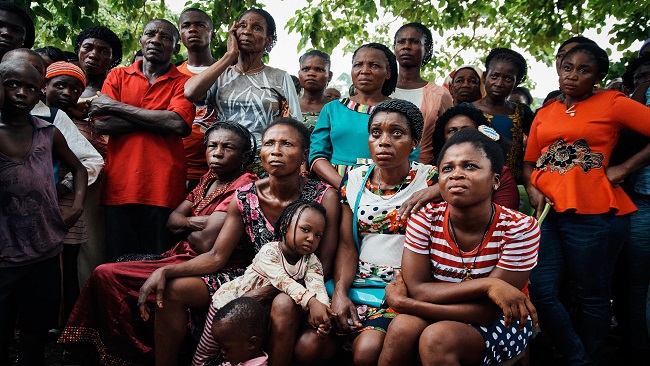
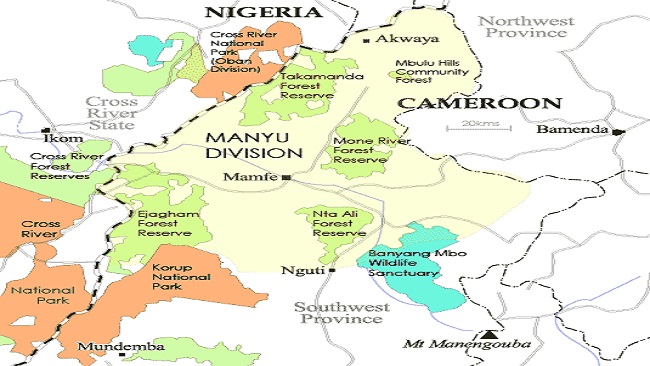
It is a bright Tuesday morning, with children hawking goods to drivers and passersby on the congested streets of Yaounde. The number of these sidewalk sellers is increasing with the ongoing conflict in Cameroon’s English-speaking northwest and southwest regions, where fighting between armed separatists and government troops has shut down schools and sent thousands of children fleeing to safer ground.
Among the sidewalk peddlers is 16-year-old Delphine Tabe. She says she has been a hawker for more than a year since she fled from her village in Lebialem, an administrative unit in the southwest.
“I am selling boiled groundnuts to have money and help my mother who is in the hospital. She was beaten by Cameroon gendarmes after a military man was killed in our village. My mother almost died. Our school was burned and students were beaten. Since that day in May 2017, we escaped to Yaounde and we do not have money to go to school.”
Delphine says her chances of pursuing her dream – becoming a teacher – are gradually slipping away as she has no one to sponsor her education. Instead, she has to look for money to help her sick mother.
In the kitchen at the house where Delphine lives in Yaounde, food is being prepared for 32 people. Emmanuel Nembo, a 52-year old government worker originally from Lebialem, says that a year ago, he had only five mouths to feed.

The number exploded as people from the southwest fled their villages and pleaded for him to feed and shelter them.
Emmanuel says he is praying for the crisis to stop because many have been coming and he can no longer offer help.
“We are stretching an olive hand of peace. Those in the bush should give a chance. Come back home, to their homes so that they could meet their mothers, brothers and sisters,” he says.
Many schools have been closed in the northwest and southwest areas since November 2016, when lawyers and teachers began a strike to stop what they see as the overbearing use of French.
Separatists took over the movement, and began pushing for the regions to become independent.
Since then, several dozen schools have been torched, and armed men have kidnapped or killed a number of teachers. Many students in the regions can no longer attend the few schools that are still open, for fear of the unknown.
The United Nations estimates that more than 100,000 people, a majority of them children of school age, have fled the violence in the English-speaking regions for safer locations. Tens of thousands have crossed over to Nigeria, and no one knows when any of them will ever return to school.
Source: VOA





















20, June 2018
Zambia: 10 killed in copper mine dump collapse 0
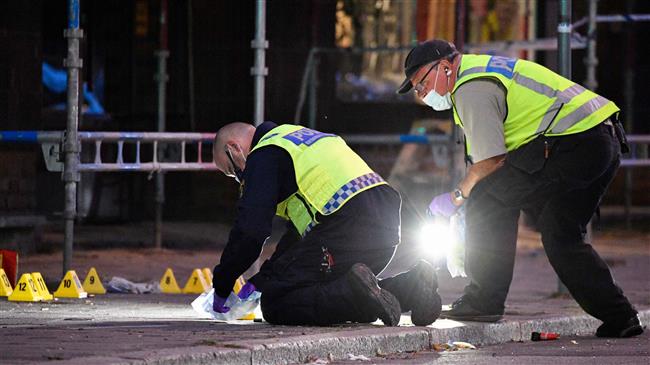
Ten people were killed and another 10 injured after a dumping site for copper mining waste collapsed in the town of Kitwe in Zambia’s Copperbelt province, police said on Wednesday.
“The incident happened this morning and at least 10 people have been confirmed dead,” Copperbelt police chief Charity Katanga said by phone from Kitwe, 400 km (248 miles) north of the capital Lusaka.
Zambia is Africa’s second largest copper producer and houses operations of many global mining companies including Vedanta, Barrick Gold Corp and Glencore.
Glencore’s Mopani Copper Mines (MCM) has been forced to halt production in recent years due to similar fatal incidents in the copper-rich area, which is also known for illegal mining around the dumpsites.
The latest incident happened at Black Mountain where artisanal miners have taken to re-mining the waste site for copper and other metals.
In February the government’s mining investment arm gave a 10 percent stake in the waste site to small-scale miners to empower surrounding communities riven by unemployment and poverty.
There remain, however, serious concerns about safety measures at the site which continues to suffer periodic collapses.
(Source: Reuters)