
6, August 2026
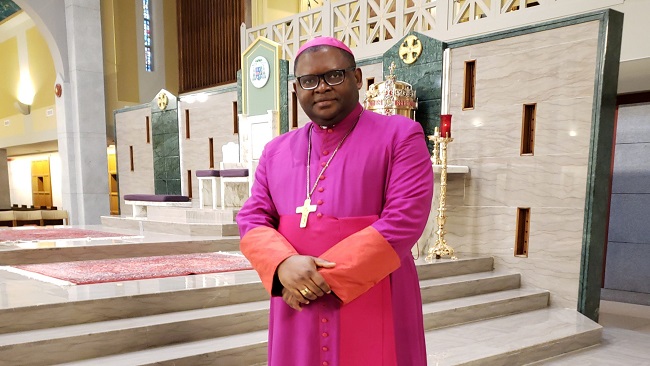
Archbishop Nkea, Bishop Bibi and Samuel Eto’o: Social media popularity should not come at the expense of truth 0
There is a growing tendency in today’s digital age for some individuals to seek relevance and popularity by launching sensational attacks against prominent public figures. The latest targets appear to be Bishop Michael Bibi of the Buea Diocese, Archbishop Andrew Nkea of the Bamenda Archdiocese and Cameroon football legend Samuel Eto’o.
Each of these personalities has recently found himself at the centre of fierce online criticism. Bishop Bibi has been attacked for urging women during a homily, to respect the vocation of priests. Archbishop Andrew Nkea has faced backlash for advocating peace in Anglophone Cameroon while also reiterating the Catholic Church’s teaching on homosexuality. Samuel Eto’o meanwhile has attracted relentless criticism over his efforts to restore the credibility and competitiveness of Cameroon’s local football championship.
What links these three cases is not merely the criticism itself but the apparent motivation behind much of it. Increasingly, social media has become a platform where controversy generates attention and attention translates into followers, likes, shares and fleeting notoriety. In such an environment, attacking well-known personalities has become an easy route to online visibility.
Constructive criticism has an important place in any democratic society. However, there is a clear distinction between thoughtful engagement and calculated attacks designed primarily to attract clicks and applause from social media audiences. When public discourse is driven more by the pursuit of digital popularity than by a genuine search for truth or solutions, everyone loses.
Bishop Bibi, Archbishop Nkea and Samuel Eto’o occupy different spheres of public life—religion, national reconciliation and sport—but they have all become convenient targets for those who appear more interested in cultivating online influence than contributing meaningfully to public debate. Their experiences should serve as a reminder that not every viral controversy is rooted in substance. Sometimes, it is simply the latest performance in the race for social media relevance.
Cameroon deserves better than a culture where personal attacks become the quickest path to internet fame. Public figures should be judged on the merits of their actions and ideas, not on the ability of others to manufacture outrage for online consumption.
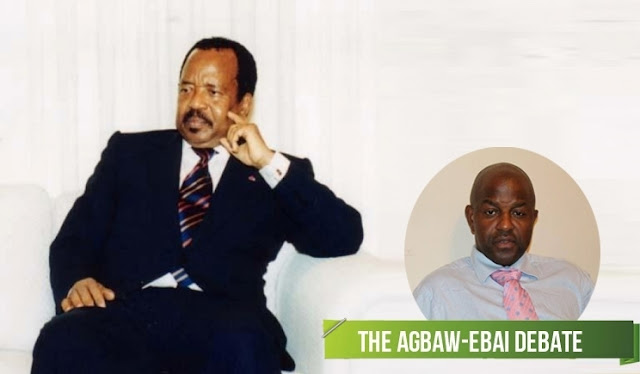
By Soter Tarh Agbaw-Ebai












8, August 2026
2 months without Biya: Cameroonian dollar bonds records its weakest performance 0
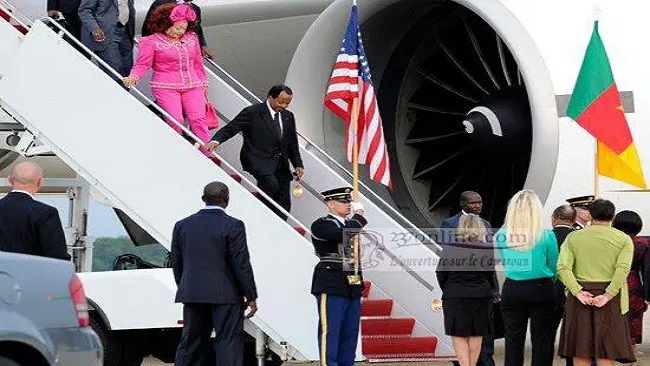
The 93-year-old president is said to have left the nation on June 7 for what authorities characterized as a brief private vacation to Europe, but has yet to return, marking one of his longest absences in recent years.
This would typically not be a problem for the country, which has no legal reservations about the president leaving the country for months.
However, the challenge results from the fact that the Cameroonian president decided against selecting a vice president, leaving the country in what the opposition parties called ‘autopilot.’
A former ally of the president and current opposition leader, Issa Tchiroma Bakary, who finished second in the October presidential election, stated on Thursday that there is a general belief in Cameroon that “all is not well” with Biya, whose absence has infuriated his camp.
“Biya’s very long stay in Switzerland only aggravates that lack of legitimacy and his desperate attempts to hold on to power by force,” Bakary stated, as seen on AP.
“Even if Biya still proves to be strong at this age, it is clear that his health challenges are taking a toll on his leadership. Cabinet reshuffles over the past 15 years have amounted to little more than recycling the same people from one ministry to another,” Wilson Tamfuh, a professor of Public and International Law at the University of Dschang, stated.
Very recently, the president of Cameroon, despite being absent, reshuffled military leadership within the country.
Another report by Bloomberg shows that investors are now spooked by Biya’s absence, which may be exerting downward pressure on the nation’s dollar bonds, as investors seek to ascertain whether a political transition is subtly taking place within the oil-producing state.
Furthermore, Cameroonian dollar bonds have recorded the weakest performance across the African continent since early June.
Cameroon’s recent military change
The change in military command was revealed by three presidential orders signed on Monday and posted on the Cameroonian president’s X website.
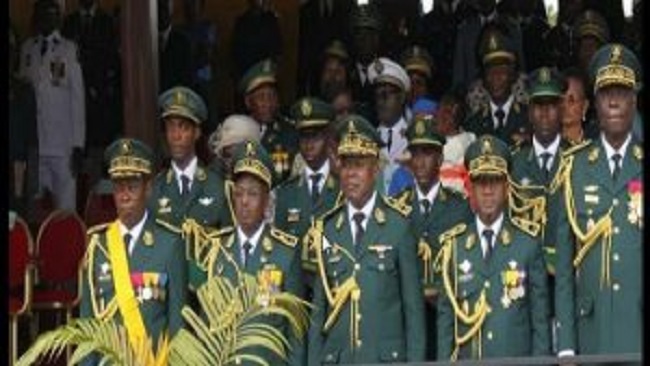
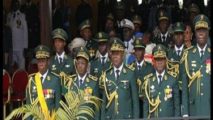
They include raising the head of the Presidential Guard from colonel to brigadier general and changing commanders in four of the country’s five unified military districts.
The shake-up also led to the appointment of a new commander for the elite Rapid Intervention Brigade, one of Cameroon’s most powerful security forces.
Other appointments affected commanders of motorized infantry brigades around the nation.
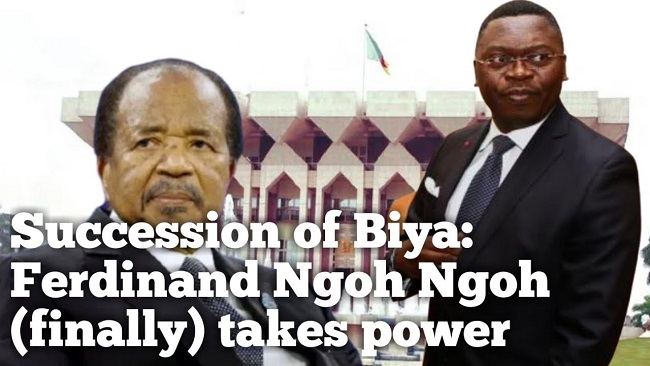
Cameroon’s President Paul Biya, the world’s oldest serving head of state, remains one of Africa’s most lasting and divisive leaders, as concerns about succession and governance grow.
The 93-year-old has led Central Africa since November 1982, making him one of the world’s longest-serving non-royal presidents.
In October 2025, Biya won an unprecedented eighth presidential term in an election that was highly contested by opposition parties, which claimed significant electoral fraud and that the official results did not represent popular votes.
Source: Africa. Business insider