
30, July 2026
A lasting gesture of solidarity with Bishop Lysinge: Thank You, Governor Peter Obi 0
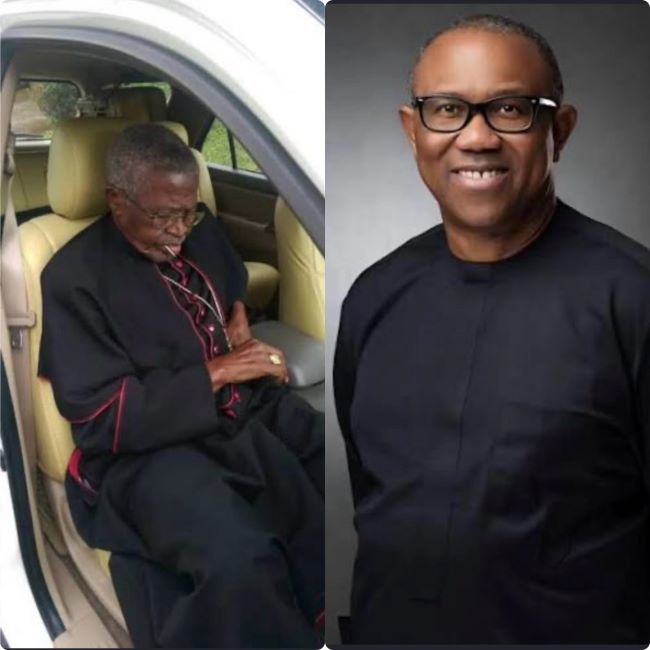
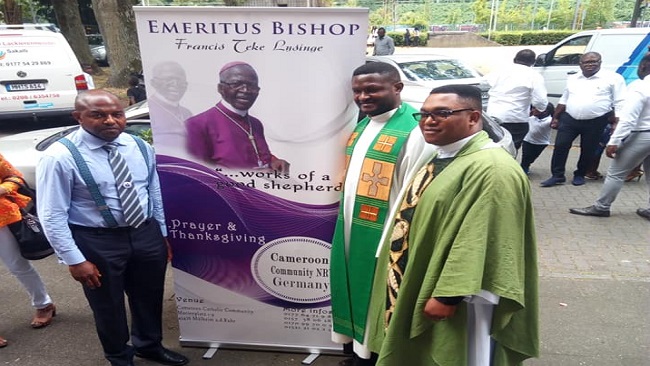
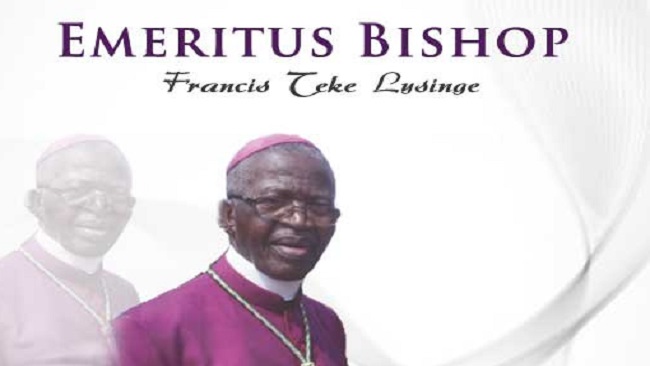
There are moments in history when a single act of generosity quietly shapes the future in ways that few could have imagined. Such acts often transcend politics, nationality including personal interest and it becomes enduring symbols of human solidarity. One such moment occurred when Governor Peter Obi of Nigeria extended a helping hand to the Diocese of Mamfe in Cameroon through the late Bishop Francis Teke Lysinge.
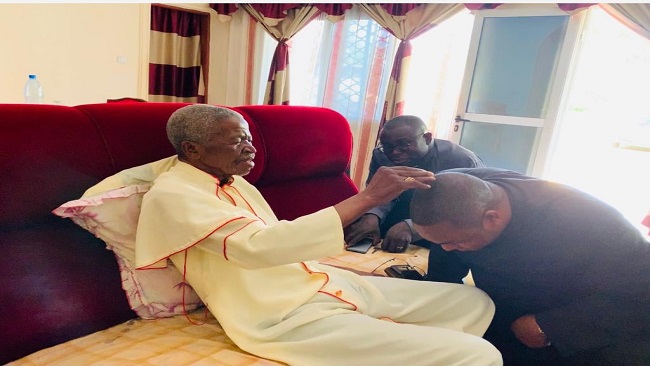
During the African Synod on the Family in Enugu, Bishop Francis Lysinge had the opportunity to meet Governor Peter Obi. In their brief audience, the Bishop shared the immense challenges facing the Diocese of Mamfe, particularly the struggle to complete the Cathedral and the Bishop’s House projects. The Diocese was young, resources were scarce and the dreams of the faithful depended greatly on the goodwill of friends.
Governor Peter Obi did not merely listen; he acted. He generously contributed ten thousand US dollars to support these important projects. It was a remarkable gesture not because of the amount alone, but because it reflected a profound belief that the Church’s mission deserves support wherever it serves humanity. Governor Peter Obi’s generosity crossed national borders, demonstrating that compassion recognizes no artificial boundaries.
History would later reveal an extraordinary irony. The Bishop’s House in Mamfe, whose construction benefited from Governor Peter Obi’s contribution, became the venue where Nigeria’s Vice President, Atiku Abubakar was received during a discreet visit to Mamfe in connection with discussions surrounding the implementation of the Bakassi Agreement between Nigeria and Cameroon. What began as an act of kindness toward a struggling diocese ultimately contributed to creating a space that would later host an event of diplomatic significance between two neighbouring nations.
More importantly, Governor Peter Obi’s gift strengthened the pastoral mission of the Diocese of Mamfe. The Cathedral and the Bishop’s House were not simply buildings of brick and mortar. They became centers of prayer, administration, pastoral care and service to thousands of Catholics and members of the wider community. They stand today as reminders that generosity invested in faith communities produces dividends that extend far beyond the original intention.
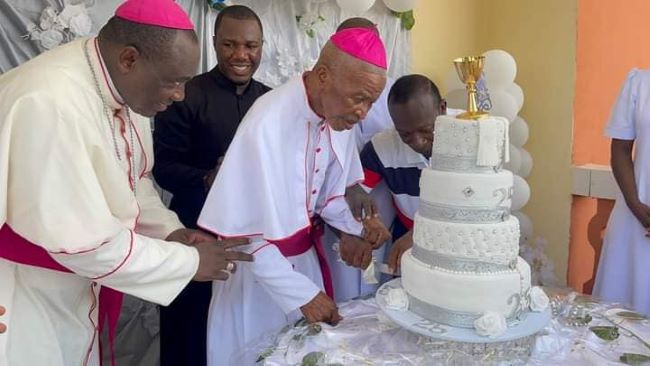
As we remember the late Bishop Francis Lysinge, whose vision and perseverance laid the foundations of the Diocese of Mamfe, it is fitting also to acknowledge those who stood with him during moments of difficulty. Governor Peter Obi was one of those friends. His support came at a time when it was needed most and it remains part of the living history of the Diocese.
In a world often divided by politics, ethnicity and national borders, Governor Peter Obi demonstrated that authentic leadership is measured not only by governance but also by compassion. His willingness to support a Cameroonian diocese reflected the shared values that unite Africans: brotherhood, faith, mutual respect and the conviction that we rise by lifting one another.
The clergy, religious and faithful of the Diocese of Mamfe have every reason to remember this gesture with gratitude. Acts of generosity may fade from newspaper and television headlines, but they remain etched in the memories of those whose lives they transform.
To Governor Peter Obi, we say thank you. Thank you for believing in the mission of the Church beyond your own country. Thank you for standing beside Bishop Francis Lysinge during a crucial chapter in the history of the Diocese of Mamfe. Thank you for demonstrating that true leadership leaves behind not only policies and speeches but also enduring legacies of hope, generosity and service.
May this noble act continue to inspire leaders across Africa to build bridges of friendship, support institutions that serve humanity and recognize that the greatest investments are often those made in people, faith and the common good.
To this I put my name
Soter Tarh Agbaw-Ebai
Chairman/Editor-In-Chief
Cameroon Concord News Group














31, July 2026
53 days and counting: where is Paul Biya? 0
A record 53-day absence by the world’s oldest head of state has renewed speculation in his native Cameroon about whether he is dead or alive, even though discussing his health is illegal in the country.
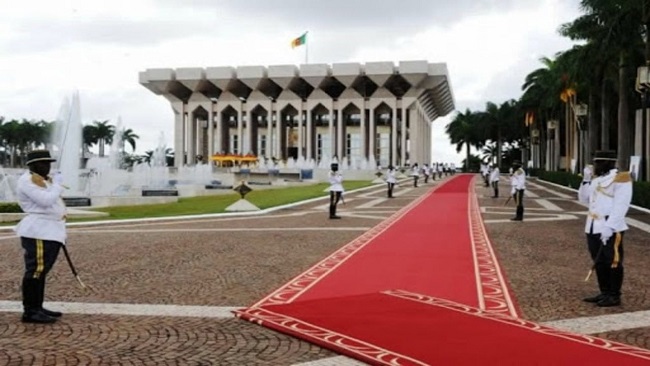
On 7 June, 93-year-old Paul Biya left for Switzerland for what officials described as a “brief private stay” alongside his wife, Chantal. Almost two months later, neither the president nor the first lady have addressed the country or been seen publicly.
Biya, who took office in 1982 after a seven-year stint as prime minister, has taken increasingly long absences from Cameroon in recent years, spending much of his time at the five-star InterContinental hotel in Geneva.
No official timetable has been announced for the president’s return from his latest trip abroad, leaving Cameroonians to rely on a succession of conflicting statements from government officials.
The minister of communication, René Emmanuel Sadi, said Biya was in good health and “working from Geneva, where he currently resides”.
“Reports claiming otherwise are pure fantasy and malicious manipulation aimed at destabilising opinion,” he added. Jacques Fame Ndongo, a senior official from the ruling party and the higher education minister, said Biya had been “meticulously following the files submitted to him by his aides … wherever he is”.
The labour minister, Grégoire Owona, gave a different explanation, saying the president was on annual leave and comparing him to regular Cameroonian citizens. “Paul Biya, elected by the Cameroonian people and paid by them, is a worker who has the right to annual leave,” he said. “His employer is obliged to grant it. He informed his employer before leaving and will do the same upon his return.”
Cameroonian authorities banned discussion of Biya’s health in October 2024, during another absence. Nevertheless, local media have published claims in recent weeks that he is critically ill, and jokes about Biya being a work-from-abroad president or a remote-work president have resurfaced on social media.
Mamadou Mota, the vice-president of the opposition Cameroon Renaissance Movement party, said Biya’s latest absence had created a “glaring institutional vacuum”. “A country cannot be governed by remote control while critical socioeconomic challenges go unaddressed,” he said.
Last November, Biya was sworn in for his eighth consecutive seven-year term, a month after a presidential election marred by widespread allegations of irregularities and voter suppression. Although the Constitutional Council dismissed post-electoral complaints by opposition parties, many of them refused to recognise the outcome, arguing that the election had further eroded public confidence in Cameroon’s democratic institutions.
Biya has yet to name a government since being sworn in for his latest term. With parliamentary and municipal elections expected in early 2027, many are worried that the ripple effect of that and his prolonged absence could disrupt the electoral cycle.
Cameroon has the largest economy in central Africa, but unemployment rates, high inflation and poor public infrastructure are stymieing the prospects of its young people, who make up about two-thirds of its estimated population of 30.6 million.
“Politics should be about serving the people, but the [ruling] CPDM [party] appears more interested in holding on to power than addressing the concerns of Cameroonians,” said Kohtem Sambit, the secretary general of the opposition Movement for Patriotism and People’s Prosperity.
“The minister of the economy borrowed more than 21bn [Central African francs] in the name of the Cameroonian people, saying it was approved by Mr Biya,” Sambit told the Guardian. “How do we justify this? You do not see the person who signed, nor do you know his whereabouts. That debt will be paid by the public.”
Referring to Owona’s remarks, Sambit said: “If the president is on annual leave, he is still accountable to the Cameroonian people because he is paid with taxpayers’ money. His whereabouts should therefore be disclosed.”
Another opposition party, the Social Democratic Front, has argued that the issue is not whether the president has a constitutional right to travel, but rather the government’s failure to explain the extension of what had initially been described as a brief private visit. Another opposition leader, Patricia Tomaïno Ndam Njoya, of the Cameroon Democratic Union, has called for an impartial procedure to determine any “temporary or permanent incapacity of the head of state”.
In April, parliament reintroduced the office of vice-president as part of a constitutional overhaul, but the position has yet to be filled, leaving Cameroon without a designated deputy should the president become incapacitated. As Biya’s son and stepson reportedly jockey for position, public disagreements between cabinet ministers have become commonplace.
Last week, the party’s secretary general, Jean Nkuete, convened a rare meeting of senior party officials. The CPDM described the gathering only as an “important working session” and did not release an agenda or further details. Attempts to obtain comment from senior party figures were unsuccessful. Several party officials have declined interview requests, citing personal reasons.
For the businessman Nji Lucas, the president’s prolonged absence has become an economic concern. “I do not have confidence because it is almost as if the country is on autopilot,” he said. “No serious investor wants to commit resources in a country where there is uncertainty over political leadership. There is no trust, and investors require certainty before making long-term decisions.”
Culled from The Guardian