
28, July 2026
Paul Biya’s 50 Days in Switzerland: The long goodbye to an era 0
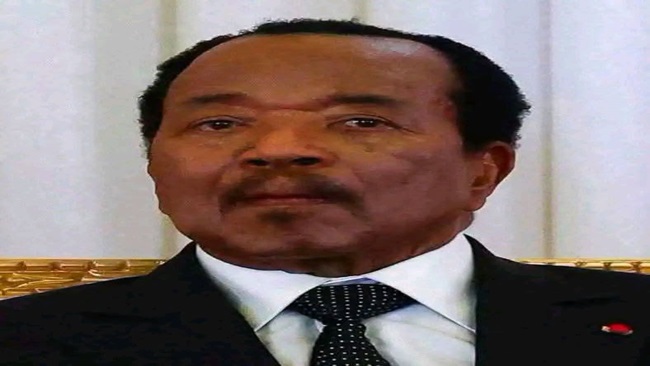
For more than four decades, President Paul Biya has defied predictions of his political demise. He has outlasted rivals, survived crises and maintained an iron grip on Cameroon through a system built on centralized authority and carefully managed succession. Yet politics is often defined not by dramatic events, but by prolonged absences that expose uncomfortable realities. Biya’s record 50-day stay in Switzerland is one such moment.
Whether the official explanations are accepted or not by the people of Cameroon, the extraordinary length of Biya’s absence has inevitably fueled questions about his health, his ability to govern and the future of the Cameroonian state. In any functioning democracy, such questions would be answered with transparency. Instead, Cameroonians have been left with rumors, speculation and official denials from Biya acolytes that have done little to dispel uncertainty.
The issue is no longer simply where President Biya is. The issue is what his prolonged absence says about the state of power in Cameroon.
For decades, Biya’s authority rested on the perception that he alone embodied the state. That image becomes increasingly difficult to sustain when the country’s leader spends weeks away from the seat of government while critical national decisions continue to accumulate. Even if the machinery of government continues to function, prolonged physical absence inevitably raises doubts about who is truly making decisions and how power is being exercised behind closed doors.
History shows that the twilight of long-serving leaders is often marked not by a formal resignation, but by a gradual erosion of their political presence. Authority shifts quietly before power changes hands officially. Ministers become more cautious. Political allies begin calculating the future. Ambitious successors position themselves discreetly. The conversation moves from loyalty to succession. Cameroon increasingly appears to be entering that phase.
The government’s insistence that everything is normal has not prevented widespread speculation. If anything, the absence of clear communication has amplified it. In the age of instant information, silence rarely reassures. Instead, it creates space for competing narratives that undermine public confidence.
No one outside the president’s closest circle can state with certainty the full circumstances surrounding his stay in Switzerland. It is therefore important to distinguish between verified facts and speculation. But one fact is undeniable: a president who has remained away from his country for an unprecedented period inevitably invites questions about continuity, governance and succession.
For a leader who has ruled Cameroon for more than four decades, this may well be remembered as the moment when the country collectively began contemplating the post-Biya era—not because an official announcement was made but because events spoke louder than words.
Political endings rarely arrive with fanfare. They emerge gradually, as confidence fades, uncertainty grows and the symbolism of power begins to outweigh its exercise. Biya’s prolonged stay abroad has become more than a personal matter; it has become a national political event.
Whether President Paul Biya ultimately returns to Yaoundé or not, his record stay in Switzerland may come to symbolize the beginning of the end of one of Africa’s longest presidential tenures. The transition may not happen today or even this year, but the aura of permanence that once surrounded his rule appears increasingly fragile.
For Cameroon, the more pressing question is no longer whether the Biya era will end. It is whether the country is prepared for what comes after.
By Soter Tarh Agbaw-Ebai


















28, July 2026
Netanyahu visits White House for first Trump talks during Iran war 0
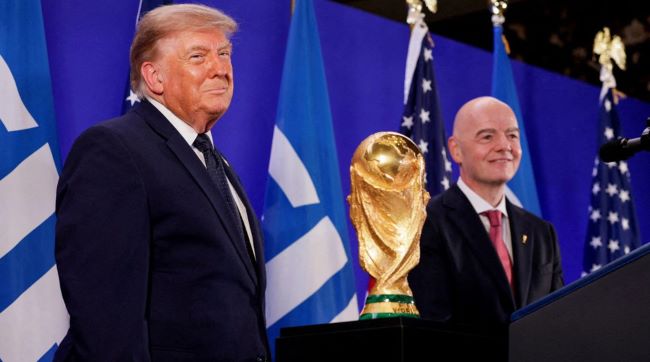
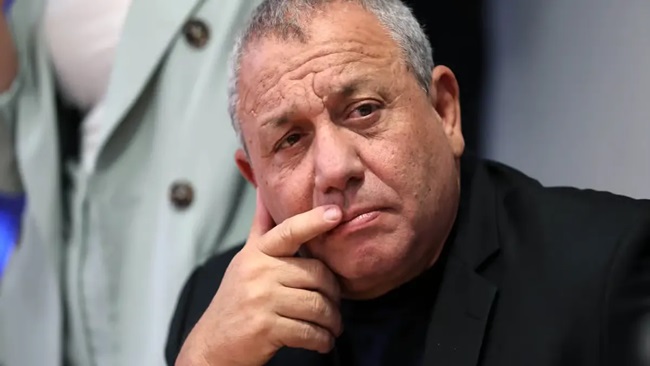
Prime Minister Benjamin Netanyahu visited the White House Tuesday for his first in-person talks with President Donald Trump since the Iran war began, with the Israeli leader saying they discussed ensuring Tehran does not acquire nuclear arms.
The closed-door talks — which the White House described as “positive and productive” — lasted for about an hour and a half and came as Netanyahu and Trump sought to patch over public disagreements on the war.
Netanyahu said in a video message after the meeting that it was “one of the best conversations I’ve ever had with the president of the United States” and that it touched on “our common goal: ensuring that Iran does not obtain nuclear weapons.”
The Iran war began in late February with US-Israeli strikes but has seen a recent pause in the fighting, with Washington saying it wants to give negotiations a chance.
Israel has not taken part in the latest round of hostilities between the United States and Iran, which flared earlier this month as an April ceasefire collapsed.
The meeting was the eighth between the two leaders since Trump’s return to office in early 2025 and came ahead of key electoral tests later this year for both Netanyahu and the US president: national elections in Israel and midterm polls in the United States.
Netanyahu’s office said he attended a private memorial dinner in Washington on Monday evening in honor of the late senator Lindsey Graham.
He also went to a memorial service for Graham after the meeting with Trump on Tuesday.
Relations between Trump and Netanyahu reached a low point in April during negotiations on the ceasefire with Iran, with Trump unleashing profanity-laced tirades against his Israeli ally.
Trump later described Netanyahu in an interview as a “very difficult guy.”
Netanyahu downplayed the exchanges as “tactical disagreements,” saying they were aligned on the goals of the war.
On Tuesday, the leaders were expected to discuss the implementation of a US-sponsored framework deal signed by Israel and Lebanon last month, whose application on the ground has been challenging.
The talks were also expected to touch on Gaza, as diplomatic efforts to kick-start the devastated Palestinian territory’s reconstruction are at a standstill.
Nearly three years after the war between Israel and Hamas broke out, the humanitarian situation in Gaza remains dire, and Israel continues to regularly target people the military says are militants.
‘No break’ in ties
Danny Danon, Israel’s ambassador to the United Nations, said Tuesday that Netanyahu’s visit came at a “critical time for the Middle East,” with Iran continuing “to choose terrorism over negotiations” and blocking the key Strait of Hormuz waterway.
Yonatan Freeman, an international relations expert at the Hebrew University of Jerusalem, said the primary aim of the visit was to dispel reports of a cooling in ties between the allies.
“I think that the main issue… is to show the world, to show Iran, and also even Lebanon and others… that there is no break or any kind of major disagreement between the United States and Israel,” he told AFP.
“There’s more in agreement between the two leaders than disagreement.”
For Freeman, any differences between Trump and Netanyahu concern the means — timeline, intensity, immediate objectives of operations — rather than the ends of the war.
He also suggested that Trump would mainly seek to focus on his two regional priorities, namely Iran and the expansion of the Abraham Accords, rather than on Gaza, which he sees as less of a priority.
The Abraham Accords are a series of US-brokered normalization agreements signed during Trump’s first term, under which Israel established formal diplomatic relations with the United Arab Emirates and Bahrain for the first time. Morocco later followed.
But other observers believe that the talks could address the possible easing of Israel’s military presence in the region, such as in Lebanon, Syria or Gaza.
Source: AFP