Featured
 So, Cameroonians, what exactly do you want from President Biya?
  Benedictus Lysinge: Homily, Mass of the Bamenda Provincial Association of Diocesan Priests
  Samuel Eto’o, a champion’s answer to his critics
  Journalist held incommunicado for photo of Ambazonia unrest
  Where is Bishop Francis Lysinge now?
Most Commented Posts
 4 Anglophone detainees killed in Yaounde
18 comments Chantal Biya says she will return to Cameroon if General Ivo Yenwo, Martin Belinga Eboutou and Ferdinand Ngoh Ngoh are sacked
13 comments The Anglophone Problem – When Facts don’t Lie
12 comments Anglophone Nationalism: Barrister Eyambe says “hidden plans are at work”
12 comments Largest wave of arrest by BIR in Bamenda
10 comments
Featured
-
Yaoundé: Japan plans 2027 festival to introduce Cameroonians to its culture
-
Yaoundé: Biya returns after 74 days abroad
-
Football: Djibouti federation accused of misusing funds
-

So, Cameroonians, what exactly do you want from President Biya?
-
Kyiv targeted by massive Russian strikes killing several people
-
Ukraine: President Zelensky’s senior aide fired amid corruption crisis
-
Yaoundé allocates CFAF400 million to SMEs
21, August 2026
Yaoundé: Biya returns after 74 days abroad 0
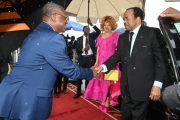
Paul Biya returned to Cameroon on August 20, 2026, after more than 10 weeks abroad. His absence had fueled speculation about his health and raised questions about how the government functioned while he was away.
The president, accompanied by Chantal Biya, landed at Yaoundé-Nsimalen International Airport at about 4:45 p.m. before heading to the Unity Palace.
Biya left Yaoundé on June 7. The presidency said at the time that he was leaving for a “short private stay in Europe,” without specifying how long he would be away. In total, Biya spent about 74 days outside the country, his longest recorded stay abroad since taking office in 1982, according to Reuters.
His return ends an unusually long absence. For more than two months, the president’s absence from public view and limited official communication about his stay fueled rumors and questions, eventually prompting the government to respond publicly. Speaking to RFI on August 2, Communication Minister and government spokesman René Emmanuel Sadi said the president was alive and that the presidency was not vacant. He also said Biya would return soon, without giving a date.
At the same time, the presidential camp maintained that Biya continued carrying out his presidential duties while abroad. Several presidential acts were issued during the period, including appointments within the defense forces on August 3.
Biya’s Absence Raises Questions About the Vice Presidency
The episode also exposed a new difficulty in Cameroon’s institutional framework. The constitutional revision of April 14, 2026, created the office of vice president and changed the rules governing presidential succession and continuity of government. Yet more than four months after the reform, no one had been appointed to the position when Biya returned to Yaoundé. Several political parties responded to the situation.
On July 18, the Cameroon Democratic Union (CDU), led by Hermine Patricia Tomaino Ndam Njoya, called for the vice presidency to be filled and for prolonged presidential absences to be more clearly regulated. The party also called for the public to receive more regular information about the functioning of state institutions when a president remains outside the country for an extended period.
The CDU did not argue, however, that Biya’s absence meant the presidency was legally vacant. Instead, the party questioned how the new institutional framework could operate in practice while one of its key offices remained vacant.
Samuel Hiram Iyodi’s Patriotic Movement for the Prosperity of the People (MP3) went further. In a letter sent to the president of the National Assembly on August 6, the party called for a debate on the legal framework governing prolonged presidential stays abroad. It proposed, among other measures, clarifying information requirements and the institutional mechanisms that could be activated when an absence extends over a long period.
Biya’s Return Ends the Absence, Not the Institutional Debate
The political debate is separate from the legal question of whether the presidency is vacant. Cameroonian law does not treat a president’s prolonged stay abroad as creating a vacancy merely because of how long it lasts. The April reform notably sets out provisions governing permanent incapacity and gives the vice president a central role in presidential succession and continuity of government. Biya’s return removes the immediate source of the controversy, but the institutional questions raised during his absence remain.
The episode highlighted the gap between the president’s legal ability to exercise his powers from abroad and public expectations about how the presidency should function during a prolonged absence with limited official communication.
It also brought the office of vice president back to the center of the debate. Although the April reform gave the vice presidency a key role in the new constitutional framework, no appointment has yet been made. Biya’s return therefore ends his 74-day absence, but not necessarily the institutional debate that began on June 7.
Source: Sbbc