
16, November 2023
Dion Ngute under pressure to launch investigation after Lamido of Ngaoundéré accused of multiple rapes 0
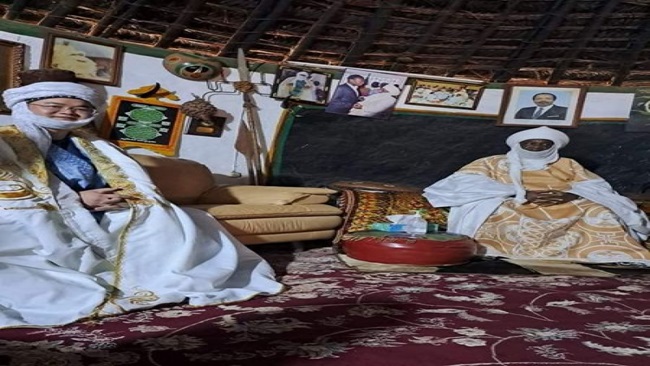
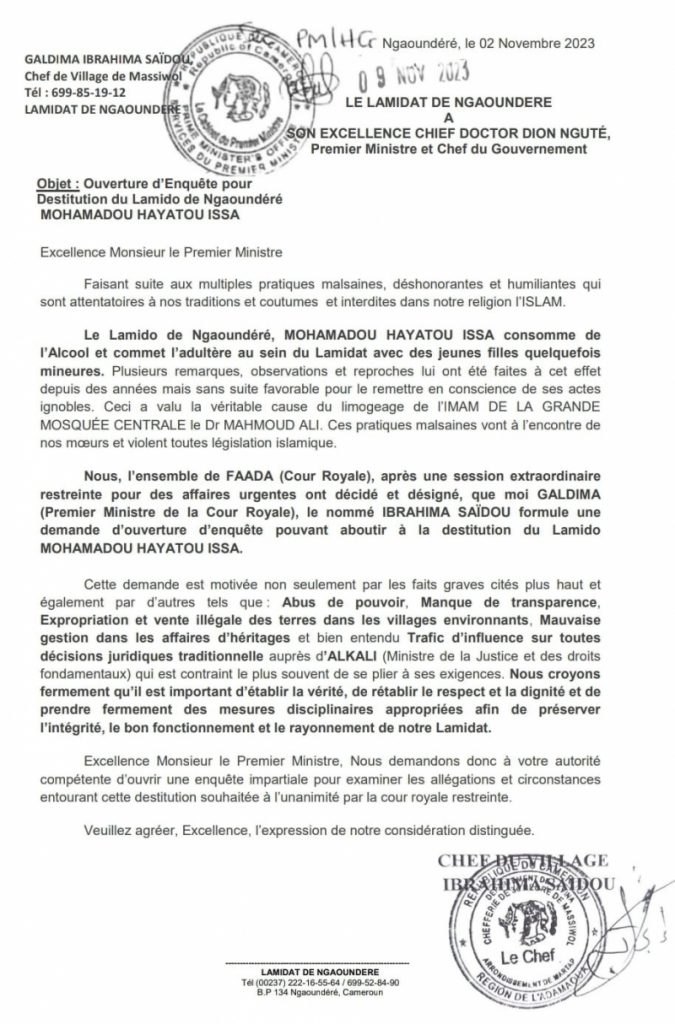
Ngaoundéré notables have written to Prime Minister Joseph Dion Ngute calling on the Head of Government to dismiss the Lamido of Ngaoundéré from his royal duties following several rape allegations and adultery including sleeping with minors.
The royals also stated in their letter dated November 9, 2023 and signed by Ibrahima Saidou, on behalf of all the members of the Royal Court that failure to act against Mohamadou Hayatou Issa, the Lamido of Ngaoundéré will allow the traditional ruler to continue to offend and to victimise young girls.
The Lamidat of Ngaoundéré is one of the most important of the three northern regions. Located in the heart of the capital of the Adamaoua Region, it was founded in 1839 by Chief Ndjobdi of Foulbé. The reigning Lamido was elected from among the members of the ruling family. He is the 18th Lamido in the dynasty and has been in office since 1997.
Cameroon Intelligence Report gathered that there are up to 35 minors who have been subject to a range of offences including multiple rapes by Lamido Mohamadou Hayatou Issa.
According to our chief correspondent in Ngaoundéré, the Lamido’s reckless actions have been ongoing ever since he ascended the throne.
The Prime Minister’s office recently admitted that Dr Dion Ngute is facing growing pressure to launch an investigation into the matter.
A prominent Muslim scholar contacted by this reporter who sued for anonymity, said it was of utmost importance that the deeply concerning and extremely serious allegations against the Lamido were thoroughly investigated by the Government.
“The allegations in the letter from the notables are deeply disturbing to read. Nobody is above the law” he stated.
By Soter Tarh Agbaw-Ebai with files





















16, November 2023
Statement by the African Development Bank Group following the illegal arrest of its staff in Ethiopia 0
On 31 October 2023, two staff members of the African Development Bank Group based in Addis Ababa were unlawfully arrested, physically assaulted, and detained for many hours by elements of the security forces without any official explanation.
We are pleased that the Prime Minister of Ethiopia immediately acted when he learnt of the incident, ordered the immediate release of the affected staff and promised to order an immediate investigation into the incident.
This is a very serious diplomatic incident, and the African Development Bank has since lodged a formal complaint with the Ethiopian authorities. For their part, the government has formally acknowledged our complaint, recognised the gravity of the incident, and reassured us that all those involved in breaking the law will be thoroughly investigated and brought to justice, ensuring transparency and full accountability.
Furthermore, the government has also reassured the African Development Bank that its staff in Ethiopia and those travelling to the country on mission will continue to enjoy full respect of their rights, privileges and diplomatic immunities under the Vienna Convention on Diplomatic Relations as well as the African Development Bank’s Host Country Agreement with the Government of Ethiopia.
The African Development Bank values its excellent relations with the government of Ethiopia and is currently engaged with the authorities, through diplomatic channels, concerning the incident.
The African Development Bank’s management would like to reiterate its commitment to the safety, security, rights and privileges of all its staff in all countries where the Bank operates.
The African Development Bank wishes to assure all its partners that its operations in Ethiopia have not been affected by this incident.
Culled from ADBG