
31, August 2023
Fall of Ali Bongo: End of strongmen era 0
At the heart of democracy is the premise that the governors are accountable to the governed. Harris Soche defines democracy as the people’s government, where the population is the power holder. With this power, the population defends and protects themselves from the tyranny of those in power. This concept underpins liberal democracies around the world. As many African countries gained political independence in the 1960s, the founding fathers had democratic governance at the forefront of how they intended to rule their new nations.
As Nkrumah, Nyerere, Ahidjo, Ahmed Ben Bella, Lumumba and the other giants of Africa were planning to build a united and prosperous Africa with accountability at the heart of it, the colonizers who had been kicked out against their will were plotting to wreck their lofty dreams. The dream of government for the people was killed in Africa after the golden ’60s and ’70s when, one after the other, the colonialists used strongmen to eliminate the founding fathers. From Nkrumah to Lumumba, from Ahmed Ben Bella to Agostinho Neto, through violent coups and dubious and brutal assassinations, politicians who had the best interest of their nations and Africa in mind were replaced by political strongmen.
These strongmen are bloodthirsty and experts at projecting fear. Terror is their tool. They are incredibly clever at their game; hire political consultants to run their machinery and work to design more effective instruments of control while acting like people who love democracy. Strongmen are manipulators who pretend to be humble servants of the people, while their main goal is to exploit political power for their gains. Strongmen ruled their countries uninterrupted with blessings from Western capitals for decades with nothing productive to show. Mobutu Seseseko ruled Zaire with an iron fist and without sentiments for 27 years. Before he was deposed in 1997 during a civil war, he had more money in his private Swiss bank accounts than his country’s official reserves.
Omar Bongo was another strongman who ruled oil-rich Gabon for over 42 years from 1967 till his death in 2009. Like all strongmen, Bongo was a crude and malicious political operator who tolerated no opposition and bled the oil-rich country’s treasury dry to enrich his 54 children. Today, Paul Biya of Cameroon and Teodoro Obiang Nguema are two strongmen who have ruled for 41 and 44 years, respectively, with citizens of both oil-rich countries poorer now than when these leaders came to power more than four decades ago.
As the world changed politically and economically in the 1990s, Western nations and others benefitted from globalization and the internet miracle. Consequently, the drums for multiparty politics around Africa were louder, and strongmen became imaginative and accepted multiparty politics in their countries. This move was designed to keep international aid agencies and institutions like the IMF and the World Bank quiet as foreign aid was now linked to democratic reforms.
Since the 90s, strongmen have claimed to accept democracy as a system of government in their countries, but their instincts and actions have been otherwise. These leaders profess democratic norms but preside over oppressive and unaccountable regimes. They organize elections to keep the eyes of international donors away from them. These elections have all fallen short of democratic standards, and these countries’ constitutions have constantly been amended to suit the demands of these political entrepreneurs.
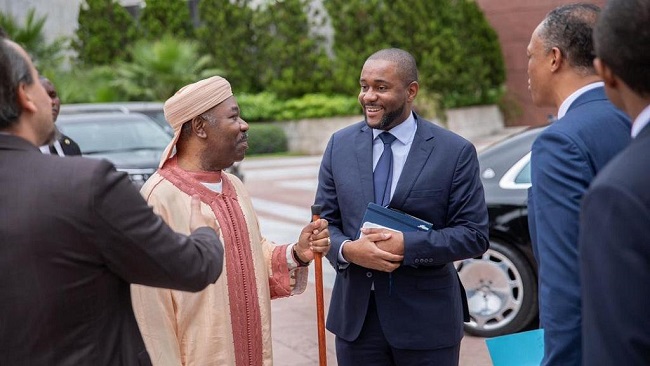
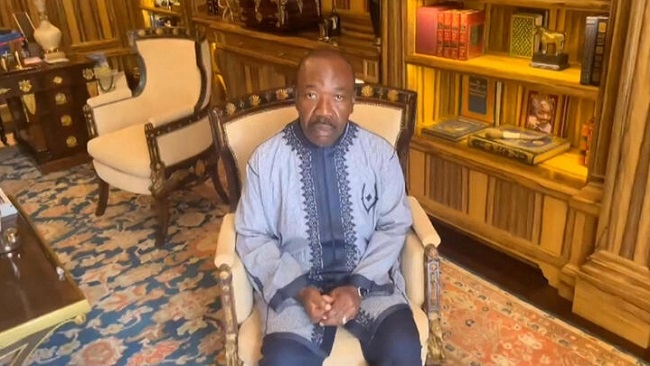
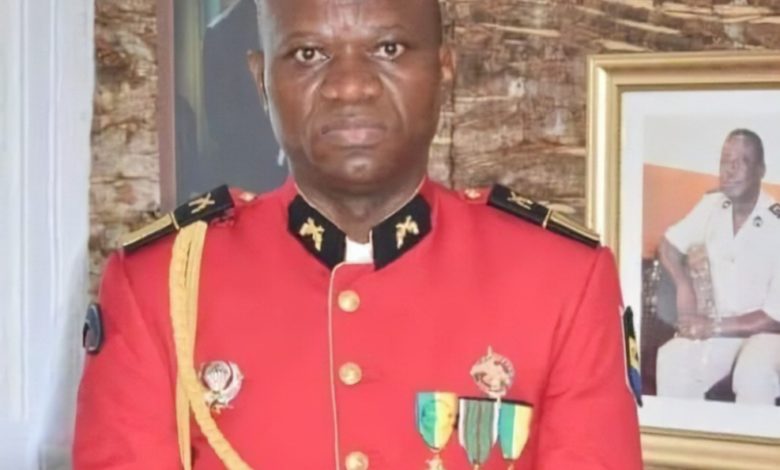
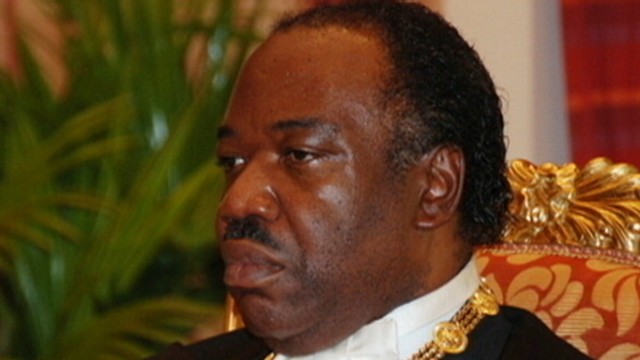
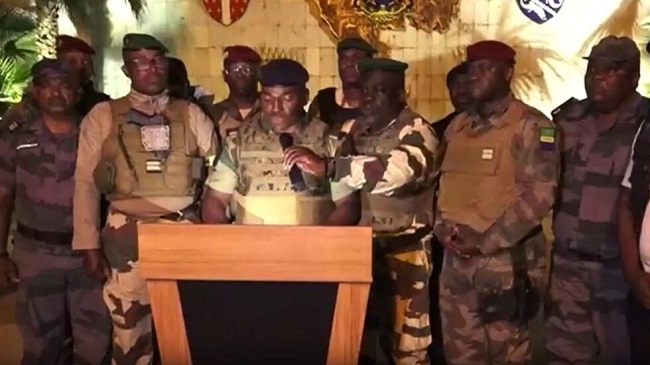
Strongmen never leave the political stage alive. Consequently, as they die in power, they leave leadership vacuums. And nowhere is that more profound than in Gabon, where yesterday, August 30th 2023, the army launched a successful coup that ended the Bongo family clamp on power. Ali Bongo became president in 2009 after his father died. His election in 2009 was rigged, and his reelection in 2016 against Jean Ping was substantially disputed as he won with less than 5,000 votes. The post-election violence saw many people killed by the security forces. In 2018, President Bongo suffered a stroke and has been going around his business with a walking stick to support his paralyzed frame. However, he was a candidate in the recent presidential election on August 26th, 2023—the coup leaders point to this disputed election as their motive to restore democratic and constitutional order in the country.
The story of Gabon, like many countries in Africa, is one that strongmen have destroyed. According to the World Bank, Gabon has a population of 2.5 million, and the real GDP per capita is 20% lower in 2020 than in 1990, and 30% of its citizens live below the $5.50 per day poverty line. This is astounding as the country is extremely rich in natural resources, and the soil is fertile with excellent weather for agriculture. Still, poverty is an unwanted and ever-present companion of the population.
Today in Gabon, Mali, Niger, Burkina Faso, Guinea and many parts of Africa, thousands celebrate with the army after coups not because they despise civilian rule and don’t want democracy. Democracy is not a perfect experiment and has flaws. Around Africa, people are acutely aware that despite its flaws, a government of the people is better than men in military fatigues. Still, the reign of strongmen in Africa over the last six decades has brought more misery than happiness. And at this juncture, anything is better than civilian strongmen. These are sad days for Africa, but the future can’t be bleaker than the past.
By Isong Asu
London Bureau Chief
Cameroon Concord News Group
















31, August 2023
Battle of the Banks seeks to find the best young bankers in Africa – do you have what it takes? 0
As banks across Africa navigate a challenging economic climate and come to terms with an increasingly digitised continent and the immense opportunity this brings, there’s an opportunity for bankers and banks to battle it out for top honours in the prestigious pan African competition, Battle of the Banks Africa 2023.
The winning bank and their team of star bankers will be regarded as the best new talent on the continent in terms of business and financial performance, with a sharp understanding of risk management strategies and corporate governance.
In the first-of-its-kind in Africa, ICAP Training Solutions has partnered with global Capital Markets Professional Services firm Andile, to bring ProBanker’s Battle of the Banks simulation engine to market. Inviting Africa’s young bankers to enter. The Battle of the Banks Africa is a robust competition and training opportunity that will see entrants gain insight into how different areas of a bank interact to enhance overall business and financial performance. In addition to this, entrants will develop important skills and understanding of how macroeconomic indicators impact the decision-making process at the highest levels of bank leadership.
ICAP Training Solutions’ CEO Yonatan Rom says: “The Battle of the Banks Africa provides a simulated environment where young bankers must think about what it takes to run an entire organisation and make strategic, corporate governance, risk and financial decisions. The simulated banking market provides practical experience and learning in a hands-on manner.”
The simulation provides bankers with skills that cannot be obtained anywhere else, other than through years of experience. Those banks who enter teams also benefit from the training as entrants can apply their learnings to their everyday roles and responsibilities back in the office.
Alongside the learning and upskilling, the top performing teams progress to the final four “shoot-out” on 22 November. Here teams will prepare a 4-quarter performance report which will be delivered via a 25-minute presentation on their simulated bank’s performance.
The ‘Battle’ is based on stock performance, net income, loan performance, Basel ratio and capitalisation usage. Each of these areas is afforded its own weighting metric and has an overall weighting of 65%. Making up the other 35% is the conceptual learning (15%) and the simulated assignments (20%).
“Our intention behind Battle of the Banks Africa is to drive practical experience, provide a unique learning simulation, develop skills and business acumen, give access to online training tools and webinars and enable networking with other young bankers from across Africa. The winners will emerge as the best young bankers in Africa,” says Pieter Kelbrick, Andile’s Managing Director.
To enter as a team, visit www.battleofthebanks.org and sign-up before 15 September 2023. Entrance costs $2,750 for a team of four. First prize winners will receive a prestigious floating trophy for the best performing young bankers on the continent, other prizes to be awarded are individual winners’ trophies, gold medals and certificates as well as a $2000 ICAP Academy coupon. There are also prizes for the second, third and fourth winners. The Most Aggressive Bank, Most Cautious Bank and Best Bank presentation in the Grand Finale will also receive prizes.