
7, November 2021
Researcher in Cameroon develops plant-based leukemia treatment 0
Hundreds of thousands of people suffer from leukemia in all parts of the world, and many ultimately lose their fight against the disease. While there is currently no cure for leukemia, it is possible to treat the cancer to prevent it from coming back.
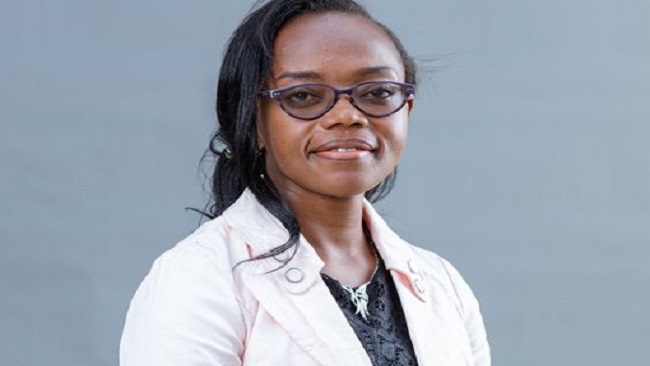
A biochemistry researcher at the University of Yaounde Medical School in Cameroon’s capital said she developed a plant-based solution to fight leukemia.
“My solution is to make xenografts by administering an aqueous extract of plant bark powder to mice capable of developing tumors,” Francine Tankeu told Anadolu Agency (AA). “We make them leukemic beforehand and then we follow their evolution.”
The next step is to arrange the remedy in a final physical aspect of the drug as it will be used in a patient and according to its compatibility.
“This other step includes several aspects such as toxicological studies to ensure its safety before moving to the human stage (of trials),” said Tankeu.
She noted results on animals show a significant regression of tumor volume after 30 days.
“The survival rate is good, but the test has not yet been performed on a human patient. The steps to be taken before clinical testing, like human trials, are not complete and I don’t have enough funds,” she said.
The idea to use plants came from her daily life, where she noticed a majority of the population uses traditional plant-based medicine for diseases.
“The beneficial effects of Syzygium Guineense, the plant I use, are not negligible because its activity is anti-leukemic. Beyond being used as a spice for local dishes, it is also used for the treatment of certain cancers,” she said.
‘Improved traditional medicine’
She figured if she could establish a scientific basis for the traditional use and formulate an improved traditional medicine, it would be “very useful.”
The methodology is “in tune with African socio-cultural realities” she said.
Tankeu wants to formulate “an improved traditional medicine” and to study the effects of the leafy forest plant when it is administered in conjunction with anti-cancer drugs to see if there would be a synergistic effect or a reduction in side effects from chemotherapy.
She received the Young Talent Award In 2020 from the For Women in Science in Sub-Saharan Africa program at the L’Oreal Foundation and UNESCO.
This prize allowed her to realize her work is “an effective contribution to the problem of cancer,” she said.
But the fight remains “vast, long and far from being won in view of the growing number of patients in the world as well as the obstacles to scientific research,” said Tankeu.
It is “very complicated in my country” for several reasons she told the Turkish news agency.
Notably, the lack of financial avenues, absence of technical platforms and prejudice against female scientists.
She noted that teachers prefer to work with male researchers because of perceptions that family responsibilities of women present obstacles.
In addition, “many children die before they are even put on treatment because the standard of living of the inhabitants is lower than the cost of examinations for an accurate diagnosis,” she said.
The number of cancer cases is increasing annually in Cameroon and diagnosis times are long – more than 60% of patients arrive at an advanced stage and treatment is expensive – according to the Health Ministry.
Tankeu also lamented about erroneous beliefs and perceptions
“It is a real barrier,” she said.
Despite the situation, the young biochemist said she views the future of her solution with “a lot of optimism, especially given the previous results.”
Source: Daily Sabah















7, November 2021
Sudan anti-coup protesters block streets 0
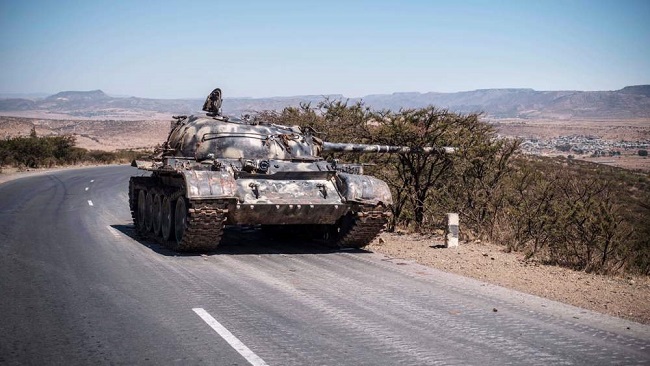
Sudanese anti-coup demonstrators built street barricades in and around the capital overnight Saturday following calls for civil disobedience to protest last month’s military coup.
Activists were seen working in darkness to pile up bricks and large slabs to block streets in Khartoum and neighbouring cities, according to witnesses and AFP correspondents.
Their preparation followed calls for civil disobedience made by the Sudanese Professionals Association (SPA), an umbrella of unions which were instrumental in the 2018-2019 protests which ousted the longtime autocratic president Omar al-Bashir.
The SPA circulated its appeals via text messages to bypass internet outages since October 25, the day of the putsch.
“The Sudanese people have rejected the military coup,” the SPA said on Twitter, vowing “no negotiation, no partnership, no legitimacy”.
“We will start by barricading the main streets to prepare for the mass civil disobedience on Sunday and Monday,” it said, urging protesters to avoid confrontation with the security forces.
Nationwide protests — including by tens of thousands on October 30 — have been met by a deadly crackdown. At least 14 demonstrators have been killed and about 300 wounded, according to the independent Central Committee of Sudan’s Doctors.
By Sunday morning, some shops were still open but others were shuttered in Khartoum and its twin cities of Omdurman and Khartoum-North, according to witnesses.
“Movement on the streets is less than usual but there is not full blockage of streets or closure of shops” after the civil disobedience call, said a witness from Omdurman who declined to give his name fearing reprisals.
Almost two weeks ago Sudan’s top general Abdel Fattah al-Burhan dissolved the government as well as the ruling joint military-civilian Sovereign Council that was supposed to lead the country toward full civilian rule.
He also declared a state of emergency and detained Sudan’s civilian leadership, including Prime Minister Abdalla Hamdok and members of his government.
Hamdok was later placed under effective house arrest and the military has since Thursday released four civilian members of his government.
The military takeover sparked international condemnation, including punitive aid cuts and demands for a swift return to civilian rule.
Burhan insists it “was not a coup” but a move to “rectify the course of the transition.”
Source: AFP