
5, March 2021
Clashes in Senegal kill one after arrest of opposition leader Sonko 0
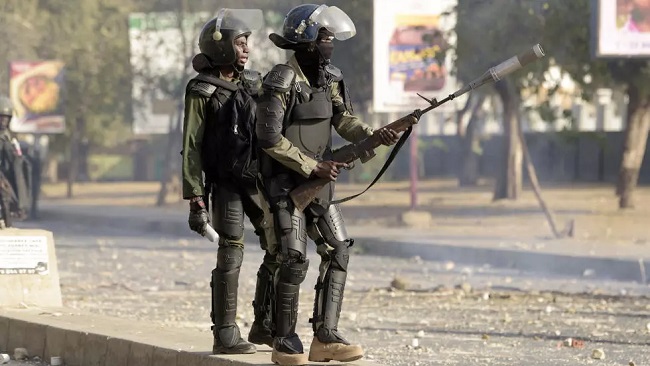
Senegalese police clashed with supporters of arrested opposition leader Ousmane Sonko on Thursday, leaving one person dead in the south of the country, a police official said.
It was the first death confirmed in clashes since Sonko was arrested on Wednesday for disturbing public order as protests broke out ahead of his court appearance on a rape charge.
Sonko, leader of the opposition Pastef party and former presidential candidate, is considered a key potential challenger for President Macky Sall in elections in three years.
One person was killed in clashes on Thursday in Bignona town, in the southern Casamance region, the police official said.
“We still don’t know the cause, it is under investigation,” said the official who asked not to be identified.
Four police were also injured in the fighting.
Sonko’s arrest has triggered the worst unrest seen in Dakar in years, in a West African country known for its stability.
Dozens of students were still holed up in Dakar’s Cheikh Anta Diop university on Thursday, where they threw concrete blocks at police, who responded with tear gas and stun grenades, an AFP reporter at the scene said.
Sonko was to be transferred Thursday evening to a Dakar courthouse where his case will be heard by a judge. But his lawyers said the hearing had been postponed to Friday.
“Ousmane Sonko is now the subject of a warrant. He will be taken to the investigating magistrate tomorrow, willingly or by force,” Abdoulaye Tall, one of his attorneys, told AFP.
Senegalese regulatory authorities on Thursday also suspended the signal of two local television channels, Sen TV and Walf TV, accusing them of broadcasting “in loop” images of the unrest after Sonko’s arrest.
Popular with youth
Hundreds of people had followed his motorcade on Wednesday, sounding horns and singing before clashes erupted and Sonko was arrested before reaching the court.
Interior Minister Antoine Felix Abdoulaye Diome said Sonko had been arrested over a ban on gatherings because of the coronavirus and violating a traffic plan put in place.
“Everyone has to comply. Others have done the same. I wonder why there would be an exception,” he told RFM radio.
Sonko also denies the rape charges filed against him last month by an employee at a salon where he received massages.
A 46-year-old devout Muslim, Sonko is frequently critical of Senegal’s ruling elite and is popular with young people.
He accuses Sall of conspiring to sideline him ahead of the 2024 elections.
Violence also broke out Wednesday in other areas including in Casamance, where Sonko’s father is from and where he has a strong following.
Sonko ran against the president in the 2019 vote, but finished third in a race that delivered the incumbent a second term.
Presidents in the former French colony are limited to two consecutive terms, but Sall launched a constitutional review in 2016, raising suspicions he intends to run again.
Source: AFP

















7, March 2021
Southern Cameroons War: EU waiting for Biden, Paris steps up pressure, a US strike possible 0
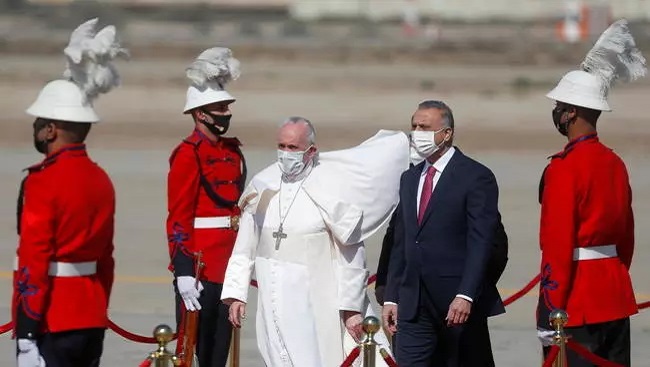
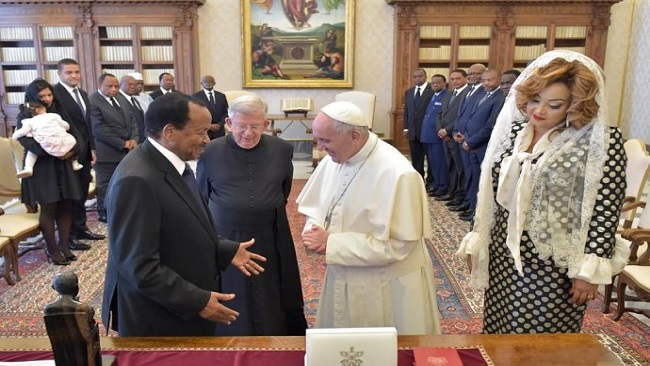
After the Vatican made its voice heard, Paris has reminded the Cameroonian government of its concerns about the continuing crisis in the English-speaking provinces. European Union states hope that the new US administration, which purports to put human rights at the heart of its foreign policy, will come to their help, reports Africa Intelligence.
Four years ago, the country’s president, Paul Biya, erroneously declared war on the country’s English-speaking minority which was simply demonstrating to bring its sorry plight to the attention of the government and the international community and what the 88 year-old dictator and his collaborators thought would be wrapped up in a week has now lasted four years with more than 7,000 young Cameroonians already sent to an early grave in a war that has no raison d’etre.
As the Francophone dominated government, its militia and Ambazonia fighters have transformed the country into an open air killing field, the country’s economy has taken a nosedive, with millions of Cameroonians seeking employment and thousands losing their jobs in the country’s two English-speaking regions where the killings are going on unabated.
The number of internally displaced person has continued to swell, while millions have fled to neighboring Nigeria where they are living rough and waiting for the fighting to end for them to return to their country, though their homes have been razed by government soldiers who are wont to inflicting collective punishment on the population each time an army soldier is killed.
The roasting of a baby on February 11, 2021 in Batibo in the North West region of Cameroon seems to be shocking to millions around the world, but very few people remember that the burning of homes during an insurrection or insurgency in Cameroon is a government policy which dates back to the days of the marquisard movement in East Cameroon.
The burning of a baby in Batibo on the country’s Youth Day by government army soldiers is a clear reminder that peace and stability are still illusory in Cameroon though the government is giving the impression that things are stabilizing in Southern Cameroons.
The roasting of vulnerable people is nothing new during this conflict that has already sent more than 7,000 Cameroonians to an early grave.
Kwakwa and Ngarbuh are still fresh in many minds. In Kwakwa, an old woman and a sick old man were roasted alive by army soldiers who are supposed to protect innocent civilians.
In Ngarbuh, government troops gunned down scores of people and set homes ablaze, leaving many calcinated in their homes. These were young children and pregnant women who had nothing to do with the insurgency that has been playing out in the two English-speaking regions of Cameroon for over four years.
The Biya Francophone Beti Ewondo regime clearly holds that burning the homes of the poor and innocent people will cause the population to discontinue its support to the insurgents even when it has not been really proven that the population is supporting the fighters.
We of the Cameroon Concord News Group believe and fervently too that US President Joe Biden is now left with no other option on the table than a military strike against Yaoundé.
By Chi Prudence Asong