
19, May 2021
French Cameroun: journalist Paul Chouta sentenced and fined in defamation case 0
Journalist Paul Chouta has been sentenced to 23 months’ imprisonment and ordered to pay several million CFA francs in fines and damages after being held for two years awaiting a trial verdict in Cameroon. Reporters Without Borders (RSF) deplores this excessive and unjustified penalty which is a serious attack on press freedom.
The judge’s verdict was finally issued yesterday after being postponed 27 times. Paul Chouta, a reporter for the Cameroun Web media outlet and a whistleblower critical of the government, was the subject of a complaint brought by the novelist Calixthe Belaya alleging defamation and the publication of fake news.
The judge sentenced him to 23 months in prison and ordered him to pay a fine of 160,000 CFA francs and a further 2 million CFA francs in damages (a total of some 3,200 euros).
He was alleged to have posted online a video of her in a heated argument with a man without seeking her permission. The video lasted just a few minutes and as a result he was held for two years in pre-trial detention, the maximum sentence for the charges against him.
The time he has already served in prison is more than the sentence but he must still raise the funds to pay the financial penalties to secure his release from Yaoundé’s main jail, normally reserved for the most serious offenders.
“Not only has Paul Chouta had to face court proceedings and a long period of detention, but he must now pay an exorbitant sum to be able finally to leave prison,” said RSF. “The verdict is the culmination of a farcical case. There is no justification for such a long detention and final verdict unless it is an attempt to silence a troublesome voice. We call on Cameroon’s justice authorities to take firm action to protect freedom of news and information and to ensure that journalists have the right to fair treatment by the judicial system in the country.”
Before his detention the journalist had been the target of threats over stories that were critical of the government. In January 2019, a few months after his arrest, he was the target of a knife attack by three unidentified assailants. After his arrest, several of his close associates were also subjected to repeated intimidation attempts by the police.
Several journalists are in prison in Cameroon, where press freedom has been eroded in recent years. Amadou Vamoulké, 71, the former head of the state-owned national radio and TV broadcaster CRTV, has been held for almost five years in Kondengui prison in Yaoundé awaiting trial. The journalist Emmanuel Mbombog Mbog Matip was arrested and arbitrarily detained in August 2020 accused of publishing fake news. He has announced he will start a hunger strike from tomorrow.
Cameroon is ranked 135th out of 180 countries in the 2021 World Press Freedom Index compiled by RSF.
Source: RSF













19, May 2021
Southern Cameroons refugees in Nigeria complain of neglect, plead for assistance 0
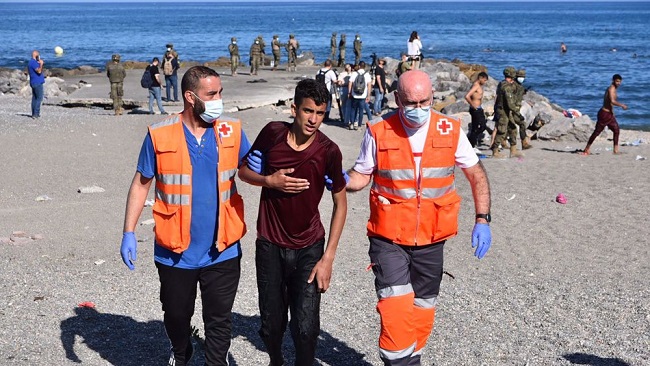
Refugees in camps scattered across the South-South zone have complained of many inadequacies, especially food supply and decent accommodation.
They spoke in separate interviews with the News Agency of Nigeria (NAN).
Refugees from neighbouring Cameroon, displaced by political crises, are taking refuge in many communities in Cross River.
Mr Elias Tako, leader of the Cameroonian Refugees at the Adagom Resettlement Camp, Ogoja, appealed to the United Nations High Commission for Refugees (UNHCR) to come to their aid.
Tako said that their basic needs and stipends were in short supply, adding that they are faced with several challenges in the camp.
“We have a lot of challenges, as I speak, we are yet to be paid our monthly Cash Base Intervention. Things are not moving as usual.
“In 2018 when we first came into the camp, the money was N7,200 monthly per individual. But as we speak, the stipend has reduced to N3,600, this is not encouraging at all.
“So, from January till date, it has not been easy with the refugees at the Adagom settlement in Ogoja,’’ he said.
Tako further said that the money was paid to them by UNHCR, adding that they are pleading with them to pay the arrears with a view to help them meet their needs.
He said that they were very uncomfortable at the camp, having been displaced from their ancestral homes as a result of the ongoing crises in Cameroon.
“We are grateful to the Cross River Government for accepting us and giving us a camp to settle down. We are also grateful to all the partners that have been delivering various services to us.
“If our brother country Nigeria with the support of the UNHCR can do anything possible for us to go back home, we will highly appreciate it, but back home in Cameroon, the crises is still ongoing,’’ he said.
He said that in 2020, it was Family Health International(FHI 360) that implemented health-based issues for the refugees, adding that their contract was terminated by the UNHCR in 2021.
The FHI 360 is a non-profit human development organisation based in North Carolina.
According to him, the Red Cross Nigeria currently implements a healthcare programme for the refugees.
He also complained of insufficient drugs in the primary healthcare centre where the refugees go for medical attention.
Mr Edet Ene, the leader of Bakassi returnees in Cross River, said the major challenge in the camp was accommodation.
Ene also said that the housing units built by the Cross River Government to house them were destroyed on Oct, 24, 2020 by hoodlums that hijacked the #EndSARS.
He said that they were now taking refuge in a primary school even as he appealed to the government and corporate organisations to come to their aid.
In Akwa Ibom, there are over 50,085 IDPs, scattered across 15 camps.
Their leaders in separate interviews, complained of neglect, and appealed to the UNHCR, the Federal Government and the World Bank to integrate them with their families.
Mr Aston Inyang, National Coordinator, Voice of Bakassi Returnees, Migrants, Refugees and Internally Displaced Persons, said that several appeals were made for assistance to the IDPs.
Inyang said that letters to the National Commission for Refugees, Migrants and Internally Displaced Persons, for assistance in areas of empowerment and skills acquisition, did not receive positive response.
The letter stated inter alia: “We are Nigerians and indigenes of Akwa Ibom State, who were displaced from Bakassi Peninsula following the ceding of the Peninsula to Cameroon by the Federal Government.
“We wish to draw your attention to the issues of Bakassi Returnees of Akwa Ibom State origin.
“We have been so neglected, cheated and marginalised by your Commission regarding relief intervention, skills training and empowerment,’’ Inyang said.
Mr Ikpoto James Ikpoto, President, Voice of Bakassi Returnees, Migrants, Refugees and Internally Displaced Persons, also claimed that the returnees were neglected.
Ikpoto said the IDPs that were camped at Technical College Ikot Ada Idem in Ibiono Ibom LGA, are experiencing accommodation problems.
“The IDPs in Akwa Ibom State suffered unbearable conditions. As the State President of the body, I tried at least to put an anchor on them, but the burden is getting heavier,” Ikpoto said.
Mr Etim Bassey, Chairman of Bakassi Returnees in Oron, said the returnees were really passing through terrible times that required urgent intervention.
Bassey said the IDPs were scattered in the five local government areas of Oron, adding that the camps lacked adequate healthcare facilities.
He called on governments to identify the real IDPs and render assistance as a matter of urgency, “instead of dealing with political returnees.’’
The story was the same at IDPs camps at Nsit Ibom, Iko Eket, among others.
Mr Godwin Udo, member of the Bakassi Returnees in Eket expressed displeasure over several promises made by previous administrations to integrate them with their families, but nothing has been done till now.
He also alleged that there were no health facilities, potable water and that the camp had been in a deplorable state for five years.
“UN officials visited the camp severally and promised to build resettlement camp and to give us relief materials, that promise was not fulfilled,’’ he said.
Udo said that their families still live in a temporary camp at Government Primary School, Iko Eket.
The Bayelsa camp with 800 inhabitants is located at Azikoro Road, Yenagoa. It is populated by victims of flood disaster and Bakassi returnees.
According to Mr Jeremiah Jerry-Weni, leader of Bakassi returnees, the state government showed concern when they were brought to camp, but afterwards forgot them.
Jerry-Weni urged the federal and state governments to improve the standard of living in the IDPs camp.
He said that life had been very difficult for them and appealed to humanitarian organisations to assist them.
Some victims of the 2020 flood disaster in the state, now taking refuge at Igbogene IDPs camp, said most of them could not go back to their houses since they lacked the resources to relocate, hence they decided to remain in the camp.
According to an IDP, Mrs Ebiere Etifa, her children have nowhere to go since no one can assist her and the children.
She appealed to relevant authorities to address their predicament as they felt abandoned by everyone around them.
In Edo, no fewer than 2, 500 IDPs, mostly from the North-East are being taken care of by `Home for The Needy Foundation. The camp is located at Uhogua, Ovia North East Local Government Area.
Coordinator of the Foundation, Solomon Folorunsho, said the organisation is grappling with feeding the IDPs, adding that the outbreak of COVID-19 pandemic worsened the situation at the camp.
He said: “It takes a lot to feed these IDPs. We got some support before, but since the outbreak of the COVID-19 pandemic, we have not received any assistance from anywhere; we managed to feed them; it has been God.
“Our concern here is not where these IDPs come from, but to secure their future,’’ he said.
He also solicited assistance in the areas of education as 50 of the IDPs had enrolled in various institutions of learning across the country, while 23 of them were offered admissions in the current academic session.
“As I speak with you, University of Benin has already offered admission to 20 of them. Ekiti State University gave admission to three. This figure is besides the 50 we had before.
“We don’t want them to go into crime. We are giving them education. Some are studying professional courses. They are the future of Nigeria.
“They need support. There is little we can do. Government should take over their education, pay their fees, while we remain at the background,” he said. (NANFeatures)
Source: Nigerian Observer News