25, December 2020
Pope Francis calls for peace and reconciliation in Cameroon, urges world to share Covid-19 vaccines 0
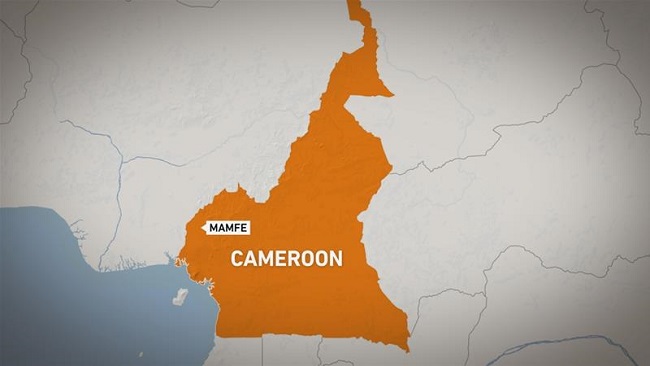
Francis called for peace and reconciliation in Cameroon, Syria, Yemen, Libya, Nagorno-Karabakh, South Sudan, Nigeria and Iraq, which he is due to visit in early March.
Pope Francis also stated in his Christmas message on Friday for nations to share Covid-19 vaccines, saying walls of nationalism could not be built to stop a pandemic that knows no borders.
In a sign of the times, Francis delivered his traditional “Urbi et Orbi” (to the city and the world) message virtually from a lectern inside the Vatican instead of from the central balcony of St. Peter’s Basilica before tens of thousands.
The pandemic and its social and economic effects dominated the message, in which Francis called for global unity and help for nations suffering from conflicts and humanitarian crises.
“At this moment in history, marked by the ecological crisis and grave economic and social imbalances only worsened by the coronavirus pandemic, it is all the more important for us to acknowledge one another as brothers and sisters,” he said.
Stressing that health is an international issue, he appeared to criticise so-called ‘vaccine nationalism’, which UN officials fear will worsen the pandemic if poor nations receive the vaccine last.
“May the Son of God renew in political and government leaders a spirit of international cooperation, starting with health care, so that all will be ensured access to vaccines and treatment. In the face of a challenge that knows no borders, we cannot erect walls. All of us are in the same boat,” he said.
Italians are under a nationwide lockdown for much of the Christmas and New Year holiday period. The restrictions mean people are not be able to go to St. Peter’s Square or the basilica for papal events, all of which have been moved indoors.
Christmas is above all a time to help others because Jesus himself was born a poor outcast, Francis said on Thursday night at his Christmas Eve Mass, which started two hours early so the few participants could get home in time before a 10 pm curfew.
“May the Child of Bethlehem help us, then, to be generous, supportive and helpful, especially towards those who are vulnerable, the sick, those unemployed or experiencing hardship due to the economic effects of the pandemic, and women who have suffered domestic violence during these months of lockdown,” he said in his Friday address.
He also asked to comfort those suffering from humanitarian crises or natural disasters in Burkina Fasso, Mali, Niger, the Philippines and Vietnam.
Source: REUTERS


25, December 2020
Covid-19 dampens Christmas cheer in Bethlehem, Rome and beyond 0
Bethlehem on Thursday ushered in Christmas Eve with a stream of joyous marching bands and the triumphant arrival of the top Catholic clergyman in the Holy Land, but few people were there to greet them as the coronavirus pandemic and a strict lockdown dampened celebrations in the traditional birthplace of Jesus.
Similar subdued scenes were repeated across the world as the festive family gatherings and packed prayers that typically mark the holiday were scaled back or canceled altogether.
On Christmas Eve in Italy, church bells rang earlier than usual. The Italian government’s 10 pm curfew prompted pastors to move up services, with “Midnight” Mass starting Thursday evening in some churches as early as a couple hours after dark. Pope Francis, who has said people “must obey” civil authorities’ measures to fight the spread of Covid-19, fell in line. This year, the Christmas vigil Mass in St. Peter’s Basilica was moved up from 9:30 p.m. to 7:30 p.m.
Normally, seats at the vigil Mass are quickly snapped up, by Romans and by tourists, but the pandemic has reduced tourists in Italy to a trickle. In keeping with social distancing measures, barely 200 faithful — instead of several thousand — spaced out in the basilica’s pews and wearing masks, attended Francis’ celebration of the Mass. A row of fiery red poinsettia plants warmly contrasted with the sumptuous cold marble of the basilica.
Francis in his homily offered reflections on Christmas’ significance. “We often hear it said that the greatest joy in life is the birth of a child. It is something extraordinary and it changes everything,” he said. A child “makes us feel loved but can also teach us how to love.”
“God was born a child in order to encourage us to care for others,” said Francis, who has made attention to the poor and unjustly treated a key theme of his papacy.
Celebrations elsewhere in Europe were canceled or greatly scaled back as Covid-19 infections surge across the continent and a new variant that may be more contagious has been detected.
In Athens, Christmas Eve was eerily silent. In normal times, voices of children singing carols while tinkling metal triangles can be heard all day. The decades-old custom, in which children go house to house and receive small gifts, was banned this year. Groups of children managed to honor the tradition by singing to Prime Minister Kyriakos Mitsotakis by video link.
Throughout the pandemic, one of the hardest-hit churches in New York City has been Saint Peter’s Lutheran Church in Manhattan. Church leaders say more than 60 members of the congregation — which numbered about 800 before the pandemic — have died of COVID-19, almost all of them part of the community of some 400 who attended services in Spanish.
Despite their own heartbreaks, congregation members — many of them immigrants — donated coats, scarves and other winter clothes for more than 100 migrant minors at a detention center in Manhattan.
While many other New York City churches have resumed in-person services, Saint Peter’s continues to offer its Masses only online. The schedule for Christmas Eve and Christmas day included Masses in English and Spanish, and a bilingual jazz vespers service.
In Bethlehem, officials tried to make the most out of a bad situation.
“Christmas is a holiday that renews hope in the souls,” said Mayor Anton Salman. “Despite all the obstacles and challenges due to corona and due to the lack of tourism, the city of Bethlehem is still looking forward to the future with optimism.”
Raw, rainy weather added to the gloomy atmosphere, as several dozen people gathered in the central Manger Square to greet Latin Patriarch Pierbattista Pizzaballa. Youth marching bands playing Christmas carols on bagpipes, accompanied by pounding drummers, led a joyous procession ahead of the patriarch’s arrival early in the afternoon.
“Despite the restrictions and limitations we want to celebrate as much as possible, with family, community and joy,” said Pizzaballa, who was to lead a small Midnight Mass gathering later in the evening. “We want to offer hope.”
Thousands of foreign pilgrims usually flock to Bethlehem for the celebrations. But the closure of Israel’s international airport to foreign tourists, along with Palestinian restrictions banning intercity travel in the areas they administer in the Israeli-occupied West Bank, kept visitors away.
The restrictions limited attendance to residents and a small entourage of religious officials. Evening celebrations, when pilgrims normally congregate around the Christmas tree, were canceled, and Midnight Mass was limited to clergy.
The coronavirus has dealt a heavy blow to Bethlehem’s tourism sector, the lifeblood of the local economy. Restaurants, hotels and gift shops have been shuttered.
It was not the usual raucous Christmas eve in Mexico City. The big celebration was a ceremony where the country’s first coronavirus vaccine shots were administered.
On Christmas Eve, parents usually take their kids to a downtown plaza where actors dress up as the Three Wise Men or Santa Claus and pose in front of elaborate backdrops resembling the sets of popular children’s movies.
But this year, the Wise Men and Santas were banned. Mexico’s other grand tradition, Midnight Mass, was canceled in many parishes.
Still, Zoé Robledo, director of Mexico’s social security system, said the start of the country’s COVID-19 vaccine program made it “an unforgettable Christmas.”
Rio de Janeiro’s iconic beaches remained open, but a City Hall decree aimed at limiting gatherings prevented drivers from parking along the shore. Rain also kept beachgoers at home.
Thomas Azevedo and his 9-year-old son braved the bad weather to set up a small stand, selling beer and caipirinhas made from fresh fruit. By early afternoon, he hadn’t sold a thing.
“It’s not so much the rain; in previous years it was full of tourists at Christmas. This year there’s no one,” said Azevedo, 28.
Australians had until recently been looking forward to a relatively Covid-19-free Christmas after travel restrictions across state borders relaxed in recent weeks in the absence of any evidence of community transmission. But after new cases were detected over the past week, states again closed their borders.
While many places around the globe were keeping or increasing restrictions for Christmas, Lebanon was an exception. With its economy in tatters and parts of its capital destroyed by a massive Aug. 4 port explosion, Lebanon has lifted most virus measures ahead of the holidays, hoping to encourage spending. Tens of thousands of Lebanese expatriates have arrived home for the holidays, leading to fears of an inevitable surge in cases during the festive season.
Lebanon has the largest percentage of Christians in the Middle East — about a third of its 5 million people — and traditionally celebrates Christmas with much fanfare.
“People around us were tired, depressed and depleted, so we said let’s just plant a drop of joy and love,” said Sevine Ariss, one of the organizers of a Christmas fair along the seaside road where the explosion caused the most damage.
Source: AP