
5, December 2020
France-Afrique: Military officer elected head of Mali’s interim legislature 0
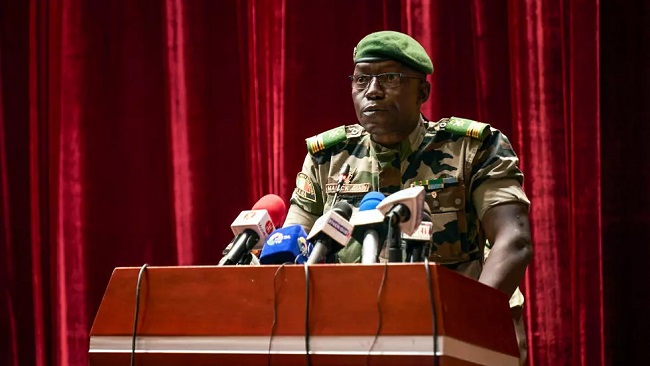
Mali’s interim legislature on Saturday elected Colonel Malick Diaw, a member of the military junta that toppled president Ibrahim Boubacar Keita in August, as its president.
The 121-seat body known as the National Transition Council was meeting for its inaugural session in the capital Bamako, and is a key part of the post-coup interim government apparatus in Mali.
Young army officers in the conflict-ridden Sahel state toppled president Ibrahim Boubacar Keita on August 18 after weeks of anti-government protests.
Under the threat of international sanctions, the officers between September and October handed power to an interim government, which is meant to rule for 18 months before staging elections.
Figures with army links dominate this interim government, however, and anger over their prominent role is growing.
Coup leader Colonel Assimi Goita was elected interim vice president, for example, and retired army colonel Bah Ndaw was also elected interim president.
Members of the defence and security forces have 22 seats in the transition council, according to a government decree, while political parties, civil society groups and trade unions also have seats.
On Saturday, the council elected Colonel Malick Diaw as its president unopposed, according to AFP journalists, with 111 votes in his favour and seven abstentions. Three council members did not vote.
Diaw was second in command of the military junta that took power after Keita’s ouster. The junta has never formally been dissolved.
Last month, Goita was also given veto power over the appointments to the new legislature, in a move seen by critics of the interim regime as strengthening army control.
The opposition June 5 Movement, which led protests against Keita this year, said in a statement on Friday that it was boycotting the new legislature and that it would not serve as a “stooge for a disguised military regime”.
Source: AFP














6, December 2020
French Cameroun: Social media a major factor in domestic tensions 0
Social media in Cameroon are heightening political and ethnic tensions unleashed by the disputed 2018 presidential election – that’s according to a report by the International Crisis Group. The ICG says social media platforms, especially Facebook, should improve filtering toxic content and promote verified pages to reduce the tensions.
The ICG report says Cameroon is already facing serious security challenges and should find a way to ease political tensions and stop offensive language, such as ethnic slurs, that are causing the central African country to sink into violence.
Arrey Elvis Ntui, the ICG’s senior analyst for Cameroon, says hate speech and inter-ethnic tensions have increased since the October 2018 poll. He says the hate speech problem could endanger Cameroon’s stability.
“This period has also been marked by a lot of street protests. The country is currently dealing with a separatist insurgency in its Anglophone regions. Also, the army is dealing with the Boko Haram insurgency in the far north of the country with nearly daily attacks. Cameroon cannot simply afford to allow the ethnic and political tensions it is facing to rise to levels where they could constitute inter community violence,” Ntui said.
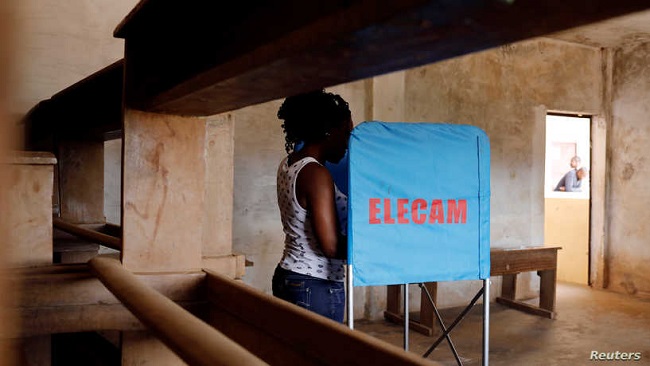
President Paul Biya, who has been in power for 38 years, was declared the winner of the elections. His victory is still contested by opposition leader Maurice Kamto, who insists he, not Biya, prevailed in the poll.
Ntui says Cameroon can avoid a slide into instability by reforming its electoral system.
“[The International] Crisis Group is proposing that Cameroon should strengthen its institutions which are responsible for addressing discrimination and improving its policy of living together. Some of these include discussions with the extra-parliamentary opposition in order to review the electoral system to make it more acceptable,” he said.
Ntui said the ruling CPDM party and the opposition should take measures to address the excesses of their supporters on social media, especially Facebook. He added that Facebook itself should also help check inflammatory language, provocative content and fake news which, he said, contribute to inflaming ethnic and political tension in the country.
Government spokesperson Rene Emmanuel Sadi said there is growing hate speech due to social media. He blamed opposition parties that he says want to weaken Biya’s rule.
“The government of the republic appeals to the majority of the Cameroonian people who have never allowed themselves to be misguided by unscrupulous politicians. The government through my voice exhorts Cameroonian men and women at home and abroad to thwart destabilizing maneuvers wherever they come from,” Sadi said.
Thursday’s report comes at a time when NGOs and journalism groups in Cameroon are warning against the use of media organs to propagate hate speech.
Rose Obah, the national coordinator of the Cameroon Community Media Network, said journalists should not be used as propaganda tools.
“We just come in to advise our members of our Cameroon Community Media Network as well as other journalists to be the first persons to [exercise] some kind of censorship around hate speech and fake news. Such words are unhealthy. Such words just come in to incite more violence and definitely with our main tool, peace journalism, we use it to encourage reporters and editors to encourage a peaceful society,” Obah said.
The ICG says President Biya should be wary of leaving behind a country riven with fighting and separatist sentiment in Anglophone areas but also by wider tensions, endangering Cameroon’s relatively amicable inter-ethnic relations.
Source: VOA