
30, January 2021
Visiting Cardinal seeks to resolve Anglophone crisis 0
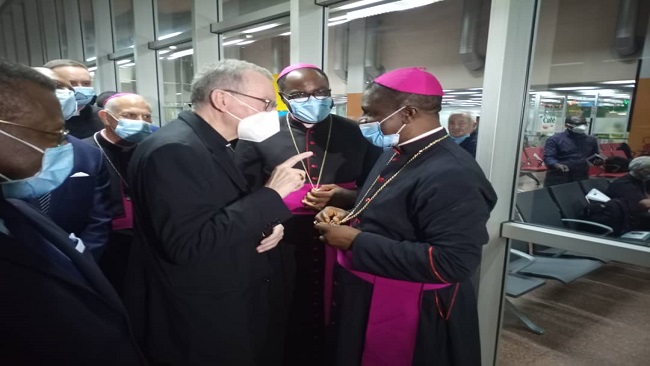
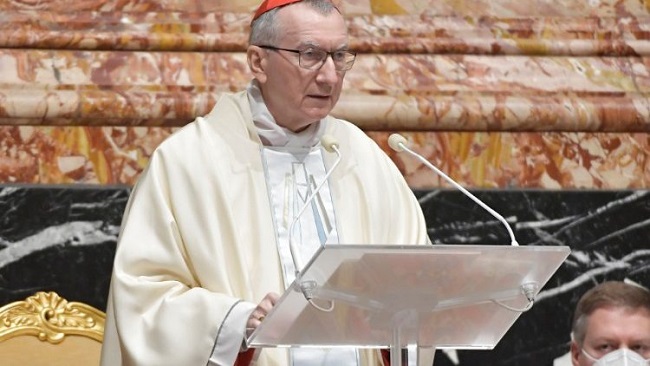
The Vatican’s Secretary of State kicked off a week-long trip to Cameroon on Thursday in which he will visit a region blighted by clashes between government forces and separatists.
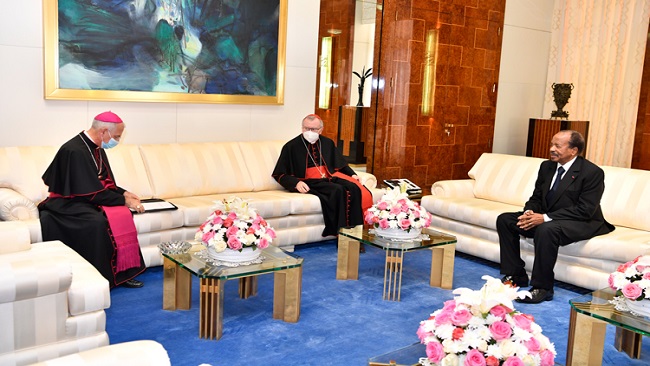
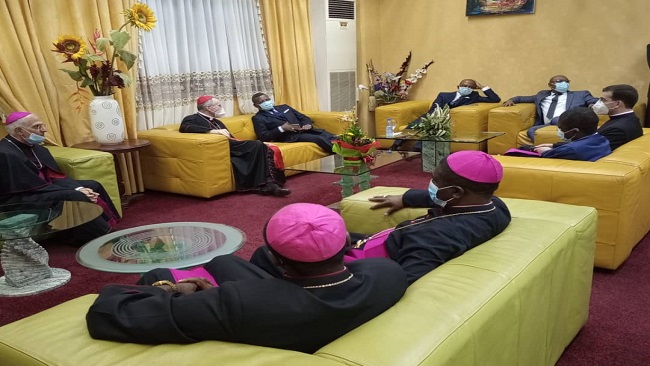
During his visit from Jan. 28 to Feb. 3, Cardinal Pietro Parolin is scheduled to meet with the local authorities and Cameroon’s Catholic bishops in the country’s capital, Yaoundé, and visit the English-speaking Northwest Region.
Local media in Cameroon have reported that the cardinal will likely use his visit to work towards the resolution of the dispute known as the Anglophone crisis.
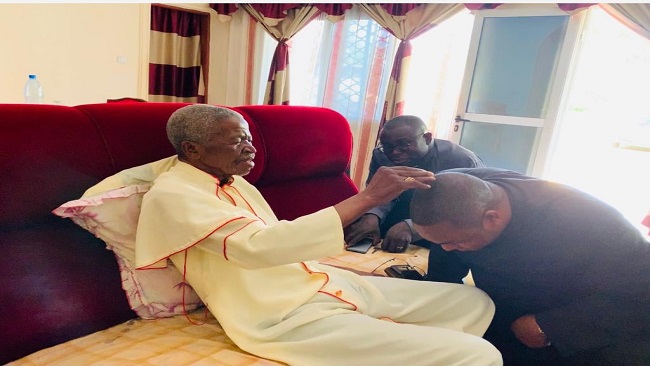
Both the Holy See and the local Church have appealed for dialogue to end the strife. One of the Catholic leaders who has played an active role in seeking a resolution is Cardinal Christian Tumi, who was kidnapped by gunmen in Cameroon’s Northwest Region on Nov. 5.
A video published on social media showed the 90-year-old cardinal calmly responding as one of his captors confronted him about his calls for separatist fighters in Cameroon to lay down their arms. To this, the cardinal responded: “I will preach what is the truth with pastoral conviction and biblical conviction.”
“Nobody has the right to tell me to preach the contrary because I was called by God,” Cardinal Tumi said. He was released by his kidnappers on Nov. 6.
The crisis in Cameroon is rooted in country’s colonial history. The area was a German colony in the late 19th century, but the territory was divided into British and French mandates after the German Empire’s defeat in World War I. The mandates were united in an independent Cameroon in 1961, but English-speakers have complained ever since of marginalization by the French-speaking majority.
There is now a separatist movement in the Southwest and Northwest Regions, which were formerly the British Cameroons. Violence escalated in October when gunmen attacked Mother Francisca International Bilingual Academy, a school in Kumba in Cameroon’s Southwest region, on Oct. 24 and opened fire on students in a classroom. Seven students aged 12 to 14 were killed.
Pope Francis prayed on Oct. 28 that “the tormented regions of the northwest and southwest of [Cameroon] may finally find peace.”
In Cameroon’s Northwest Region, Parolin will offer Mass on Jan. 31 at the Catholic cathedral in Bamenda, where he will give the pallium to Archbishop Andrew Nkea Fuanya.
Nkea, 55, was appointed archbishop of Bamenda in December 2019. He is known for his emphasis on family, community, and traditional values.
At the 2018 meeting of the Synod of Bishops on young people, faith, and vocational discernment, Nkea, who was the bishop of Mamfe at the time, said that the Church in Cameroon and many parts of Africa was growing — including among young people.
“My churches are all bursting, and I don’t have space to keep the young people,” Nkea said during a Vatican press conference in Oct. 2018. “And my shortest Mass would be about two and a half hours.”
A 2018 study by the Pew Research Center found that church attendance and prayer frequency was highest in sub-Saharan Africa and lowest in Western Europe. Four out of five Christians in Cameroon said that they prayed every day.
During the synod on young people, Nkea credited the Church’s growth in Cameroon to the alignment between Church teaching and the values of Cameroonian society, and the strength of the family as a cultural institution.
“People ask me, ‘Why are your churches full?’” Nkea said in 2018. “Coming from Africa, the family is a very, very strong institution.”
“We come from a culture in which tradition normally is handed from one generation to the other.”
“Our traditional values still equate to the values of the Church, and so we hand over the tradition to our young people undiluted and uncontaminated,” he continued, noting that a strong sense of community in the Church is something “very important that Europe can learn from Africa.”
Source: The Catholic News Agency













30, January 2021
Fearing Amba Fighters, Biya regime tightens security at football venues 0
A stone’s throw from the Moungo, the river that in part marks the separation between the English and French-speaking regions of Cameroon, light armored vehicles and trucks full of soldiers have been on the lookout since the beginning of the African Championship of Nations (CHAN).
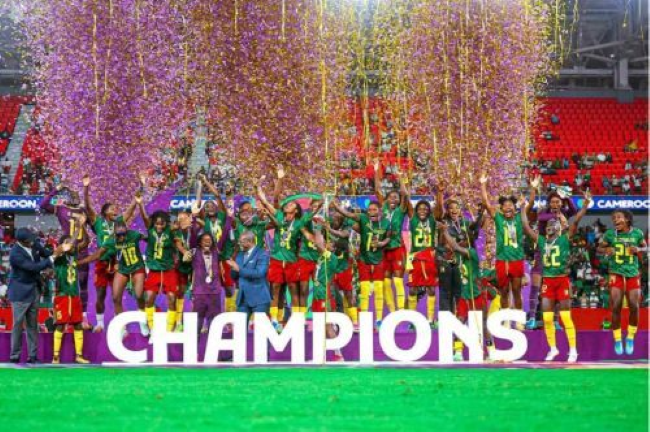
This tournament, which brings together 16 African national teams without their stars playing outside the continent, is a dress rehearsal before the African Cup of Nations (CAN), the flagship competition of African soccer scheduled for January 2022.
It is the first major international soccer tournament organized in the world since the beginning of the Covid-19 pandemic. But beyond the health restrictions gauging 25% of the seats, 50% from the semi-finals, the great challenge for the organizers is that of security, in this country in a situation of war on part of its territory.
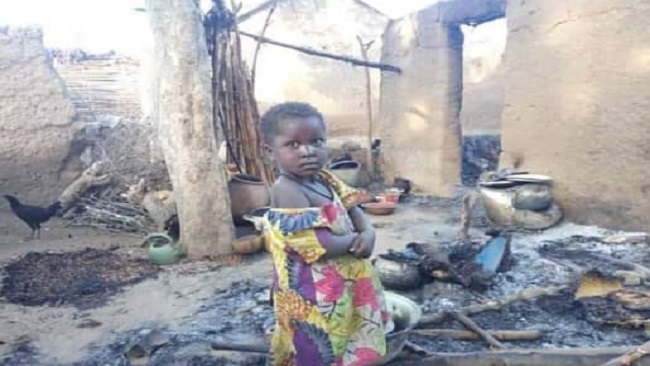
For the past four years, the English-speaking regions of the Southwest and Northwest have been plagued by a bloody conflict between armed groups demanding the independence of these English-speaking areas and the security forces. The violence has resulted in more than 3,000 deaths and more than 700,000 displaced persons. Civilians are caught in the crossfire and are victims of crimes and abuses by both sides, according to international NGOs and the UN.
Some armed groups have vowed to disrupt CHAN. So along the banks of the Moungo, which was also the symbol of the reunification in 1961 of Cameroon under French and British mandates at the end of the First World War, police and military forces were considerably reinforced.
A state of alert
As the qualification phase for the quarter-finals draws to a close, fears are growing in Limbe, the capital of the Southwest region, which will host one of the semi-finals, as well as in Buea, the training site for some of the teams.
On Tuesday and Wednesday, as the Zambia-Namibia match in Limbe approached, the towns on the road from the resort to Douala were almost deserted.
Armed separatists, dubbed Amba Boys passed ‘ghost town’ orders where they ban activity every Mondays.
Since the opening of CHAN, ghost towns are decreed every day and match eve in Limbe. Usually very lively, the small towns of Tiko and Mutengene, between Buea and Limbe, had closed down on Wednesday.
On the road as in Buea, light armor patrols criss-crossed the town with machine guns ready to fire.
In Molyko, the boulevard that cuts Buea in half, lies the burnt body of a car. Four other charred wrecks still lie on the road to Limbé.
Military convoys are sometimes targeted by IEDs, improvised explosives placed along the roadside.
Bomb
In November, suspected separatists attacked a school in Limbé, setting fire to two classrooms and forcing teachers and students to undress.
Descending the mountain to Limbé, as in some ultra-secure areas of Buea, life appears more normal, however. Clusters of schoolchildren and high school students return home after a day of classes. Shops and bars fill up.
But in Limbé, when the matches are approaching, fear is very present.
On Tuesday, “everyone took cover after a bomb exploded,” which did not cause any injuries, not far from the stadium, says Harris, 19, still in shock. “Just to be on the safe side,” the soccer fan did not go to Zambia-Namibia as he had planned.
From a security standpoint, everything is going well,” said Southwestern Governor Bernard Okalia Bilai on Wednesday at halftime of Zambia-Namibia, which was attended by about 1,000 spectators. “We haven’t had any incidents that would have disrupted our program,” he said.
Source: Africa News