

30, August 2019
Keep schools open, Cameroonian bishops tell Ambazonia Interim Gov’t 0
Some bishops in Cameroon have urged Anglophone separatists to allow schools to reopen, after militants abducted a bishop and two priests for condemning the school shutdown campaign.
“All children deserve the right to education and a good future wherever they decide to spend their lives,” said members of the Bamenda provincial bishops’ conference.
“Many parents have been consistently deceived about their children’s education, while arguments about a lack of security are used to frighten and prevent them sending [children] to school.”
The three-page open letter was published on August 24 after independence fighters in Cameroon’s northwest and southwest regions called for a new school shutdown.
The bishops said separatists had burned schools and killed teachers who had defied past boycott demands and should now “approach the issue of schools with reason more than emotion.”
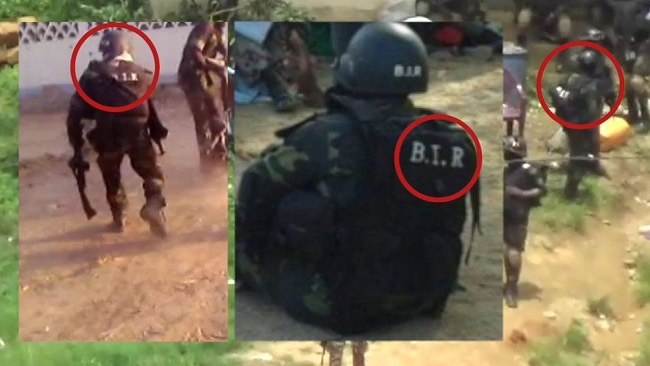
However, the letter also called on the government to “exercise more vigilance” over military units and ensure they remained “as far from schools as possible.”
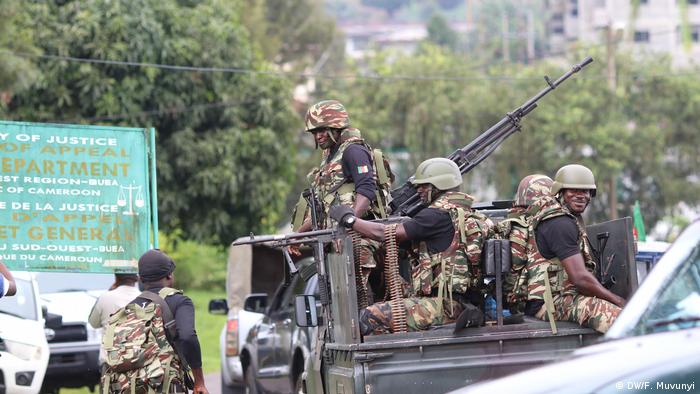
“Schools are not barracks, and [soldiers] should not enter them unless invited by competent authorities,” the bishops said.
“Every state has a right to employ its military to protect citizens and defend its territorial integrity. However, it is also known that some military have used exaggerated force against innocent civilians and sometimes committed horrendous crimes against children,” they said.
The letter was published as Bishop George Nkuo of Kumbo was freed by abductors on August 24, five days after two of his priests were released by separatists.
Journal du Cameroun said all three had been detained in apparent retaliation for an August 15 homily by Bishop Nkuo, who condemned the school closures as a “crime against humanity and a great exploitation.” He called on Catholics to resist “the evil dragon of violence, torture and kidnappings.”
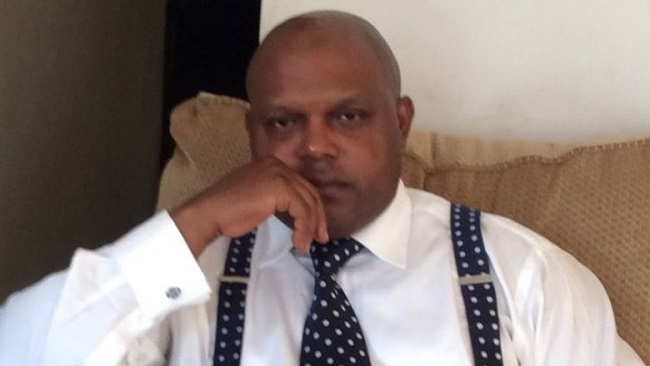
Separatist leader Mark Bareta denied the bishop had been kidnapped and told the same newspaper Aug. 26 his fighters were “civilians and Christians,” and had sought “a conversation with their bishop.”
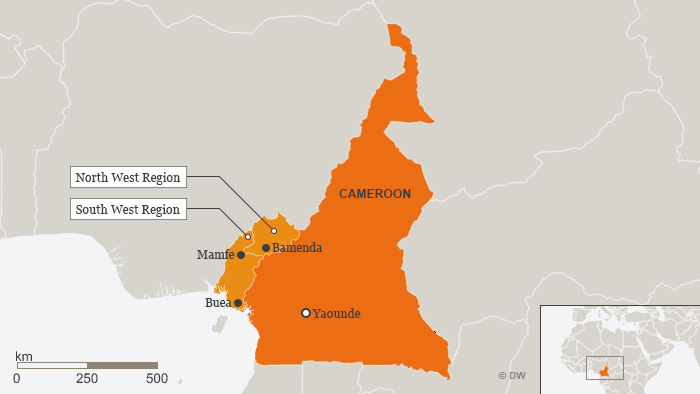
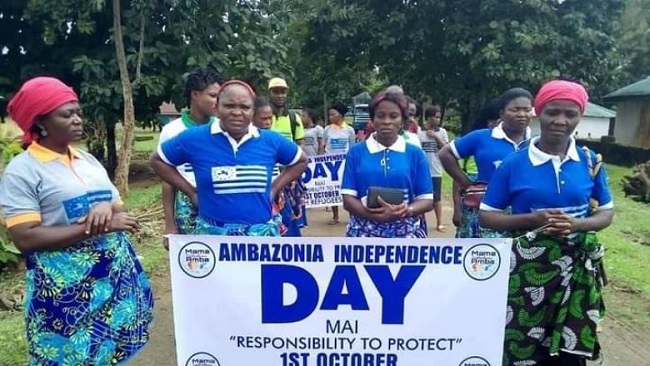
At least 2,000 people have been killed and 400,000 displaced during three years of army deployment in the Anglophone regions, where separatists declared an independent state, Ambazonia, in October 2017 after protesting the encroachment of French-language controls.
Church leaders and human rights groups have condemned atrocities by both sides in the territories.
Other senior Catholic clergy have also been abducted, including Archbishop Cornelius Esua of Bamenda, who was detained briefly in June after attempting to pass a separatist roadblock.
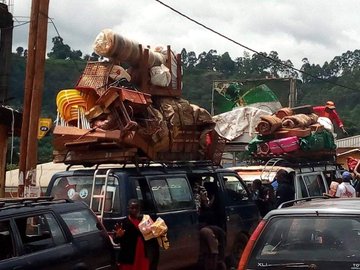
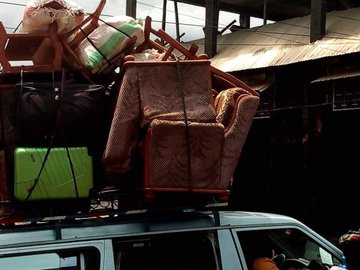
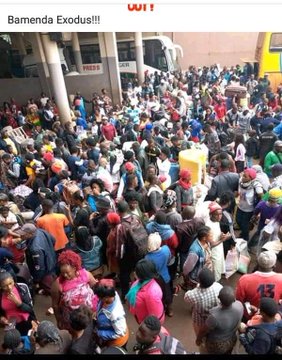
In an Aug. 27 statement, Unicef estimated 4,400 schools had been closed and 74 burned, leaving more than 600,000 children without education in northwest and southwest Cameroon. Journal du Cameroun said a “mass exodus” was now underway to avoid the separatist shutdown.
Source: Catholic Herald













30, August 2019
Impoverished Cameroon women forced into human trafficking rings 0
With an estimated 30 percent of the country’s population of 24.68 million living below the poverty line, many young Cameroonians are looking to other countries to secure a better life for themselves. And young women are joining this trend with reports of some trapped in human trafficking rings operating in the Middle East.
“Migration appears to be the most popular resolution to individuals growing up in impoverished regions of Cameroon. In response to the increasing poverty, many people move out of the country to seek better living conditions,” said the Borgen Project, an organisation that fights global poverty.
The CIA World Report for 2019 reported that the West African country’s economy suffers from factors that often impact underdeveloped countries, such as stagnant per capita income, a relatively inequitable distribution of income, a top-heavy civil service, endemic corruption, continuing inefficiencies of a large parastatal system in key sectors, and a generally unfavourable climate for business enterprise.
And despite support from the UN World Food Programme (WFP), Cameroonians continue to battle other poverty-related issues including malnutrition, food insecurity and inadequate health care.
While the government tries to fill in gaps by providing subsidies for electricity, food, and fuel, these have dented the federal budget which, in turn, has affected potential funding for education, healthcare and infrastructure, the Borgen Project reported.
In a bid to escape the grinding poverty, Enact Africa recently reported that lured by the promise of employment, some Cameroonian women are being trafficked to Kuwait and Saudi Arabia.
“In September 2018, the kidnapping of 14 young Cameroonian women in Kuwait City brought to light the trafficking of migrant workers in the Middle East,” wrote coordinator Agnes Ebo’o and researcher René Oyono, from ENACT’s Regional Organised Crime Observatory for Central Africa, which is part of the Institute for Security Studies (ISS).
Following diplomatic negotiations between Kuwait and Cameroon, the young women were eventually able to return home. However, Enact confirmed that the 2016 incident was neither unique nor unprecedented.
“In 2016 Cameroon’s government was already referring to a five-year old practice, implying that the phenomenon has existed since at least 2011.”
As the trend continues, Cameroon’s unemployed women, often with limited educational qualifications, are still being smuggled to the Mideast by intermediaries whereupon arrival they end up trafficked or enslaved.
Their destinations predominantly include Kuwait, the United Arab Emirates (UAE) and Saudi Arabia, according to Oumia Paba Salé, Near and Middle East Foreign Affairs Secretary at Cameroon’s Ministry of External Relations (MINREX).
Walk Free Foundation’s Global Slavery Index in 2017 ranked Saudi Arabia and Kuwait among the countries with the highest prevalence of slavery in the Arab world.
In most cases, the women are recruited through networks in Cameroon that advertise jobs for candidates through posters at universities and churches in the capital Yaoundé and another major city Douala.
The victims are then entrapped in a vicious cycle which begins when they are forced to pay between $2 000 and $3 000 to various players in the human trafficking chain, leaving them in debt upon arrival at their destinations where they are held in servitude – often with their passports taken away from them – until they are able to repay their debts, sometimes through sex work and at other times through low-paying menial labour – and they are not always freed once their debts are paid off.
“This practice has serious implications at individual, family, community and state levels. It causes financial losses that are devastating for poor families; and their inhumane treatment leaves victims highly traumatised,” said the Enact report.
African News Agency (ANA)