27, March 2022
African Development Bank Group signs MOU with ECOWAS for $3.56 million grant to develop West Africa Pharmaceutical Industry 0
The African Development Bank (www.AfDB.org) and the Commission of the Economic Community of West African States (ECOWAS) have signed a memorandum of understanding for $3.56 million in grant funding to support the development of pharmaceutical industries in West Africa.
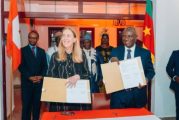
Lamin Barrow, Managing Director of the Bank for Nigeria and Mamadou Traoré, ECOWAS Commissioner in charge of Industry and the Private Sector, signed the agreement for the Pharmaceutical Industry Development Support Project in West Africa on Wednesday.
The project’s total cost is $3.77 million, to which the ECOWAS Commission will provide $200,000 in cash and $400,000 in-kind.
The funds will support the implementation of regulations to allow duty-free access to pharmaceutical raw materials, packaging, and finished products under the ECOWAS Common External Tariff. It will also help establish an effective regional pharmaceutical regulatory ecosystem by providing technical assistance programs for regional regulatory authorities.
Commissioner Traoré said: “Local production of pharmaceuticals and biologicals has become an imperative and a regional priority, as is the provision of healthcare delivery services. The African Development Bank’s support of these priorities will help ECOWAS achieve its development objectives.”
During the signing ceremony held in Abuja, the African Development Bank’s Director General for Nigeria, Lamin Barrow said: “The COVID-19 crisis has further exposed the fragility of our national healthcare systems and posed significant disruptions to the global health and pharmaceutical supply chains. This underscores the urgency of accelerating efforts to ensure a minimum level of supply of health products.”
The project will enhance the pharmaceutical industry’s competitiveness through improved quality and product standards and help ensure that the region complies with best practices in manufacturing pharmaceutical products and supplies. It will strengthen regional training institutions and laboratories to ensure that the required skills are available to support the industry’s regional growth in a gender-sensitive and environmentally friendly manner.
In response to calls from the African Union and the pharmaceutical industry, the African Development Bank has taken a leadership role in developing and driving a continental Vision and Action Plan for a new African Pharmaceutical order. Bank Group President Dr. Akinwumi A. Adesina announced last year that the institution would mobilize up to $3 billion to support this development.
The project will also advance the Bank’s efforts to support the harmonization of the regulatory environment for pharmaceuticals across Africa at the regional and continental levels. This, in tandem with the operationalization of the African Continental Free Trade Area, will deepen intra-African integration and trade, boosting regional markets.
The Bank’s Vice President for Private Sector, Infrastructure and Industrialisation, Solomon Quaynor, said: “To develop the pharmaceutical industry, the African Development Bank will help to develop local production capacities to increase the market share of African (local and regional) pharmaceutical production value to 45-55% by 2030.”
The project aligns with three of the African Development Bank’s High Five strategic priorities: Industrialize Africa, Integrate Africa, and Improve the quality of life for the people of Africa. It also advances the Bank’s Regional Integration Strategy for West Africa, and is in line with the Bank’s gender strategy, and its strategic response to the Covid-19 pandemic.
The ECOWAS Commission will be the executing agency for this project, which will run for two years, starting from 2022. The West African Health Organisation will be the implementing agency.
By APO Group

















29, March 2022
Chinese-built port, highway in Cameroon boost economy, regional trade 0
When the Chinese arrived in Cameroon in 2011 to begin building the first phase of Kribi Deep Seaport, the Central African nation was hopeful of having a new transport corridor that would link its vast southwestern coastal area and neighboring nations.
The main existing port in the commercial hub of Douala, some 150 km to the north of Kribi was virtually worn out by congestion. To increase transport capacity, the China Harbour Engineering Company Ltd (CHEC) set out to construct the Kribi port, and in three years works were completed.
The new port has stimulated the country’s economy and provided relief for the harbor at Douala port, the country’s most populous city, while also providing dock space for larger ships, said Alain Patrick Mpila Ayissi, Manager of Land development and Environment department of Port Authority of Kribi.
“Since the construction works ended in 2014 and the start of port operations in 2018, there has been notable increase in economic growth. The first indicator is the hikes in the custom revenues as a result of the port. We left from 750 million XAF (US$1.26 million) to practically 150 billion XAF per annum,” said Ayissi.
As a cheap logistics mode, the port is a fundamental foundation of Cameroon’s industrialization process, said Xu Huajiang, general manager of China Harbour Central Africa Division of CHEC who oversaw the construction of the first phase of the port.
“So far, after Kribi (port) was founded, it has attracted a lot of external investment. For example, there is already a cocoa factory invested by Cote d’Ivoire. There are two cement plants under construction. Many logistics enterprises have settled in to build their own yards and warehouses. There are also some Chinese enterprises coming to discuss investment with them in this area,” Xu said.
Kribi port is located on the Atlantic coast some 285 km from the capital Yaounde. It is strategically positioned in the center of the Gulf of Guinea and is surrounded by the 262 square km Kribi Industrial Area, destined to host new industrial and logistical developments.
With Cameroon being a growing market, Kribi is expected to become a regional hub for the African Atlantic coast. Ship-owners will no longer run the risk of offloading part of their cargo elsewhere before docking in Cameroon, said Ayissi.
“With the coming of the Kribi port, Cameroon has once again placed herself as the port entry to the sub-region. This (the port) has added more value to certain industrial projects in Chad, Central African Republic and Congo,” he added.
As part of the project, CHEC also constructed the Kribi-Lolabe highway that will cater to the requirements of the port transportation and logistics and make a contribution to local prosperity.
The highway which includes the construction of 20 bridges, the total length of which is 2 km will serve as an important traffic artery in the Kribi region.
Currently, CHEC is busy constructing the Kribi Deep Sea Port Phase II. After the completion of the project, it is expected to become a large container transit port and comprehensive hub port in Central and West Africa.
Xu revealed that during the process of port and highway construction, over 1,000 jobs had been provided. Cameroonian workers employed by CHEC, including Eric Defo Fotso, Larissa Ekale Koule and Fran Mbofris told Xinhua that building their country’s largest port is an opportunity to update their own skills and contribute to the country’s industrialization.
“We have project coordinators with a lot of experience be it in administrative affairs, project management and I got to live the Chinese culture. We get to see different things from what we heard since childhood. Just working with them is like you traveled to China to learn about this (skills),” said Fotso, 32, who coordinates projects at the site.
“Every nation, like Cameroon aspires to emerge. So it’s an honor for us to have China and her expertise and who willingly accepted to share it with us,” added 26-year-old Koule whose main assignment is to ensure that all onsite workers are in good health and that there are no job-related illnesses.
“They (CHEC) have given us a great opportunity. Our livelihoods have improved significantly,” said Mbofris who spent seven years in China teaching the English language and now works as an interpreter with CHEC.
Ayissi said the Kribi port project is a glaring example of Cameroon’s participation in the China-proposed Belt and Road Initiative, adding that the country is committed to unlocking the potential of interlinked production networks and value chains.
Source: Xinhua