
21, July 2025
Foundation stone for fake Kribi refinery 0
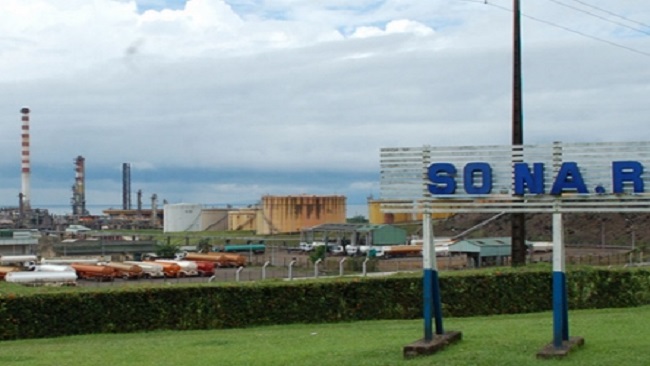
Cameroon has laid the foundation stone for the construction of a new oil refinery and petroleum reserve depot in the southern part of the country, according to the state-run National Hydrocarbons Corporation (SNH).
The refinery, which is constructed on a 250-hectare site within the Kribi industrial port zone, will have a processing capacity of 30,000 barrels per day, said Nathalie Moudiki, who represented the executive general manager of SNH at the occasion on Thursday.
She added that the fuel storage terminal will have an initial capacity ranging from 250,000 to 300,000 cubic meters.
The new refinery is designed to process Cameroon’s crude oil, aiming to reduce fuel imports by 30 percent, according to SNH.
The construction works are expected to take 18 months. It will be Cameroon’s second oil refinery upon completion. The country’s lone refinery in the seaside resort town of Limbe has been shut down since 2019 following a devastating fire. Cameroon has since relied on imported refined fuel.
Source: Xinhuanet




















30, July 2025
Cameroon’s natural wealth worth $222 billion 0
Cameroon’s natural capital is valued at $222.3 billion, or about 130,000 billion CFA francs, according to a recent African Development Bank (AfDB) report focusing on the country. This represents 39% of Cameroon’s national wealth and a 4.5% rise from the $212 billion estimated previously.
The World Bank’s 2025 report on Cameroon’s economic situation previously stated that national wealth consists of human, physical, produced, and natural capital. It assessed Cameroon’s natural wealth at 331,800 billion CFA francs.
The AfDB notes Cameroon’s natural capital includes renewable resources such as biodiversity-rich forests that are crucial for climate regulation and carbon sequestration. The country also has an estimated 12,000 megawatts of unexploited hydroelectric potential and significant solar potential, with an average insolation of 5.8 kWh per square meter per day, which favors clean energy production. Non-renewable natural capital comprises oil, natural gas, and mineral resources.
Despite this “significant potential, which constitutes a strategic lever for economic transformation and the achievement of sustainable development goals” in Cameroon, the AfDB observed that “the contribution of natural capital to the Cameroonian economy remains moderate, as its potential is underexploited.” The financial institution cited a decline in natural capital’s contribution to gross domestic product as proof. Natural capital rents fell from 6.5% of GDP in 2018 to 4.7% in 2020, reflecting a decline in the effective economic valuation of these resources, the AfDB reported.
The AfDB noted that the 4.5% increase in natural capital over 25 years conceals a marked relative degradation. Natural capital per capita sharply decreased by 47.9%, falling from $16,105 in 1995 to $8,392 in 2020, the AfDB reported. This decline primarily stems from increasing demographic pressure and unsustainable resource exploitation.
Source: Business in Cameroon