22, March 2018
44 African states sign free trade area pact 0
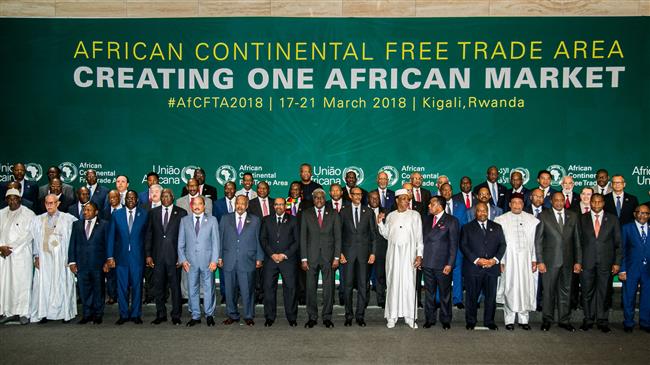
Forty-four African countries have signed an agreement establishing a free trade area seen as vital to the continent’s economic development, the head of the African Union said Wednesday.
The creation of a free trade area — billed as the world’s largest in terms of participating countries — comes after two years of negotiations, and is one of the AU’s flagship projects for greater African integration.
“The agreement establishing the CFTA (African Continental Free Trade Area) was signed by 44 countries,” said Moussa Faki Mahamat, chairman of the AU commission.
However, the agreement will still have to be ratified at a national level, and is only due to come into force in 180 days.
Nigeria is notably absent from the signatories after President Muhammadu Buhari pulled out of this week’s launch in Rwanda saying he needed more time for consultations at home.
One of Africa’s largest markets, Nigeria hesitated after objections from business leaders and unions — a sign that getting the deal through scores of national parliaments may face several hurdles.
“Some countries have reservations and have not finalized their national consultations. But we shall have another summit in Mauritania in July where we expect countries with reservations to also sign,” said Albert Muchanga, the AU Commissioner for Trade and Industry.
However other economic powerhouses South Africa, Kenya, Morocco, Egypt, Ethiopia and Algeria — known for strict protectionist policies restricting imports and exports — did sign the deal.

If all 55 African Union members eventually sign up, it will create a bloc with a cumulative GDP of $2.5 trillion (2 trillion euros) and cover a market of 1.2 billion people.
Currently, African countries only do about 16 percent of their business with each other, the smallest amount of intra-regional trade compared to Latin America, Asia, North America and Europe.
And with average tariffs of 6.1 per cent, businesses currently pay higher tariffs when they export within Africa than when they export outside it, according to the AU.
“If we remove customs and duties by 2022, the level of intra-African trade will increase by 60 percent, which is very, very significant,” Muchanga told AFP in an interview before the summit.
The CFTA is a key part of the AU’s long-term development plan Agenda 2063, which calls for easing trade and travel across the continent.
At its most recent summit in Ethiopia in January, AU member states agreed to a common air transport market that could drive down airfares, as well as plans for visa-free travel for Africans across the continent.
Also on Wednesday, 27 countries signed the protocol agreeing to the free movement of persons across the continent.
(Source: AFP)




















28, March 2018
Corruption, backlogs strangling Cameroun’s Douala port 0
In Cameroon’s port of Douala, corruption, bureaucratic red tape, overpriced services and a growing backlog have combined to put a major drag on cargo trade through central Africa’s largest harbour.
More than 95% of Cameroon’s maritime traffic transits through Douala, a sprawling hub that serves as the main gateway for landlocked Chad and Central African Republic.
But the procedures for clearing goods are a permanent headache, and very little gets done without greasing palms with extra cash, traders say.
“There is high-level corruption at Douala port,” says one businessman as he slips a 1.50 euros note to the ticket seller at the entrance – a quarter of the official entry price.
“To take a car out of customs, for example, you have to get between 20 and 22 different stamps,” says a port employee who asked to remain anonymous – for each stamp, a bribe has to change hands. On top of that, there are rapidly rising formal costs.
“A car that we cleared a year ago for 850 000 CFA in charges would now cost 1.3 million,” explains the businessman who bribed the man at the gate.
“In the offices, staff (handling the paperwork) are incredibly slow, so if you want your dossier to be dealt with, you have to pay up.”
The World Bank has noted the remarkably long time taken to move goods through the Douala – an average of 16 days according to an expert mission in March last year.
The team said this period was “an eternity compared, for instance, with the port of Lome in Togo, where the delay is two days”.
Catastrophic delays
For Chad and Central African Republic, Douala is the nearest gateway for a stream of hauliers supplying the capitals of N’Djamena and Bangui.
Due to the red tape endured by the freight transporters, some are now considering the idea of “going through other ports in the West African subregion”, Chad’s ministry of infrastructure warned in a recent statement.
In Douala, “our lorries are often blocked for many weeks at the port before being able to get on the road”, Ali Abdallah Youssouf, head of Chad’s national council of importers, exporters and freight forwarders, told AFP by phone from Libreville.
A survey conducted for the World Bank in 2011 noted that customs “sometimes rightly” took much of the blame for delays in clearing containers and other cargo, but pointed out that many other agents were involved, from shippers to sanitary services.
Such delays are “catastrophic” for most businesses, stated a businessman from Central African Republic who has to work through the Cameroonian port.
“By holding the goods” the terminal managers “earn more money than they do in handling them,” particularly when it comes to wood, a valuable commodity in central Africa, he said.
‘A marked degradation’
Since 2004, the container terminal has been managed by Douala International Terminal (DIT), a subsidiary of France’s Bollore Group. Another of its subsidiaries, SEPDC, manages the wood terminal.
And it is through these two terminals that around half of the port’s merchandise has to pass.
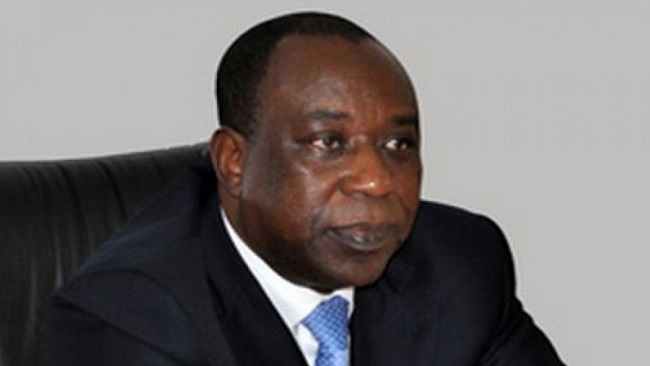
But it has not gone unnoticed by the authorities themselves, with the port’s Director General Cyrus Ngo’o warning last month that a singular lack of investment had caused a “marked degradation” in its infrastructure.
His remarks were made in a pointed letter addressed to the transport ministry, a copy of which was seen by AFP.
The port, he wrote, was initially built to cope with an average “seven million tonnes of merchandise” per year, while today it handles 12 million tonnes – which was putting major stress on its limited infrastructure.
“Since 1980, there has not been any major investment to expand its ability to accommodate vessels and process their merchandise,” he wrote.
‘Congestion is real’
In February, France’s Rougier Group, which trades in tropical timber, said its business was suffering from the “chronic backlog” at Douala port, which was affecting its Cameroonian, Congolese and Central African subsidiaries.
But Ngo’o hit back, saying Douala could not be held responsible for Rougier’s failings since the port’s “logistical operations for international trade were proceeding as normal”.
Despite his fighting talk, Ngo’o’s letter admitted the port was facing “an unforeseen situation in which its operations were experiencing a decline in fluidity”.
“This situation is having a negative impact, notably on the speed of handling the exports of Cameroon’s main cash crops such as coffee, cocoa and wood,” he wrote.
“More than 2 000 containers” of these three goods had been stuck at the terminal for many weeks, he warned, saying the risk “of congestion at Douala port is very real.”
Source: AFP