
6, August 2025
Biya seeks alternative treasury funding amid surging T-Bill Costs 0
As of end-June 2025, Cameroon’s domestic public debt, excluding arrears, which are invoices pending payment for around three months, and floating debt, stood at CFA3,814.4 billion, representing 11.6% of GDP. The figure was disclosed by the Autonomous Sinking Fund (CAA) in its latest update on Cameroon’s public debt situation.
According to the CAA, 55% of this debt is made up of public securities issued by the government on the BEAC market. This market, operated by the central bank of the CEMAC region (Cameroon, Congo, Gabon, Equatorial Guinea, Chad, and the Central African Republic), has become one of the Cameroonian state’s main financing sources.
On this market, the Treasury issues two main types of instruments: Treasury bonds (OTA), with maturities between two and ten years, typically used to finance infrastructure projects; and Treasury bills (BTA), with maturities under one year, mostly used to manage temporary cash flow needs.
However, as revealed in the CAA’s latest report, “with regard to Treasury bills in particular, which have increased by 11.6% year-on-year as of end-June 2025, discussions are underway to mitigate the underlying refinancing risk, due to mounting pressure on the domestic market’s capacity.”
In other words, faced with rising BTA issuance costs on the BEAC market in recent years—and the increasing difficulty for CEMAC states to raise targeted amounts because of competition and prudential limits on banks serving as primary dealers (SVTs)—the Cameroonian government is actively considering other financing options.
“It is within this context that the Head of State signed a decree on May 19, 2025, authorizing the Minister of Finance to raise loans on international financial markets, up to a maximum of CFA200 billion, for the purpose of financing 2025 Treasury operations,” the CAA noted.
At the same time, the government is working to secure the full mobilization of the funds it seeks on the domestic market, despite saturation among local intermediaries—mainly the SVT banks. To that end, it has taken steps to attract new investors to the subregional public securities market.
In July 2025, Cameroon raised CFA200 billion on the BEAC market through a bond issuance supported by a swap arrangement that allowed Afreximbank to convert foreign currency into local currency. This made it possible for the bank to subscribe to the public offering.
Thanks to this deal with the Cameroonian government, the African Export-Import Bank (Afreximbank) became the first foreign investor to participate in the BEAC public securities market, which has been operational for nearly 14 years.
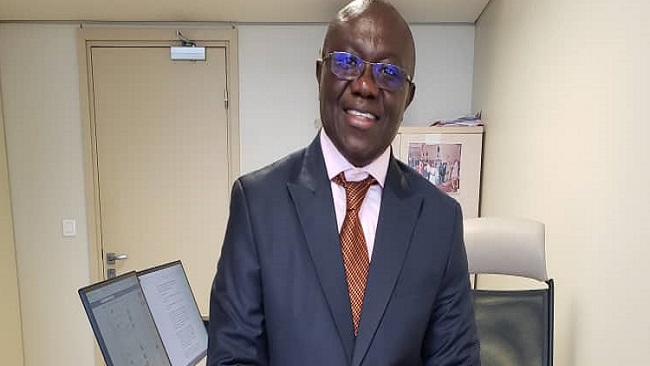
The transaction also comes ahead of a leadership change at Afreximbank. Starting in September 2025, Cameroonian legal expert George Elombi is set to take over as head of the pan-African institution.
Source: Business in Cameroon
















18, August 2025
Sonara adopts 2-year plan to restart Limbe refinery by 2027 0
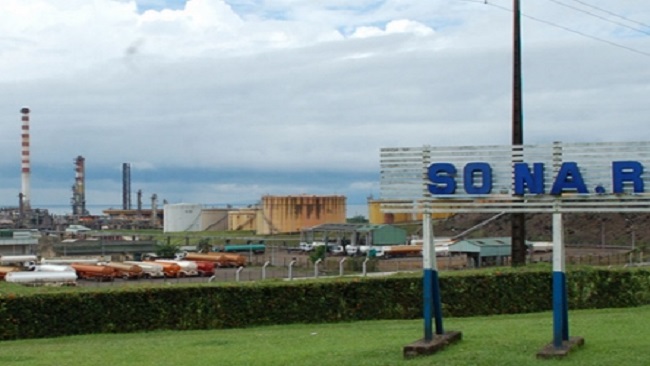
Cameroon’s National Refining Company (Sonara) approved on August 13 the Acceleration Plan for Restructuring and Rehabilitation Measures for Refining Restart within 24 months (Parras 24). The initiative agreed upon during a Board Meeting aims to resume production by 2027 with government support.
“Parras 24 is designed to relaunch Sonara’s core functions and ensure the continuity of petroleum product supply,” the company’s official statement said. The plan calls for recapitalization and new partnerships to fund the rehabilitation and quick restart of production. Sonara has not yet clarified whether recapitalization will involve debt buyback or fresh capital injection. In June, a joint delegation from UBAF, ING, and Mauritius Commercial Bank had proposed potential financing for the project.
Technically, Parras 24 aims to restore facilities to their state before the May 2019 fire that severely damaged part of the refinery. At the same time, Sonara will implement a workforce management program to strengthen staff skills and prepare for operations to restart.
The company continues to struggle with high debt. It currently owes CFA261 billion to banks, restructured over 10 years since 2021 at an interest rate of 5.5%. It also owes CFA185 billion to Vitol, CFA8.5 billion to PSTV, CFA14 billion to Trafigura, and CFA20 billion to Mercuria Energy. Repayment of these debts has been ongoing since 2022 through a state mechanism that collects CFA47.8 on each liter of fuel sold at the pump.
While Parras 24 is underway, Sonara has assured partners and customers of steady supply. “The supply of refined products on the national and international market will continue in both quantity and quality until the full restart of the refinery,” the company said.
This ambitious plan, combining strategic financing, technical rehabilitation, and workforce development, marks a decisive step for Cameroon’s oil sector and the stability of its domestic market.
Source: Business in Cameroon