16, June 2026
Iran deal: the cards are now in Tehran’s favour 0
The US president’s 80th birthday began with a bang that kicked off on social media, resonated in the roars on the White House South Lawn as fighters pummeled each other in a cage, and left Middle East experts reeling as they examined the geostrategic impact of Donald Trump’s birthday gift to the world.
The president had made it known that he wanted an Iran “peace deal” on his birthday, come what may. So, when Israel kicked off the day with strikes in Dahiyeh, the Hezbollah stronghold in the southern suburbs of Beirut, he was incensed with Prime Minister Benjamin Netanyahu.
“Why did Bibi have to do a fucking attack,” Trump fumed in an interview with US news site Axios. “He has no fucking judgement,” he added.
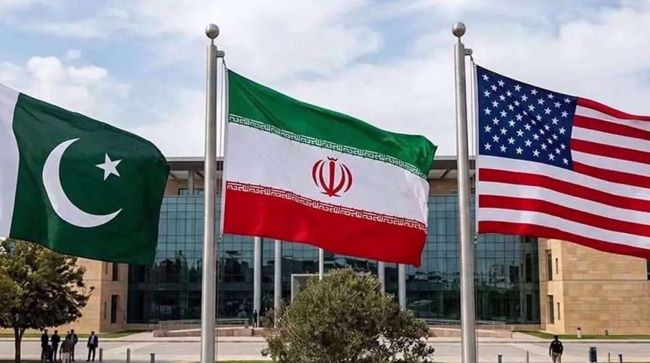
By the end of the day, the storm had settled. Pakistani Prime Minister Shehbaz Sharif took to X to announce a deal had been reached, which was followed by a Trump post on Truth Social declaring “The Deal” was “now complete”. The 55-word message stated that the US president had “authorized” the opening of the Strait of Hormuz and that “ships of the world” could “start their engines”.
This was just as things were before the US and Israel started the Iran war, when the Strait of Hormuz was open for business with 20 percent of the world’s oil and natural gas passing through the critical waterway.
‘Back to square one’
Now that the celebrations on the South Lawn have wrapped up, the international community is looking the gift horse in the mouth and asking who got the biggest party favor at the end of the day.
Trump’s Sunday night announcement was “both a birthday gift for himself and a gift for the Iranian regime”, said Karim Emile Bitar, international relations professor at Beirut’s Saint Joseph University and lecturer at Paris-based Sciences Po university.
“It is quite ironic that the main accomplishment of this deal is reopening a strait (the Strait of Hormuz) that was wide open four months ago. It showed that Iran found out that the control of the strait could be a deterrent, arguably even more important than a nuclear deterrent, that they could have the entire world’s economy basically slowed down by simply closing this trade,” Bitar noted.
The details of what Trump calls “the deal” and diplomats call “the Islamabad Memorandum of Understanding (MoU)” will not be released before Friday. But news reports based on multiple sources say the agreement provides for a 60-day cessation of hostilities during which the two sides will negotiate a final peace deal.
While Trump’s message on Sunday declared the Strait of Hormuz would be opened “toll free”, senior administration officials had no details on the time schedules.
In an interview with CNBC television on Monday, Vice President JD Vance was asked if the MoU provided a toll-free opening of the waterway for just the initial 60-day period. Vance replied that, “Our expectation is that the strait is going to be opened in a toll-free way for the long term, and that’s the sort of thing that we’re going to figure out in these technical negotiations.”
Trump on Monday declared that many ships loaded with oil are starting to pass through the Strait of Hormuz, calling it “totally safe, secure and pristine”. But maritime trackers have yet to show an uptick in traffic since the deal was announced. Minesweeping operations are expected to last several weeks, while France and the UK prepare a support mission to help the reopening of the vital waterway.
More than a century after US writer and satirist Mark Twain wryly noted that, “God created war so that Americans would learn geography,” the Trump administration may have finally had a crash course in geostrategic waterways. But critics say the lesson came too late for Washington, handing Tehran a win as the war dragged past the three-month mark.
“Over the three-month trajectory, what Iran showed is that, yes, they were the underdog, attacked by two nuclear powers with military supremacy. But they also had their own cards to play,” said Negar Mortazavi, senior fellow at the Washington-based Center for International Policy, in an interview with FRANCE 24.
“The defining point in this war is the strategic geographic advantage that Iran has over the Strait of Hormuz. And it seems like President Trump and the US just couldn’t get them to reopen the strait with force. This brought [the US] to the negotiating table and, essentially, back to square one, because the Strait of Hormuz wasn’t even a problem before the war.”
First US president to negotiate directly with Iran
In the past, the US has held only indirect, mediated talks with the Islamic Republic, such as the negotiations leading up to the signing of the Joint Comprehensive Plan of Action (JCPOA) – the 2015 nuclear deal Iran signed with six world powers – during the presidency of Barack Obama.
But Washington has never had to negotiate with Iran for peace, noted FRANCE 24’s Noga Tarnopolsky, reporting from Jerusalem.
“No previous American president has tried to make peace with the Islamic Republic of Iran. It was never on the table, there was never an actual war between the United States and Iran necessitating a peace. Before this, Iran has always been viewed as a threshold nuclear state that is increasingly dangerous. That was the aim of Obama’s Joint Comprehensive Plan of Action, to try and curb Iran’s nuclear ambitions. It didn’t go beyond that,” Tarnopolsky explained.
The period between the 2015 signing of the JCPOA and Trump’s 2018 withdrawal from the nuclear deal during his first presidency were “the only three years when Iran’s nuclear program was held back and was scrutinized by international authorities”, Tarnopolsky said.
Details of Iran’s nuclear commitments under the terms of the new Islamabad MoU have been vague. In his comments to the press, Trump has noted that “the Iranian enriched uranium file will be dealt with” at a later date. The US president also stressed that the nuclear issue will be the focus of in-depth and direct negotiations during the 60 days following the signing of the agreement.
Iran has long maintained that its nuclear program was for civilian energy purposes only, and under the JCPOA its enrichment activities were limited to 3.67 percent – a level sufficient to power nuclear reactors, but far short of the 90 percent needed for weapons. After Trump withdrew from the agreement, Iran announced it would begin enriching to 60 percent.
Under the JCPOA, Tehran also agreed to nuclear inspections by the IAEA, the UN’s nuclear watchdog, and had begun complying with shipping parts of its uranium stockpile to Russia, which was also a signatory to the 2015 nuclear deal.
The Iran war has not resolved the critical nuclear non-proliferation issue, Bitar noted, adding that the current deal leaves the world worse off.
“The Iranians did not make any concessions so far. They just reiterated what they had said for the past 20 years, and that was already clearly written in the JCPOA,” he said.
“We’re back to the original sin of Donald Trump: out of obsession or jealousy [of] Barack Obama, tearing down an agreement that was much better negotiated – which was not just a bilateral US-Iranian agreement but that also involved Europe, the United Nations, Russia and China. That we have reached this stage of America showing its impotence is, to a large extent, because Donald Trump committed this major mistake of tearing up the JCPOA in 2018.”
‘Good old protection racket’ of Gulf states
Iran’s nuclear ambitions were a major threat to the Gulf states and a key driver of the US security umbrella for oil-rich Sunni monarchies facing a giant Shiite power across the Persian Gulf.
The Iran war has forced the Gulf states to hedge their security bets as missiles from Tehran wreaked havoc on their economies. Earlier this month, Reuters reported that the United Arab Emirates agreed to pay Iran billions of dollars in exchange for a de-escalation.
Sources told Reuters that the UAE had agreed to release a total of $10 billion, more than $3 billion of which had already been delivered. While there was no clarity on whether the funds earmarked for the transfers belong to the UAE or originate in long-blocked Iranian accounts in the UAE banking system, the report noted that Iranian attacks on Emirati facilities had decreased over the past few weeks.
“Deep down, there is no love lost between the Iranian and Emirati regimes. But it’s definitely true that the UAE realized that their security and economic development was heavily dependent on having better relations with Iran. So they seem to have succumbed to the good old protection racket,” said Bitar.
The lifting of Western sanctions and access to Iran’s frozen funds abroad have been key demands of the Islamic regime. Iran’s Mehr news agency reported that the MoU stipulates the release of $24 billion in frozen Iranian funds during the 60-day negotiation period. The report has not been confirmed by Iranian or US authorities.
‘Victim of American amateurism, Iranian cynicism and Israeli hubris’
While the international community has been left in the dark about much of the details of the Islamabad MoU, the one issue that Pakistani PM Sharif has confirmed is that the cessation of hostilities covers all fronts, “including Lebanon”.
But Sharif has been here before. On April 8, just hours after Sharif declared that a Pakistan-mediated US-Iran ceasefire included Lebanon, the Israeli military conducted massive strikes across Lebanon, offloading more than 100 bombs in just 10 minutes and killing more than 360 people under Operation Eternal Darkness. The Lebanese called it “Black Wednesday”.
Trump’s expletive-riddled birthday rant against Netanyahu on Sunday underscored his fears that Israel, which was not involved in the MoU negotiations, could scupper the latest agreement.
“This deal has been considered unacceptable by Israel. Israel seems determined to continue its occupation of south Lebanon. It is an electoral season in Israel,” said Bitar, referring to Israeli legislative elections being held later this year. “So, I very much doubt that Netanyahu can withdraw from Lebanon. At the same time, this deal does not seem to have imposed on Iran any conditions to stop financing and supporting Hezbollah. So, Lebanon could once again end up being the victim of American amateurism, Iranian cynicism and Israeli hubris.”
The biggest losers are the Iranian people, who rose up in mass protests against the regime in December-January. Five months after Trump told Iranians who were protesting that “help is on its way”, the regime today is more hardline than it was before the start of the war, experts say.
“This really solidified the regime and their argument that Iran is the only country in the region that can fight two superpowers. And they were able to defend the country’s sovereignty, independence, the system and bring the world’s [foremost] superpower to the negotiating table in three months,” said Mortazavi.
Israel’s initial decapitation strikes at the start of the war might have killed Ayatollah Ali Khamenei, but his son and successor, Mojtaba Khamenei, has close links to Iran’s hardline Islamic Revolutionary Guards Corps (IRGC), whose powers have increased since the February strikes.
“The regime in Iran is more emboldened and more hardline, consolidated by an IRGC that is essentially governing in a police state fashion,” said Tara Kangarlou, adjunct professor at Georgetown University and author of “The Heartbeat of Iran”, in an interview.
“Life for ordinary Iranians in Iran is worse than how it was before the war against a collapsed economy. They’re left with a younger, more emboldened Khamenei regime. This is not what they wanted and asked the world for. The regime has stayed and Donald Trump is presumably interested in making a peace with this same regime. The price has been paid by ordinary people.”
Source: France 24














17, June 2026
Cameroon to expire in December 0
After careful observation of the 2026 GCE leaks, recurring examination scandals, corruption allegations, administrative confusion and the national talent for turning every crisis into a committee meeting, the Republic of Cameroon is now approaching its expiration date. Please check the label beneath the national coat of arms for details.
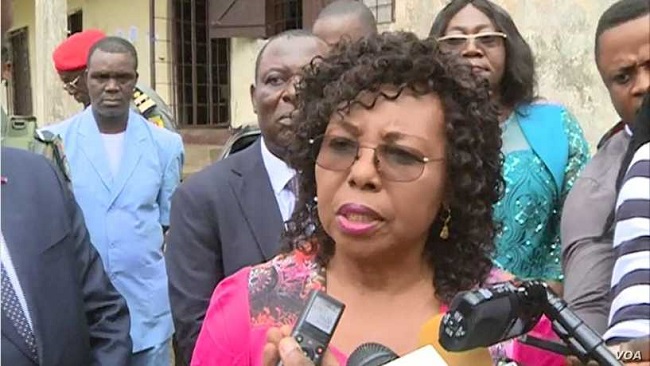
The latest GCE scandal saw examination papers circulating online before candidates entered exam halls, forcing authorities to postpone several exams. Officials described it as a serious breach of integrity and internal failure. At this point, the exam papers seem to know the questions before the students do.
One candidate reportedly opened his exam booklet and shouted, “Wait, this is the old leak! Where is the updated version?”
Another student complained that he studied honestly and therefore entered the examination hall at a competitive disadvantage.
Meanwhile, corruption in Cameroon has become so experienced that it no longer walks—it teleports. When a scandal emerges, everyone is shocked, investigations are launched, statements are issued and somehow the scandal graduates with distinction while accountability fails the resit.
The nation has become a place where roads are under construction longer than some university degrees! Public projects age before completion! Committees are created to investigate why previous committees failed.
Every GCE leak is blamed on “a few bad individuals,” despite the fact that the few bad individuals apparently number in the thousands.
The GCE was once a test of knowledge. Today it risks becoming a test of internet speed. Students revise textbooks while others revise WhatsApp groups. Teachers prepare lessons while fraudsters prepare answer keys. Parents pray for success while officials pray that the next leak waits until after the press conference.
If things continue at this rate, Cameroon may not expire from natural causes. It may simply receive a notification:
“System Error 404: Governance Not Found.”
Yet the tragedy behind the joke is real. Examination leaks undermine trust, punish honest students and weaken confidence in educational institutions. Recent reports note that repeated leaks and fraud concerns have raised serious questions about the credibility and security of national examinations.
If corruption remains permanent, accountability remains temporary and every scandal becomes tomorrow’s forgotten headline, then the nation risks something worse than expiration: getting used to dysfunction. And this is a far more dangerous disease than any exam leak.
By Soter Tarh Agbaw-Ebai