11, August 2026
Cameroon cannot be governed by absence: It is time for the CPDM to prepare a new leader 0
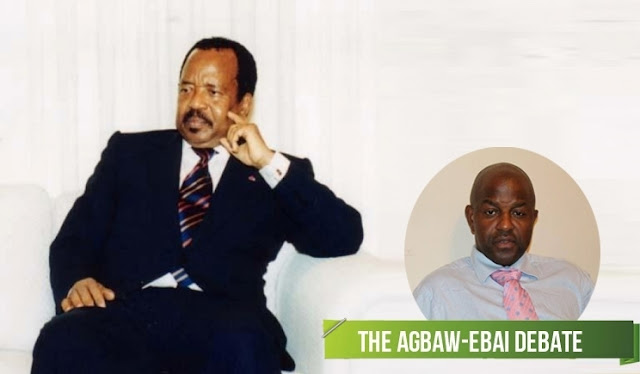
On June 7, 2026, President Paul Biya left Yaoundé with his wife for what the Presidency described as a “brief private stay in Europe.” Sixty-five days later, on August 11, he remains outside Cameroon.
The number matters. But the deeper issue is not the length of one presidential trip. It is what such a prolonged absence says about the resilience of the Cameroonian state.
A modern republic cannot depend on the physical presence of one individual to maintain political certainty. Nor can a country of nearly 30 million people be expected to operate indefinitely on assumptions, rumours and official assurances that everything is under control. The question before Cameroon is therefore no longer simply: When will Paul Biya return? It is: How long can the country continue without a credible transition plan?
President Biya has governed Cameroon since 1982. His political longevity is extraordinary, but longevity cannot itself be a substitute for succession. At 93, and after decades in power, the question of what comes after Biya should no longer be treated as an act of disloyalty. It is an unavoidable matter of national responsibility. The ruling CPDM party above all, should understand this.
The CPDM party has spent decades presenting itself as the guarantor of stability. But genuine stability is not the indefinite preservation of one political personality. Genuine stability is the ability of institutions to function, markets to have confidence, citizens to know who is responsible for decisions and the country to move from one generation of leadership to another without uncertainty or crisis. That is precisely why the CPDM should begin the process of ushering in a new leader.
This is not necessarily a call for the party to abandon its political identity or erase the legacy of Paul Biya. It is a call for the party to recognize that Cameroon is bigger than one man and the CPDM must be bigger than one presidency.
The economic cost of prolonged uncertainty is easy to underestimate. Investors do not only look at macroeconomic statistics; they look at predictability. Businesses need to know who is making decisions, whether policy will remain consistent and whether political succession can occur peacefully. Government itself needs clear authority. Public institutions need confidence. Citizens need to believe that the machinery of the state is working deliberately rather than simply continuing on autopilot. That perception matters.
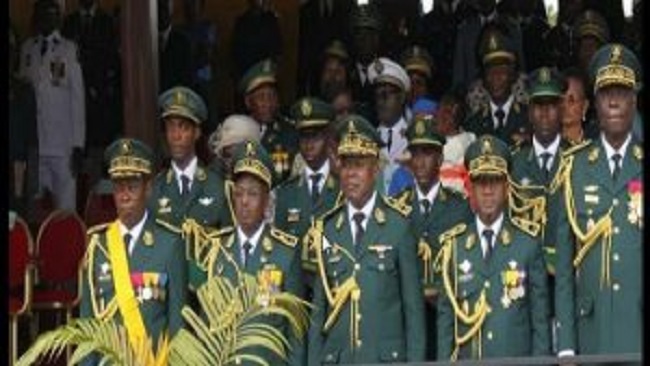
Reuters has reported that Biya’s prolonged absence has already generated political concern, while his government has provided no clear timetable for his return. The CPDM itself held a senior-level meeting in July as criticism surrounding the absence mounted. Military leadership changes announced during the absence have added another layer of uncertainty.
None of this means that the Cameroonian state has collapsed. It means something more subtle and potentially more dangerous: the country is being forced to confront how dependent its political system remains on a single individual. That is an institutional weakness, not a personal accusation. The CPDM has an opportunity to correct it.
Instead of treating every discussion of succession as an attack on the President, the party should treat succession planning as an essential component of responsible governance. It should openly identify, debate and prepare a new generation of leadership capable of governing Cameroon in the decades ahead.
The alternative is to wait until circumstances make the decision for everyone. That would be irresponsible.
Cameroon has a young population, enormous economic potential and serious security and development challenges. It cannot afford a political system in which the most important question facing the nation is whether its president will return from a private European stay whose duration was never publicly defined.
Nor should the answer be to manufacture rumours about the President’s health. Those rumours are neither a substitute for facts nor a foundation for responsible politics. The stronger argument is simpler: even a healthy president eventually leaves office and a serious political party prepares for that day before it arrives. The CPDM has had more than enough time to prepare. It now has a choice.
It can continue defending the permanence of one man and hope that the system survives every new test. Or it can demonstrate that the party understands the difference between loyalty to a leader and loyalty to a nation. The latter requires courage.
The CPDM should begin an orderly, constitutional and transparent process of political renewal. It should identify credible new leadership, establish a clear succession framework, strengthen the institutions that must outlive President Biya, and give Cameroonians confidence that the country’s future does not depend on the whereabouts of one individual.
Paul Biya’s historic contribution to Cameroon can be debated by history. But the future of Cameroon cannot be postponed until history is ready to write his final chapter.
The time has come for the CPDM to usher in a new leader—not because Cameroon has ceased to need stability, but because Cameroon now needs stability that does not depend on one man.
By Soter Tarh Agbaw-Ebai



















13, August 2026
Indomitable Lionesses: meet Kyria Bihina our saviour 0
A clean sheet against record 10-time African winners and reigning champions Nigeria is the kind of result that etches your name in the history books.
Bihina’s heroics that inspired Cameroon to a historic 1-0 win did not only ensure the Indomitable Lionesses have reached the semifinals of the TotalEnergies Women’s Africa Cup of Nations 2026 in Morocco but it also means they have qualified for the FIFA Women’s World Cup for the first time since 2019.
Right from the first minute of the game, the 22-year old custodian was tested by the Nigerian attack led by captain Rasheedat Ajibade but she established her presence strongly.
Bihina understood the assignment. Carrying the weight of her nation on her shoulders, she showed that as the last line of resistence, Nigeria would need a miracle to go past her.
Bihina. Bihina. Bihina.
Allez! Allez! Allez [Let’s go] Bihina! The enthusiastic Cameroonian fans in the stands kept chanting her name in a bid to show their support to her. Every time, she made a save, they cheered her on and clapped for her. But most importantly, they enjoyed her jaw-dropping performance on an evening when Cameroon was desperate to register a positive result.
This was the 14th meeting between Cameroon and Nigeria at the WAFCON – the most played fixture at the continental showpiece. Cameroon had only won once before August 9, 2026. That win was thanks to a Gaelle Enganamouit goal that inspired the Indomitable Lionesses finish third at the WAFCON 2012 edition in Malabo, Equatorial Guinea.
Bihina was eight years, 10 months and 15 days back then. A child.
Since then, Nigeria defeated Cameroon in back-to-back WAFCON finals in 2014 in Windhoek, Namibia and 2016 in the Cameroonian capital Yaounde. Cameroonians have never forgotten that loss at the fully packed Ahmadou Ahidjo Stadium in the capital.
At the WAFCON 2018, Nigeria edged Cameroon 4-2 on penalties after a goalless draw in the semifinals and four years later, an Ajibade lone goal was enough for Nigeria to claim the win in the quarterfinals. Cameroon did not qualify for the 2024 edition played last year.
For Bihina, who is featuring at the WAFCON for the very first time, it was about time Cameroon ended this jinx that had turned into a one-sided rivalry between the neighbours.
“I am so happy right now. This is a dream come true. Playing in my first WAFCON and being able to beat Nigeria and qualify for the World Cup is historic. I am so excited and happy that as a team we have achieved this. I’m very emotional right now,” she says with barely a voice left thanks to the celebrations after the game.
Shot stopper extraordinaire
Nine saves. A second clean sheet in four games. Only two goals conceded. This is the story of Bihina who plies her trade at Benfica in Portugal. Bihina admits that, “We had an objective going into this game – to change the history of our national team especially against Nigeria. I am happy. The team is happy. It is a great day for Cameroonian football.”
When her personal stats were projected on the stadium screen, fans and opponents alike gave her a standing ovation. It was the kind of performance that one must applaud in the spirit of fair play.
Away from the stands to the pitch, her former Benfica teammate and Nigerian midfielder Christy Onyenaturuchi Ucheibe who played her heart out in this matchup, walked up to her, hugged her and congratulated her. They exchanged jerseys. More applause from the fans.
“She praised me and said she was happy for me and that I deserve it. She is my dear friend. We have been at Benfica together and that means so much to me that she did that,” Bihina reveals exclusively to CAFOnline.
“For me personally, it has been a long journey of hard work and discipline. I continue to work with humility and try to improve every other day. I’m glad to be here playing for Cameroon.”
Born in Ekounou, Nkoldongo in Yaounde, Bihina started out as a striker and as she continued growing tall for her age, she switched to goalkeeping. “My coach told me that I was too tall to be a striker and that I would do better as a goalkeeper. I did that and six months later, I was summoned to the national team,” she remembers with a big grin on her face.
At 15, Bihina got her first test of Nigeria’s dominance when they defeated Cameroon in the final 3-2 on penalties after a goalless draw at the 2019 African Games. This stayed with her. She continued working on her craft that saw her join Portuguese second division side Racing Power. She helped them win the league title and gain promotion to the topflight division.
Her exploits attracted attention from the rest of the league but most importantly the league giants SL Benfica who successfully signed her on February 1 this year. She won the double adding the league and Portuguese Cup to her name.
Coming off this spectacular season with Benfica, Bihina has now added reaching the WAFCON 2026 last four with a chance to win the WAFCON for Cameroon for the very first time and World Cup qualification to her illustrious curriculum vitae.
N’Kono, Antoine Bell, Kameni, Onana, Bihina…
Reeling and in tears of joy, Bihina was lifted into the air by her teammates immediately center referee Antsino Twanyanyukwa blew the full time whistle. As she received the Woman of the Match Award, she could not believe it. So many emotions ran through her body. A moment of truth had come at the right place for her.
“It was a great day for me to show that Cameroon has good goalkeepers. It is an honour for me to be in the same sentence with these great Cameroonian goalkeepers who have represented our country over the years,” she says when asked about her nation’s goalkeeping legacy.
Bihina finds herself in the same sentence with Cameroonian greats like the iconic Thomas N’Kono and Joseph Antoine Bell who dominated global headlines when they won the AFCON in 1984 and 1988. A clean sheet against Diego Maradona’s Argentina in their opening match at the FIFA World Cup 1990 in Italy was the only introduction the world needed to know about Cameroon’s goalkeeping prowess.
The list is long – Jacques Songo’o, Carlos Kameni, Alioum Boukar, André Onana and his cousin Fabrice Ondoa. Cameroon has continuously produced world class goalkeepers and Bihina is keen to continue working hard to make her nation proud and to inspire other young Cameroonians – female and male to believe in themselves and to work hard.
The wall between the posts for Cameroon, Bihina, will now face yet another massive test when the Indomitable Lionesses take on the hosts and back-to-back WAFCON finalists Morocco on Wednesday at the Moulay Hassan Stadium in Rabat at 21h00.