29, September 2023
Yaoundé: The Biya regime situation report 0
Greetings from Yaoundé which is in a much panicked mood! Minister René Emmanuel Sadi is now saying that any Cameroonian predicting a coup risked being arrested and prosecuted.
In a statement on Monday, Sadi moonlighting as Minister of Communication and government spokesperson stated that “The government therefore urges those concerned to be careful not to draw senseless and preposterous parallels, and to make obscene predictions about the future of Cameroon which could amount to calls for the destabilization of the state.”
With Biya’s time on earth nearly over, it’s time to turn away from the 90-year-old President, who survived a coup attempt in 1984 and has ruled Cameroon for 41 years.
One event to watch is the football friendly between the Indomitable Lions of Cameroon and the Russian Federation in Moscow in mid-October. Cameroon Concord News Group London Bureau Chief Isong Asu calls it “a Biya’s last journey of many dangers” for the Francophone dominated regime in Yaoundé. It will be the first football match between an African team and Russia since the invasion of Ukraine in February 2022, and has been actively encouraged by the 90-year President Biya.
Southern Cameroons business communities in the diaspora are seeing red with the customs-led public auctions in Douala. Goods to be sold are those that have been stored ever since the war started in Southern Cameroons. The customs department says the goods to be sold include various items such as electronics, household appliances, antiques, food products, machinery, etc. The customs estimates their value at tens of millions of FCFA. It is all Southern Cameroons money.
Mr Biya’s back-to-school campaign in Southern Cameroons has not been going according to plan; the actions of Ambazonia restoration forces have successfully erected a stone wall against the reopening of schools. Two head teachers and a female student were killed by Ambazonia fighters and this week a Roman Catholic priest and three teachers sustained gunshot wounds in an attack on CS Kembong in Eyumojock Sub Division in Manyu.
Household final consumption prices in Cameroon went up 0.5% in August. This overall food price trend came with inflation that reached a yearly average of 7.8% at the end of August.
The Biya Francophone regime also has plenty to worry about: The nation’s economy is stalling. Businesses are closing down and major corporations like PAMOL and CDC are filing for bankruptcy protection. Most of the major banks and telecom operators seem to be in difficulty. 90-year-old Mr. Biya says the younger generation should turn to farming. Not surprisingly, many are turning a deaf ear to the stupidity coming from Etoudi
It is evidently clear that the office of prime minister was a creation to appease Southern Cameroonians following the emergence of the late Ni John Fru Ndi! All the Anglophone political men-name them: Simon Achidi Achu, Peter Mafany Musonge, Inoni Ephraim, Philemon Yang and now the celebrated polygamist Dion Ngute have failed to deliver to the people of Southern Cameroons. Dion Ngute’s recent performance has been patchy, and his war of words with Minister Ferdinand Ngoh Ngoh has turned into open mutiny within government circles.
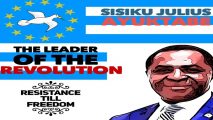
It remains extremely difficult to avoid the jailed Southern Cameroons leaders in Kondengui. To avoid a coup in Yaoundé, Biya and his men should start talking to Sisiku Ayuk Tabe. A stitch in time saves nine!!
Thank you for keeping the faith in what we do in Cameroon Concord News and Cameroon Intelligence Report. We of the Cameroon Concord News Group are doing all what we can to move some of you to get in touch. Remember that you are what you read! Regardless, you can reach me at soteragbawebai@gmail.com











3, October 2023
Time to resolve Southern Cameroons persistent yet forgotten crisis 0
Cameroon’s Anglophone conflict undermines national unity and is arguably the most damaging of the country’s multiple crises. It sparked demands for secession and led to separatists proclaiming a new state of Ambazonia in the country’s English-speaking North West and South West regions on 1 October 2017. The regions are home to about 20% of the population.
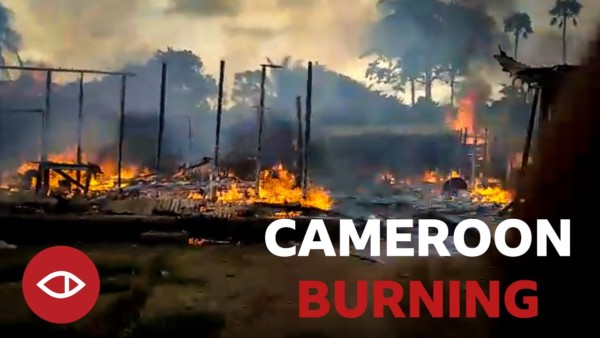
Celebrations surrounding ‘Independence Day’ are typically marred by clashes between government forces and armed separatist groups. Violent attacks during this year’s commemoration underscore the depth of the problem that seems forgotten.
The crisis was sparked in October 2016 when demands by teachers and lawyers for reform of the English-speaking regions’ educational and judicial systems were brutally suppressed. The authorities’ violent response to citizens’ concerns about the marginalisation of Anglophone linguistic and educational systems and the underrepresentation of English-speaking Cameroonians in politics turned into an ongoing political crisis.
The government made some concessions, including a Major National Dialogue in 2019, but failing to invite key separatist leaders, achieved little. Decisions stemming from the dialogue led to the granting of an ambiguous ‘special status’, with supposed autonomy, to the regions.
In October 2022, discreet talks between government and Anglophone leaders in the diaspora signalled interest in formal negotiations. However, these efforts haven’t quelled the separatist rebellion, which has claimed over 6 000 lives and internally displaced 630 000 people, with 86 000 seeking refuge in Nigeria.
A recent Amnesty International report details atrocities – including sexual and gender-based violence – by armed separatists, militias and security forces against civilians. The crisis has also disrupted hundreds of thousands of children’s education and halted socio-economic activities in the two regions.
Separatists have repeatedly expressed readiness for talks under international mediation
The government has intensified its pursuit of a military solution, hoping to take advantage of widening fragmentation between the armed separatist groups, which it calls ‘terrorists’. In early 2023, troops deployed to the North West attacked separatist positions.
Separatists are committed to fighting for an independent Ambazonia, regardless of the cost. They have repeatedly expressed readiness for talks under international mediation, but government won’t accept their conditions. These include the release of political prisoners, demilitarisation of the Anglophone regions and amnesty for exiled separatists.
The conflict continues to evade continental and international scrutiny. Besides some statements of concern by African Union (AU) Commission chairperson Moussa Faki Mahamat, the AU has done little. During Faki’s visit to Yaoundé in 2018, President Paul Biya committed to resolving the crisis, but these promises have fallen flat.
And despite the grave implications for stability in Central Africa, the AU’s Peace and Security Council (PSC) has yet to discuss the Cameroon crisis. As a PSC member, Cameroon likely blocks attempts by other member states to table the issue for debate.
Despite the grave implications for Central Africa’s stability, the AU PSC has not discussed the crisis
At the same time, the government has pulled the plug on mediation efforts. In September 2022, Biya halted a government-sponsored Swiss-led dialogue. A new initiative saw discreet pre-mediation meetings with several separatist groups in Canada late last year. Although the government denied seeking Canadian assistance, Canada’s foreign ministry maintained it had accepted an invitation from both parties to mediate.
Further political turmoil is brewing ahead of Cameroon’s 2025 general elections. Rival elites are jostling to succeed Biya, who has held power since 1982. He will be 92 when the polls open. Since gaining independence in 1960, Cameroon hasn’t had a single democratic transfer of power.
The military coup on 30 August that ousted Gabon’s Ali Bongo has had an unsettling effect in Cameroon. It forced Biya to reshuffle senior military roles and consolidate his power by reducing the influence of some security services branches and suppressing coverage linking Cameroon with coups.
Health problems could rule him out of the 2025 race, creating a power vacuum. Biya has reportedly been pursuing plans for his son Franck Biya to succeed him, although a dynastic succession would probably be unwelcome among the ruling Cameroon People’s Democratic Movement’s senior members. The military could exploit any succession-driven instability to justify a coup.
The country is also battling Boko Haram violence in the Far North. Fatalities from this conflict are well above 3 000, with at least 250 000 people displaced. Rebel incursions from the Central African Republic affect the country’s east, complicated by sporadic intercommunal clashes in the Far North and South. Farmer-herder tensions have also resurfaced between Nigerian pastoralists and Cameroonian farmers.
The PSC could deploy the Panel of the Wise as a preventive tool, instead of reacting after the country disintegrates
The nation is also grappling with a web of corruption scandals tied to the Africa Cup of Nations’ organisation in early 2022, and the assassination of journalist Martinez Zogo in January 2023.
Ahead of Ambazonia’s ‘Independence Day’, tensions soared in the North West and South West, and security forces stepped up attacks on separatist hideouts. Separatists have recently hardened their stance, enforced moratoriums on public life through ‘ghost towns’, threatened government employees, and increased violence against civilians. With both parties to the conflict unwilling to compromise, clashes will probably continue as economic and social neglect are further entrenched in the Anglophone regions.
The crisis cannot be ignored. The PSC must table Cameroon for discussion, especially as the Economic Community of Central African States – which has rarely tackled conflicts in its member countries – is unlikely to deal with the matter. The PSC could recommend deploying the Panel of the Wise as a preventive diplomacy tool, instead of reacting only after the country disintegrates.
Cameroon’s international partners should press for inclusive dialogue to resume. Should talks gain traction, partners must highlight the need to strengthen governance and expedite decentralisation so the Anglophone regions benefit from the autonomy their ‘special status’ should have granted them.
Source: Institute for Security Studies