14, October 2024
Paul Atanga Nji: Biya’s health is a question of public interest not a national security issue 0
It appears there is no limit to the odium Cameroonians will endure in the hands of their government, because just when the regime seems to have hit rock bottom in governance capacity, it somehow manages to find a further depth in ignominy. Cameroonians have been agonizing over the health and whereabouts of President Paul Biya, the 91-year-old nonagenarian, tottering on the borders of senile decay, who has not been seen publicly since attending the Sino-Africa forum in Beijing on September 8. He was missing at the UN General Assembly (UNGA) in New York, last month, despite elaborate preparations, including a team of reporters from state-owned CRTV and Cameroon Tribune dispatched to New York. Biya also cancelled an appearance at the International Organization of La Francophonie (OIF) summit this October, stoking speculations about his health. Following awkward denials of rumors that Biya had died either in a Paris hospital or in Geneva, by civil cabinet director, Samuel Mvondo Ayolo, and Communications Minister and Government spokesman, René Sadi; Territorial Administration Minister, Paul Atanga Nji, in a streak of authoritarian madness, announced that Biya’s health was a national security issue and “any debate in the media about the president’s condition is therefore strictly prohibited.”

Atanga Nji has instructed regional governors to set up units to monitor broadcasts on private media channels and social media platforms, warning that offenders will be prosecuted. That’s bunkum and utterly ridiculous. The right to free speech is protected by the constitution, so Cameroonians have the right to question the health and whereabouts of their president. Atanga Nji’s illegal edict, ornamented with harmful grandiloquence amounts to high-level official rascality and a reckless and imprudent display of statecraft. It’s the kind of arrant nonsense that is emblematic of a broader problem when you put an empty suit with no education or requisite temperament for governance in a position of authority, far above his intellectual capacity.
The unequivocal, dispiriting truth is that Atanga Nji has proved himself temperamentally unfit for high public office. He’s dangerous in word, deed and action. This is not simply an opinion of a critic; it is a judgment based on his character. Atanga Nji has no moral compass; he lies blatantly and maliciously embraces petty gossips with a juvenile bully’s instinct to target critics. He is animated by a thirst for power: to use the levers of government to advance his parochial interests, satisfy his most insidious impulses and exact retribution against those he thinks are opposed to Biya and his Beti benefactors from whom he craves validation and vindication. He delights in poisoning the public discourse with vile and incendiary language. His sycophancy is matched by his ignorance as he lacks the intellectual capacity to understand the difference between the presidency as an institution, and the person occupying the office (president), who incarnates national sovereignty as head of state. The fact is the presidency, embodies state authority, regardless of who occupies the office at any given time. Atanga Nji must be told in whatever language he understands that the office is bigger than the person, hence, Biya’s health status cannot be a matter of national security! Such a convoluted view promotes dangerous personality cults, and an utter lack of respect for the constitution, the rule of law and the Cameroonian people.
The degree of travesty to which Atanga Nji has descended to reveal his ignorance and fundamental misunderstanding of how modern societies operate is indeed pathetic! This pig-headed ban is not just misguided; it is buffoonery of the highest order. The stupidity is simply mind-boggling and inexcusable and betrays a lack of political sophistication from a minister renowned for his hubris, arrogance and public gaffes. It is senseless, moronic, pedestrian and devoid of any perfunctory exaggeration. Banning discussions on Biya’s health does not make the issue disappear; it amplifies it. But even more absurd is the sheer impracticality of the ban’s implementation. In the age of the internet, where information flows freely across borders, it is naïve and laughable for Atanga Nji to think he can ban discussions about Biya’s health with a press release. The president’s health is not a national security issue; it is a question of public interest and a matter of international significance. Cameroonians will continue to talk about Biya’s health, online and offline, in hushed tones or in loud protests, and there is nothing Atanga Nji can do about it. Censorship in today’s world is not just ineffective; it is counterproductive, and attempts to stifle discussions will lead to a backlash against the regime, and reinforce Cameroon’s international image as a banana republic with highly dysfunctional institutions where bizarre things can happen.

Besides, the illegal and unconstitutional ban reflects a dangerous disregard for the core principles of free speech. In any functioning democracy, the people have a right to scrutinize their leaders, especially when their health could impact national decision-making. In fact, the demand for health disclosure is serious enough that in the USA, presidential candidates are obliged to disclose their health reports before they can even run for office. When governments clamp down on free speech, they inadvertently confirm suspicions. In Cameroon where a culture of secrecy already shrouds political leadership, this ban adds fuel to the fire, making the government seem more interested in preserving power than in fostering an informed, engaged citizenry. It is the behavior of a regime terrified of transparency, not one confident in governance. By this act of civic callousness, Atanga Nji is essentially telling Cameroonians that their opinions are inconsequential, thus undermining the very notion of government of the people, for the people and by the people. Cameroonians deserve to know if their president is still capable of leading, especially when it is visibly obvious to anyone not blinded by hypocrisy that Biya is showing more wear and tear mostly in the deterioration in his husky voice, the wrinkles on his face; the advancing baldness, the frailty and declining swagger of his gait (Biya can barely walk), the diapers and alleged uncontrollable flatulence and protracted anal blasts during public and private events.
Regrettably, the quest for credible information about Biya’s health is taboo as no one has officially confirmed what’s ailing the President beyond the subterfuge amongst the President’s men that all is fine. The veteran Le Messager journalist, Pius Njawe (RIP) was jailed simply for insinuating that Biya might have suffered a malaise during the 1997 Cameroon cup finals. These speculations intensified after Biya; for the first time in 26 years as president skipped the 2008 challenge cup finals which was presided at by then Prime Minister Ephraim Inoni. Presently, it hardly matters if the rumors about Biya’s health are true or not; official silence implies there’s no smoke without fire. The latest rumors about Biya’s health underscore growing public concerns about his ability to govern effectively, given his age and prolonged absences from the country. But the pedestrian and amateurish manner in which speculations about the president’s health and whereabouts was handled is a textbook failure of crisis management and damage control that is neither edifying to the country, nor to Biya’s image.
At age 91, Biya has been in power for 42 years and counting, making him one of the world’s oldest and longest-serving leaders. For any nation, especially one facing numerous political, economic, and security challenges, the health of the president is a matter of public interest. The fact that Biya spends significant periods outside Cameroon for health reasons only vindicates the public’s right to know whether he is still fit to lead. The president’s health is a matter of national interest because it directly affects his ability to lead and make crucial decisions impacting millions. The president’s capacity to fulfill his duties, especially in times of crisis, is vital for national stability and governance. Presidents, like all people, are human; they can fall ill or as reluctant mortals, die unexpectedly. Hiding their health issues risks creating power vacuums, undermining public trust, and engendering power struggles and instability.
As Biya advances in age, and continues to abdicate his presidential responsibilities, concealing his health status can no longer be said to be in the public interest. The secrecy around Biya’s health, which for far too long, has been the currency in official circles has had its day. Cameroonians need to know whether or not their President is healthy enough to live up to the exalting responsibilities of his high office. Instead of gagging people, the government should embrace transparency, open communication, and accountability. Better communication over what the president Biya is suffering from, what the prognosis is and perhaps some comments from Biya himself would go a long way to ending all these speculations. Cameroonians deserve better, and it is time their voices were heard.
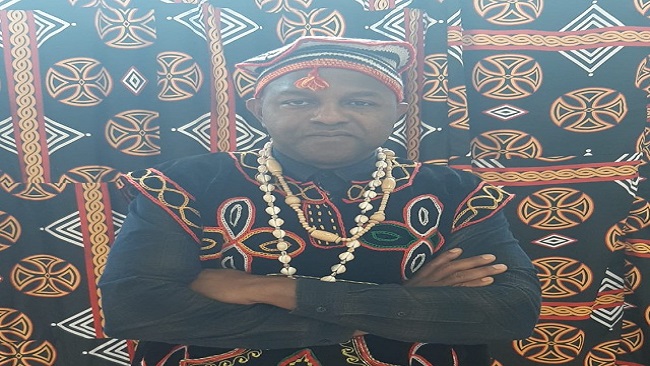
Ekinneh Agbaw-Ebai is a public intellectual and graduate from Harvard University John F Kennedy and Harvard Business School. He writes from Boston, USA. Talk back at ekinneh@yahoo.com



16, October 2024
Biya’s imaginary return to Yaoundé has not occurred 0
The expected return of Cameroon’s president Paul Biya to Yaoundé has not occurred. Financial markets are reacting to growing concerns about his health, while several key government figures have been called to Geneva.
What happened on 13 October? In Yaoundé, Cameroon, while supporters of the Rassemblement Démocratique du Peuple Camerounais (RDPC, the ruling party) and members of youth organisations had been discreetly mobilised to welcome President Paul Biya at the airport, the arrangements were scrapped a few hours later, with the same discretion. And with good reason: the Cameroonian president did not return to the country and is still in Europe. But where?
Imaginary homecoming
No announcement has been made about Biya’s aborted return or the reasons. But this latest development has heightened doubts about the president’s condition, after September and October saw him cancel his participation in the United Nations General Assembly, the International Organisation of La Francophonie (OIF) summit and the meeting on sustainable development in Hamburg, Germany.
Faced with rumours of the president’s death spread by a television channel close to the Ambazonian separatists and widely reported on social networks, the Cameroonian presidency and government were forced to make a public statement on 8 October, explaining that the head of state was continuing his stay in Switzerland, was in perfect health and would return to Cameroon “in the very near future”. That was a week ago.
“The head of state had never planned to return this Sunday [13 October],” said a source close to the presidency, who confirmed that no members of the presidential guard or the presidential security directorate responsible for accompanying the head of state on his travels had been mobilised for this trip. According to our sources, airport authorities were not alerted to any movement of CM-001, the code reserved for President Biya.
Budgetary emergencies
As a result, public suspicions have returned with a vengeance. According to one of the most persistent rumours, Biya has been hospitalised for at least two weeks in an ultra-secure VIP wing of the Percy military hospital in Clamart, near Paris. Cameroon’s ambassador to France, André Magnus Ekoumou, denied this to Jeune Afrique. “Paul Biya has never been hospitalised in Paris or anywhere else. He is in Geneva and in good health,” he said.
Then the influential territorial administration minister Paul Atanga Nji provoked more tension by declaring a ban on debates about the president’s condition in the Cameroonian media. In the same vein, land and property minister Henri Eyebe Ayissi announced that he would organise a day of prayer for Biya at Yaoundé’s Palais des Sports on 17 October. This was subsequently cancelled on the orders of Biya’s private office, led by Samuel Mvondo Ayolo.
These initiatives have annoyed some members of the presidential entourage, since they contribute to the climate of mistrust surrounding their boss. On 13 October, Finance Minister Louis-Paul Motaze, who is also expected in Brussels in the next few days, and Senate Vice-President Aboubakary Abdoulaye were summoned to Geneva. On 14 October, they were joined by Senate President Marcel Niat Njifenji, who had just been discharged from the American Hospital in Paris, accompanied by a delegation of three officials from the upper house.
According to our sources, these summonses correspond to a working meeting officially organised to draw up the budget, which was due to be signed by the president in early August. To make up for the delay, it must be finalised before the plenary session of the National Assembly and Senate, scheduled for November. For his part, Njifenji will have to work with his Senate colleagues from Geneva to manage some of the tensions that are threatening the upper house with implosion.
The uncertainty surrounding the drafting of the state budget is also worrying international agencies. Uncertainty about Biya’s health is affecting Cameroon’s ability to borrow as well as increasing the perceived risk of political instability.
With foreign debt repayments imminent and economic operators awaiting clarification, it looks as though the head of state preferred organising the summit meeting in Switzerland over not holding it at all. To date, Biya has no concrete plans to return to Yaoundé.
Culled from The Africa Report