31, October 2018
Murder of an American Missionary: French Cameroun’s cover up backfires 0
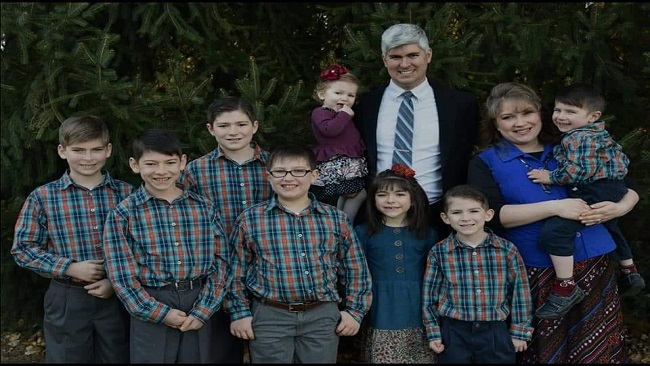
A desperate attempt by the Government of French Cameroun to cover up its responsibility for the targeted murder of an American missionary, has backfired miserably with French Cameroun confessing to the commission of other crimes. Charles Trummann Wesco was killed by a French Cameroun military sniper hit-man in the Bamenda neighbourhood of Bambili, on Tuesday, 30 October 2018.
Cameroon Concord News Group recalls that French Cameroun as a state party to the Geneva Conventions 1948 had a mandatory obligation under the treaty, in declaring the war against the Federal Republic of Ambazonia, to respect its treaty obligations and the laws and customs of war. There is unimpeachable evidence that French Cameroun has targeted civilians and civilian targets for attacks in the prosecution of the war and genocide against Ambazonia and persons found within the territory of the Federal Republic of Ambazonia. The targeted murder of Charles Trummann Wesco is one among a well coordinated campaign targeting America and American interests in French Cameroun, the Federal Republic of Ambazonia and the entire Gulf of Guinea.
Cameroon Concord News Group further recalls that when the Ambassador of the United States of America delivered his government’s position expressing concerns for the indiscriminate targeted of civilians and civilian targets by the soldiers of French Cameroun deployed to prosecute the genocide and exterminate the civilian population of Ambazonia, the government of French Cameroun organized and carried out an official campaign of incitement against Americans and US interests. This criminal campaign which was ongoing when this crime was committed was led by the Minister of External Relations of French Cameroun, Lejeunne Mbella Mbella, the Minister Delegate in charge of Defense in the Presidency of the Republic of French Cameroun, Joseph Beti Assomo, the Minister of Communication Issa Tchiroma Bakary ( Josef Goebbels of French Cameroun genocidal campaign), Atanga Nji, the Al Capone criminal executioner of French Cameroun official slaughter of armless civilians, Gregoire Owona, the CRTV, Television ( Mille Colline) 4 and other satellite genocidal and hate crimes news outlets and networks, the CPDM crime syndicate and a plethora of genocide apologists on the pay of Paul Biya and French Cameroun. It comes as no surprise to Cameroon Concord News Group and keen observers, that the assassination of the American citizen, Charles Trummann Wesco occurred within the framework of the official policy of the government of French Cameroun defined and executed by soldiers deployed to prosecute a genocide of Ambazonia.
Pursuant to French Cameroun anti-American campaign, several American citizens were profiled, abducted and detained in French Cameroun’s military and paramilitary dungeons without complying with the Vienna Convention on Consular Relations (1963 article 36). Some US citizens or legal residents are feared to still being held in French Cameroun’s detention camps in furtherance of this official policy of French Cameroun. That an American cleric is targeted and killed by a French Cameroun sniper in the territory of Ambazonia where French Cameroun military have defined the enemy as civilians residing or found in the territory of Ambazonia comes as no surprise. It is this policy of targeting civilians and civilian targets by French Cameroun terrorists which the American government through its ambassador publicly decried drawing retaliatory threats and incitement targeting US interests and citizens. Isa Tchiroma Bakary went as far as accusing the United States of supporting the self-defense forces of Ambazonia and that the United States caution against the targeting of civilian and civilian targets was a veiled attempt to procure the oil deposits and extensive natural resources within the territory of Ambazonia and the Gulf of Guinea. Cameroon Concord News Group is of the considered opinion that hateful rhetoric is not different from that espoused by Boko Haram and confederacy of crime profiteers operating from within the Centre of power in French Cameroun and Nigeria. Issa Tchiroma is a key liaison operative within that expansive criminal network.
Cameroon Concord News Group invites the United States of America to take the opportunity of the sniper murder of its citizen and the official campaign of incitement against its citizens and interests in the Gulf of Guinea by French Cameroun to lead an international effort to intervene and conduct an independent investigation into all the crimes perpetrated by French Cameroun in Ambazonia. Cameroon Concord News Group is concerned that French Cameroun has embarked on a criminal strategy to eradicate evidence pointing to its responsibility for the murder of Charles Trummann Wesco through the cold-blooded execution of the alleged Ambazonian militants it alleged committed the crimes. The confessed extrajudicial execution of the alleged militants French Cameroun alleges committed the murder without allowing for thorough investigations and a fair judicial process unmistakably portray French Cameroun as a guilty criminal gang in a hurry to eradicate evidence of its criminal responsibility for the crimes, before the US officially decides to conduct its own independent investigation of the crime. Cameroon Concord News Group recalls that the US through its State Department periodic country human rights reports and through its diplomatic mission in French Cameroon has decried extrajudicial executions in French Cameroon and called for the respect of French Cameroun’s international human rights treaty obligations.
The confessed execution of four individuals alleged to have committed the murder of Charles Trummann Wesco is a cover up through the commission of further murders, by execution. The confessed execution of these individuals without due process is an aggravation of the crime requiring urgent American and international attention.
Cameroon Concord News Group calls on the United States of America and the International Community, including the International Criminal Court to urgently open investigations into the crimes of genocide, crimes against humanity and war crimes committed by French Cameroun and conjointly with Nigeria through the abductions and disappearances of hundreds and thousands of Southern Cameroons/Ambazonia civilians in the territory of Nigeria among whom are the President of the Federal Republic of Ambazonia His Excellency Sisiku Ayuk Tabe and members of the interim government of the Federal Republic of Ambazonia.
By Soter Tarh Agbaw-Ebai
Chairman and Editor-in-Chief
Now that you are here
The Cameroon Concord News Group Board wishes to inform its faithful readers that for more than a decade, it has been providing world-class reports of the situation in Southern Cameroons. The Board has been priding itself on its reports which have helped the world to gain a greater understanding of the crisis playing out in Southern Cameroons. It hails its reporters who have also helped the readers to have a broader perspective of the political situation in Cameroon.
The Board wishes to thank its readers who have continued to trust Southern Cameroon’s leading news platform. It is therefore using this opportunity to state that its reporters are willing to provide more quality information to the readers. However, due to the changing global financial context, the Board is urging its readers to play a significant role in the financing of the news organization. It is therefore calling on its faithful readers to make whatever financial contribution they can to ensure they get the latest developments in their native Southern Cameroons, in particular, and Cameroon in general.
Bank transaction: Soter Tarh Agbaw-Ebai
Banking IBAN: GB51 BARC 2049 1103 9130 15
Swift BIC BARC GB22XX
SORT CODE 20-49-11, ACCOUNT NUMBER – 03913015 Barclay PLC, UK
The Board looks forward to hearing from the readers.
Signed by the Group Chairman on behalf of the Board of Directors
Soter Tarh Agbaw-Ebai
Email: soteragbawebai@gmail.com













2, November 2018
The Killing of an American missionary: Yaounde is under pressure 0
The pressure on Yaoundé regarding the killing of an American missionary is increasing by the day. Charles Trumann Wesco, 44, a clergyman from Indiana, died on October 30, barely two weeks after arriving in Bambili in the Northwest region of the country where a growing insurgency in the English-speaking regions has reduced government authority in that part of the country.
The American missionary who was being driven to a market by another missionary, together with his wife and a son, was caught in a crossfire between Ambazonian Restoration Forces and government soldiers near the city of Bamenda. He took two shots to the head when two bullets struck his car’s windshield. He was rushed to a hospital in Bamenda, but did not survive as the hospital lacked the appropriate equipment to handle such situations.
Speaking after the missionary passed away, Kingue Njie, Director of the Bamenda Regional Hospital, said “We tried in vain to save his life,” adding that Wesco’s wife and children, who were with him in the vehicle were unharmed and these people have been talking. They have already spoken to American officials on the ground, some of whom are CIA agents and they hold that ballistic tests will produce incontrovertible evidence regarding which weapon fired the bullet that cut short the missionary’s life and this is causing government officials to lose sleep.
Faithful to its gospel of falsehood and manipulation, the Biya regime through its defense minister, Joseph Beti Assomo, promptly pointed a finger at Southern Cameroonian fighters whom he considers as terrorists. He said the “separatists” who had taken cover, shot and killed the U.S. citizen, adding that the army swiftly riposted and four separatists were gunned down, while a student and soldier were wounded. He warned all foreigners in the country to always inform the country’s authorities and security forces of their movement in the north-west and south-west regions due to the actions of terrorist groups, ignoring the fact that the government had killed other men of God in that region in suspicious circumstances.
Father Alexandre Sob Nougi, 42, pastor of the parish of the Sacred Heart in Bomaka, in the Cameroonian Roman Catholic diocese of Buea, was killed on the 20th of July by government soldiers and the regime has not expressed any remorse, nor has it apologized for the killing of a priest who had nothing to do with the fighting that is playing out in the two English-speaking regions of the country. Not even an investigation has been opened, maybe because the priest is Cameroonian and the clergy has openly criticized the government for its poor handling of the crisis in the region.
This serious incident occurred on the road between Buea and Muyuka, 25 km northeast of Buea, which is the capital of the English-speaking region in the southwest region of the country. The priest, who was also known because he was a diocesan secretary for Catholic education, was shot point blank by government forces.
During his funeral, the Bishop of Buea did not mince his words. He knew who the killer was. Speaking during another event in the northwest, Archbishop Cornelius Fontem Esua of Bamenda said the seminarian shot by Cameroonian soldiers was a “martyr of the Anglophone crisis”. He used the phrase at the October 16, 2018, funeral of 19-year-old Gérard Anjiangwe, who was killed on October 4, 2018, in front of the Santa Teresa Church in the village of Bamessing, in the northwest region of the country.
The armed separatist fighters blamed government forces for killing the missionary in a crossfire, but Assomo has denied the allegations. The Yaounde government is not known for taking responsibility for its actions. When it was accused of flagrant human rights abuses in the northern part of the country, it refused that the incident had taken place in Cameroon. It claimed the incident had taken place in Mali, oblivious of the fact that modern technology could help expose its lies. And this lies were laid bare by Amnesty International and other rights groups which made the most of U.S. satellite images and other technologies to arrive at a convincing conclusion that the incident had actually taken place in Cameroon.
In a fast response to the criticism, the government said it had arrested those identified in the video, including one of the soldiers who had even died a year earlier. This is a government that has a track record of arresting dead people. It will be hard to believe any story from any of the government officials and the government is noted for telling lies and seeking to manipulate international and national public opinion.
The American missionary is not the first to be killed by reckless Cameroonian soldiers who hold that they can put an end to the insurgency by killing any and everything in the two English-speaking regions of the country. Not long ago, government forces killed a Ghanaian pastor whose mission in Cameroon was to spread the word of God. Apostle Isaac Attoh who is survived by a young widow and a two-month old baby boy was shot dead in the troubled town of Batibo in Cameroon. The deceased was dressed in his religious garb at the time of his death.
It was confirmed that Apostle Attoh was killed alongside two other Ghanaians who were in the country for religious purposes. The government’s arrogance was clearly on display when efforts by some Ghanaian pastors and friends in Cameroon to retrieve the body of the deceased were frustrated by the military which was unwilling to release the body to anyone. Due to these frustrations, the Apostle’s family urged the Ghanaian government and the International community to intervene for them to get his remains to Ghana for burial.
As American officials become aware of the incident, the Yaounde government is once more at its antics. It has recruited a Washington DC-based communications firm, Glover Park Group, to inform U.S. and international reporters that the country’s authorities are urgently looking into the matter. The government is already trying to pin the killing on separatists, claiming that the weapon used in killing the U.S. citizen was a shotgun which was commonly used by separatists.
But the government’s gimmicks may not produce the desired results this time around. It might have succeeded to cover up the killing of the Cameroonian seminarian and the Ghanaian pastor, but it will have to work extra hard to convince Americans who are already breathing down its throat that it is not responsible for the killing of the missionary. Ghana, another African country, might not want to embarrass Cameroon, but Americans who are not in the business of hiding the truth, will surely publish their own findings and will want their fellow citizens to know the truth surrounding the killing of one of theirs who was in Cameroon just to spread the word of God.
Wesco’s brother, Timothy Wesco, told ABC News recently that their family believed the killing was targeted “quite probable because he was a white, English-speaking American.” He, however, did not specify which party perpetrated the “targeted” killing, but initial forensic evidence indicate that there were pellets in the victim and this could only come from weapons used by army soldiers. This initial forensic analysis is already pointing a finger of accusation to the Yaounde government that was prompt at accusing the separatists. The government’s charade will surely not last for a long time as CIA agents have already gathered a lot of evidence and their conclusion will be known in the days ahead.
This situation could jeopardize bilateral relations between the U.S and Cameroon under the country’s long-serving dictator. In recent times, the U.S has increasingly given military assistance to Cameroon particularly in its battle with Boko Haram terrorists; providing training to the country’s elite military unit—the Rapid Intervention Battalion (BIR)—which has been deployed to the north-west and south-west regions. But that may change as the Cameroonian military has been racking up a record of human rights abuses.
In May, the US ambassador, Peter Barlerin, had accused government forces of ‘targeted killings’ and abuses in the fight against Southern Cameroons separatists. This, coupled with the human rights abuses in the northern path of the country, has resulted in the U.S. putting an end to its military cooperation with the Yaounde government in the fight against Boko Haram.
The tragic death has sparked outrage on Capitol Hill. Sen. Bob Menendez of New Jersey, a senior member of the U.S. Senate Foreign Relations Committee, has called on Cameroonian authorities to ensure transparency and thoroughness in the investigation, adding that the Yaounde government must strictly adhere to the legal process for swiftly bringing those implicated to justice.
The U.S. lawmaker wants the Yaounde government to get to the bottom of the matter. “I am deeply saddened to learn of the death of an American missionary who sacrificed his life working to improve the lives of the people of Cameroon. As we wait for the details surrounding his death, I extend my heartfelt condolences to his family and friends during these difficult moments,” he said.
“I understand Cameroonian officials have opened an inquiry into this tragic incident. I call upon them to publicly release the findings of their investigation to ensure transparency and thoroughness, and to strictly adhere to the legal process for swiftly bringing those implicated to justice,” he added.
He pointed out that “Reports of increasing violence in the Anglophone region of Cameroon are alarming, as are allegations of human rights abuses by armed actors. I urge all actors on the ground to engage in dialogue to resolve political disputes, and to refrain from violence against civilians. I also call on the Trump Administration to provide appropriate services to the victim’s family, and urge State Department leadership in Washington to engage the Cameroonian government at the highest levels to find a peaceful solution to the Anglophone crisis.”
Cameroon government officials are losing sleep. Their reckless military policies are gradually coming back to bite them in a big way. It is wrong to be shooting down ordinary citizens and it is even unacceptable for army soldiers to be firing at anything that walks. The American missionary is simply a victim of these policies and this mishap may be that trigger that might bring the stubborn Yaounde government to the negotiating table for that much-talked about inclusive dialogue.
Americans will not let the government off the hook. Their ambassador had clearly advised Mr. Biya, the country’s president, not to run for re-election. But Mr. Biya and his collaborators clearly ignored his advice. The killing of the missionary could be that much-needed opportunity that will enable Americans to take their pound of flesh. The pressure is on and the Yaounde government is already feeling the heat.
By Kingsey Betek and Soter Tarh Agbaw-Ebai
Now that you are here
The Cameroon Concord News Group Board wishes to inform its faithful readers that for more than a decade, it has been providing world-class reports of the situation in Southern Cameroons. The Board has been priding itself on its reports which have helped the world to gain a greater understanding of the crisis playing out in Southern Cameroons. It hails its reporters who have also helped the readers to have a broader perspective of the political situation in Cameroon.
The Board wishes to thank its readers who have continued to trust Southern Cameroon’s leading news platform. It is therefore using this opportunity to state that its reporters are willing to provide more quality information to the readers. However, due to the changing global financial context, the Board is urging its readers to play a significant role in the financing of the news organization. It is therefore calling on its faithful readers to make whatever financial contribution they can to ensure they get the latest developments in their native Southern Cameroons, in particular, and Cameroon in general.
Bank transaction: Soter Tarh Agbaw-Ebai
Banking IBAN: GB51 BARC 2049 1103 9130 15
Swift BIC BARC GB22XX
SORT CODE 20-49-11, ACCOUNT NUMBER – 03913015 Barclay PLC, UK
The Board looks forward to hearing from the readers.
Signed by the Group Chairman on behalf of the Board of Directors
Soter Tarh Agbaw-Ebai
Email: soteragbawebai@gmail.com