27, May 2018
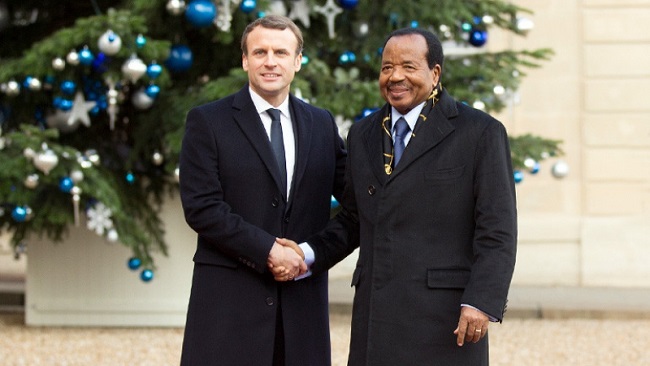
Emmanuel Macron——- Cameroon needs you now 0
Listen up, France: If you want to help avert a full-scale civil war in Cameroon (you still have major economic interests in your former colony), it’s time to take a tougher line against its long-serving president, Paul Biya. That’s the urgent appeal this week from a group of (unnamed) French and Cameroonian observers and published by Libération, a French daily.
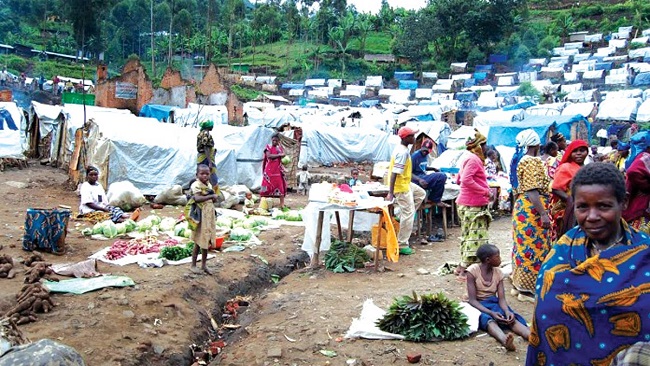
Over the past two years, hundreds of people have been killed and some 160,000 have fled their homes during armed conflict between government forces and anglophone separatists. Insurgents have targeted security forces, elected officials, and teachers, and the army has torched entire villages. “The international community, and especially France, must encourage the government towards dialogue, which it has so far refused,” the observers urged, blaming the government’s intransigence in the face of anglophone calls for greater autonomy.
With human rights groups banned from visiting conflict areas, a bishop from the would-be mediating Catholic Church targeted in an assassination attempt, and the press muzzled, such a move by France would raise hopes for a ceasefire and help dispel anglophone perceptions of its bias towards Biya. More on this under-reported conflict soon.
Source: Irinnews.org
















27, May 2018
Southern Cameroons Crisis: 8 more bodies found in Menka-Pinyin 0
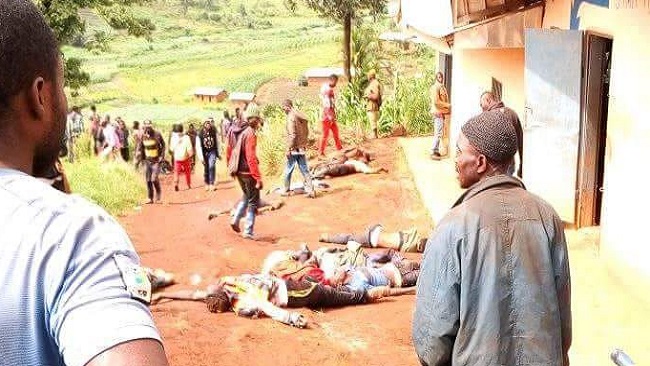
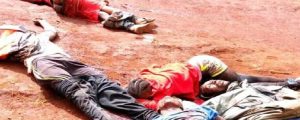
The bodies of eight young men were discovered in Cameroon’s restive Northwest anglophone region, an opposition MP and eyewitnesses told AFP on Friday.
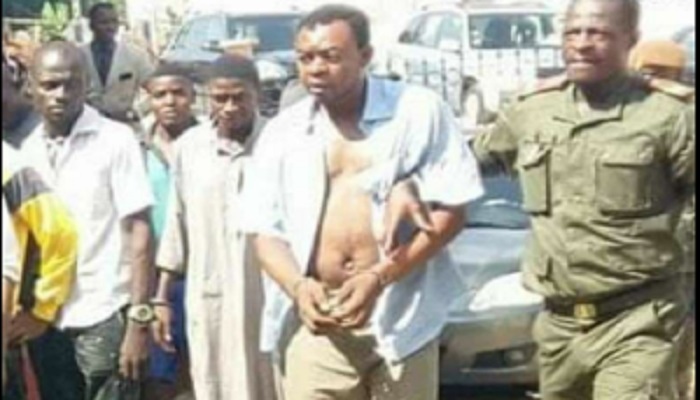
Local residents found the bodies in the bush in the town of Menka. Photos of a dozen dead bodies circulated on social media. Violence between armed anglophone separatists and government forces occurs almost daily in the Northwest Region and the Southwest Region, following an escalation of the crisis in late 2016.
According to Menka residents, the Cameroonian army fended off an attack in the area in mid-May but soldiers returned overnight between Sunday and Monday. Many young people have been missing since.
“There have been some killings in Menka by the army,” Nji Tumasang, deputy of the first anglophone opposition party, the Social Democratic Front, told AFP.
“We think that at first glance they are civilians because no weapon was found on them. The husband of an activist from our party is among the victims.”
The Cameroonian government did not comment when approached by AFP.
Since anglophone separatists declared independence last October, dozens of officials and foreigners have been targeted for abduction.
Abductions are also used as a tool to enforce allegiance among locals who have not taken up the separatist cause.
Earlier this month, the US ambassador to Cameroon accused government forces of carrying out “targeted killings” and other abuses in the fight against independence-seeking militants.
The foreign ministry later expressed its “deep disapproval” of the comments made by US ambassador in Yaounde, Peter Barlerin.
The presence of a large English-speaking minority — about a fifth of Cameroon’s population of 22 million — dates back to the colonial period.
It was once a German colony that after World War I was divided between Britain and France.
In 1960, the French colony gained independence, becoming Cameroon, and the following year, the British-ruled Southern Cameroons was amalgamated into it, becoming the Northwest and Southwest Regions.
For years, resentment built among anglophones, fostered by perceived marginalisation in education, the judiciary and the economy at the hands of the French majority.
Demands for greater autonomy were rejected by 85-year-old President Paul Biya, in power for more than 35 years, leading to an escalation that saw the declaration of the self-described “Republic of Ambazonia” in October last year.
Source: Pulse.ng