
22, February 2018
Cameroon: SDF holds congress amid high tension 0
Members of Cameroon’s leading opposition party, the Social Democratic Front (SDF), are in Bamenda, the North West regional headquarters, where they are expected to attend their party’s annual congress.
The congress will be taking place amid high tension as unknown armed groups in the region are threatening to disrupt the event following criticisms by the SDF Chairperson, John Fru Ndi, of the Southern Cameroons struggle for independence. It is alleged that Mr. Fru Ndi called the President of the Republic of Ambazonia, Julius Ayuk Tabe, and his government arrested in Nigeria on January 5, 2018, and extradited to Cameroon in late January terrorists.
The armed groups, which have been killing and maiming soldiers, as well as kidnapping senior administrative officers in the region, hold that they must punish Mr. Fru Ndi who they accuse of having political intercourse with the Yaoundé government.
To ensure that the congress takes place as scheduled, the Yaounde government is providing top security to Mr. Fru Ndi, a situation that has further fueled rumor he is playing ball with Mr. Biya. Even the location of the event is heavily guarded, as the armed groups are determined to wreak havoc.
It should be recalled that the Biya government that is providing security for the SDF today, was the same government that maimed and killed many young SDF supporters in 1990 when the political party was launched because the Biya regime felt threatened that multiparty politics could sweep it out of power. It therefore declared the party launch illegal, thus creating a chaotic situation that resulted in the arrest and detention of many SDF supporters.
Similarly, due to threats, the SDF congress location has been changed as the owners of the previous location were scared that their property could be burnt down or destroyed. The SDF which has been seeking to bring the Southern Cameroons crisis to the floor of the National Assembly will finally hold its congress at the Congress Hall in Bamenda which many Cameroonians erroneously hold that it is the ruling party’s property.
The armed groups are serious. Their threat should be taken seriously. It should be recalled that last week, the Batibo Divisional Officer was kidnapped and taken into a thick forest and attempts by government officials to locate him have been futile. Not even his body has been located even when rumor had swirled that he had been killed. For now, it is believed that he is being held by Anglophone separatists who are seeking to restore their independence from the Republic of Cameroon.
It is worth mentioning that the SDF is known to be in favor of a federal system in Cameroon and the party chairman as well as other officials have always chided the government for mismanaging a problem that has metamorphosed into a crisis that has already consumed more than 500 lives, including both civilians and soldiers.
Despite the increasing tension, many political analysts hold that the SDF congress is necessary as it will enable the party chooses its candidate for this year’s presidential election. Many Cameroonians – both Francophones and Anglophones – hold that a new political class must emerge, as the old one has been a huge disappointment to the people.
For now, there are two candidates who are seeking the party’s top job. Joshua Osih and Barrister Mbah Ndam. But the congress will surely be a coronation for the young Osih who is very much respected in the country.
Mr. Joshua Osih is smart, bilingual, and patriotic, and he understands the people’s plight. After serving for long as his party’s vice-president and parliamentarian, Mr. Osih believes that this is the right time to help pull the country out of the political mess created by the Biya government.
His candidacy in the upcoming party election comes as a relief to many young Cameroonians who clearly hold that it is time to walk away from the ineffective and inefficient gerontocracy that has brought pain and death to many Cameroonians. Many young Cameroonians hold that the country needs younger hands to transform the country’s economic and political landscape and Joshua Osih has a safe pair of hands.
It is also widely believed that his understanding of both Francophone and Anglophone cultures makes him the ideal candidate for the post of president in a country that might implode if the right person does not step in. His moderate stance on many issues has earned him the respect of the entire nation.
Joshua Osih’s time has come. He is being considered as the comprise candidate even by Anglophones who have clearly demonstrated their frustration with the Yaounde government. Cameroon needs to heal and only someone with Joshau Osih’s temperament and charisma will be able to help the country walk away from its ugly past.
Meanwhile, the country’s political situation is fast deteriorating, especially as it is rumored that the country’s president, Paul Biya, is bed-ridden, having been struck down by prostate cancer and a failing heart. The ruling party is already falling apart with some of its senior officials taking a swipe at the ailing president. One would think only the young, ambitious and hungry members of the party would throw stones at the ailing president.
But things are slowly turning out differently. Chief Victor Mukete of Kumba, the Paramount chief of the Bafaw, has been taking parting shots at Mr. Biya whom he accuses of being inaccessible, ineffective and responsible for the political mess that is tearing the country apart.
The 99-year-old Mukete knows he is on his way out of politics and he is at death’s door. His senatorial appointment will no longer be renewed due to age and he thinks this is the right time for him to tell it all, at least in the interest of current and future generations.
Speaking to Jeune Afrique, the continent’s most popular French language political magazine, Nfon Mukete did not spare any punches. He pulled some of his deadliest punches against Mr. Biya who himself has been out of the public eye for months now.
Chief Mukete also castigated the Biya government for appointing less than 10 Anglophones to senior positions in the country. He decried the marginalization of Anglophones, adding that none of the Anglophones who had been prime minister under Biya had been courageous or honest enough to sound the alarm.
He regretted the chaos playing out in Southern Cameroons, stressing that the issue could have been addressed long before it got out of hand. He clearly said that he would like Cameroon to be a ten-state federation, pointing out that the current extreme centralization was an error. He pointed out that federalism would enable the people to be in charge of their destiny.
He underscored that the president would be open to such an idea, adding that he had heard people within the corridors of power saying that the president was considering it as a way out of the current political crisis.
Asked why he had not written to the president about the situation, Chief Mukete said that he was not sure the letter would ever reach him, adding that Ahidjo was more accessible than Biya and that the people around Mr. Biya had created a ring of fire around him.
By Fosuh Tamajung in Bamenda, with contributions from Kingsley Betek and Rita Akana in Yaounde.



















22, February 2018
Nigeria aids refugees fleeing from Southern Cameroons 0
More than 25,000 refugees have travelled across the border from Cameroon to Nigeria and dozens continue to arrive every week. Caritas Nigeria is appealing for urgent support to fight an emerging humanitarian crisis as a growing number of refugees have been forced to flee political upheaval and armed conflict in neighbouring Cameroon.
“The situation is dire,” said Fr Evaristus Bassey, director of Caritas Nigeria. “According to some of the refugees, they escaped on bush paths with only the clothes they were wearing.” Caritas Nigeria says assessments show more than 25,000 refugees have travelled across the border from Cameroon to Nigeria and dozens continue to arrive every week. Caritas has launched an international appeal to provide 10,000 refugees in Cross River State with food, clean water, mosquito nets and other aid.
Fr Bassey said the influx was having a serious impact on already impoverished Nigerian communities.“Many refugees are staying with relatives or friends they have known on the Nigerian side,” he said. “Typically many of these villages are rural and housing conditions are poor and congested. Some of these communities in peace time had no functional latrines except designated spots for open defecation. Water sources are from the stream.”
The armed insurgency in Cameroon is largely driven by the Ambazonian group which is demanding the full restoration of statehood for what was a former British colony in southern Cameroon from 1922 to 1961. Their objective is the dissolution of the 1961 Union of Southern Cameroon with French Cameroon.
English speaking parts of Cameroon have long complained of marginalization by the French-speaking dominated government, which has deteriorated into a brutal crackdown. Caritas Cameroon’s Fr Kisito Balla Onana said, “Our English-speaking brothers and sisters are in distress.
“Two weeks ago I went to the field with one of the bishops. We visited deserted villages where the houses were burned down. Many of their inhabitants had left and were living in extremely difficult conditions. Caritas brought them clothes, food and a small sum of money.”
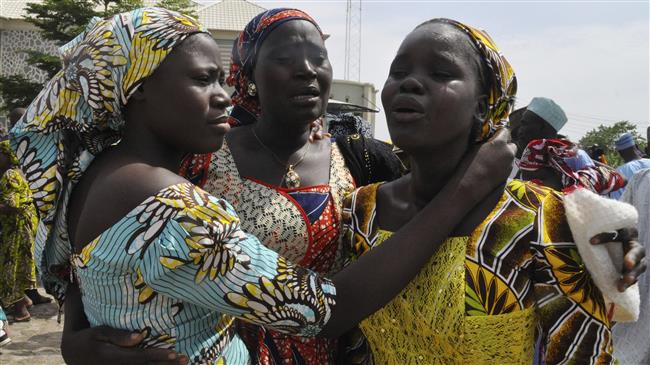
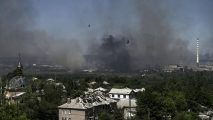
Many refugees have fled their homes to Nigeria to escape the conflict which has destabilised the country and destroyed lives and livelihoods.
Caritas Nigeria says services are stretched and there is inadequate accommodation, food, water and sanitation available.“We want to urgently provide humanitarian relief to those in dire need, before this crisis becomes too monstrous and difficult to handle,” said Fr Bassey.
Caritas Nigeria conducted rapid assessments across some of the affected areas that have received a large influx of refugees from Cameroon. The assessment revealed that the Cameroonian refugees in Cross Rivers State were mostly based in the communities within Nigeria that are sharing borders with Cameroon.
Most refugees are living in host communities with relatives, in abandoned government quarters or uncompleted buildings and even open space. They have been dependent on the generosity of impoverished host communities for donations of food and clothing as most of them fled for their lives.
“Caritas Nigeria carried out an assessment two years ago on the Oban corridor in 18 communities because of an environmental program we wanted to initiate,” Fr Bassey said. “The clean water and hygiene conditions were appalling. These are aggravated now with the present crisis.”
While Caritas has carried out assessments in Cross River State where the refugees have the largest concentration, it is seeking input and guidance in other areas where refugees are being housed.
“Caritas has already made assessments in the Oban Corridor and the Boki and Ikom axis,” said Fr Bassey. “Caritas will soon carry out market surveys and establish relationships with vendors for food vouchers. The main challenge though is that markets are far from these communities and transportation is a huge challenge in transporting materials.”
The Nigerian Church is planning a national collection and Caritas Nigeria is appealing for urgent donations of food, clothing, blankets, medicine, cooking utensils and WASH materials.
Fr Bassey said in Nigeria systems and institutions often respond quickly to a crisis but pressure from the international community might assist Nigeria to face up to the challenge over the longer term.
He said language barriers with French speaking Cameroon made co-operation challenging across borders and the Nigerian government would need a lot of support if the situation escalates into a full-blown crisis.
Source: Reliefweb.int