
20, December 2017
Southern Cameroons Crisis: Commonwealth Secretary General meets Biya 0
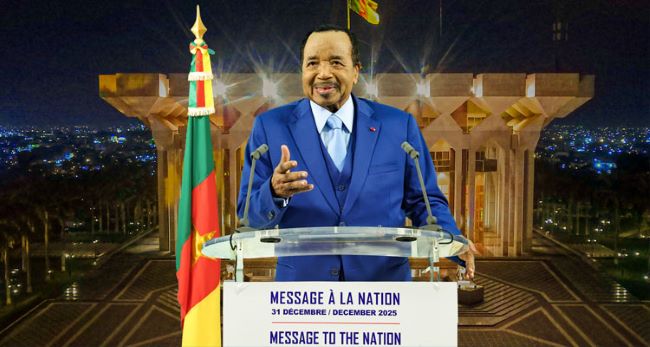
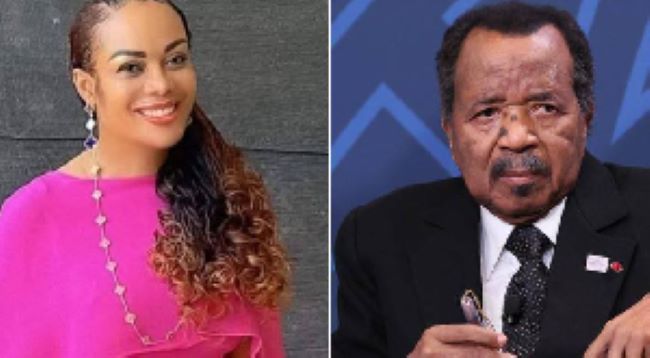
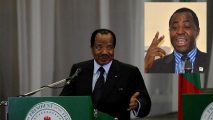
On the second day of her official visit to Cameroon, the Commonwealth Secretary General Patricia Scotland was received in audience by the French Cameroun dictator, Paul BIYA at the so-called Unity Palace on Tuesday, 19 December 2017.
Nothing has filtered from their conversation but some sources have said it was cordial. Mr. Biya and his guest reviewed cooperation between Cameroon and the Commonwealth that started in 1995. Patricia Scotland was elevated by the Paul Biya to the dignity of Grand Officer of the Order of Valor, the highest honor awarded to a foreign dignitary.
Biya reportedly discussed the socio-political and economic situation of the country marked notably by the war against the terrorist group Boko Haram, corporatist agitation in the North-West and South-West regions and blamed the killings of Cameroon defense forces on the Southern Cameroons Diaspora.
The 84-year-old enlisted all the measures taken by his government to appease the Anglophone community which Cameroon Concord News understands are not genuine. Biya also reiterated his willingness to dialogue, but observed that he was determine to “restore order and (to) punish the guilty of these murders”.
For her part, the Secretary General of the Commonwealth expressed “great sadness” in the face of the difficulties currently facing Cameroon, a country known as a haven of peace and stability. She urged Cameroonians to preserve peace and unity; to encourage in all circumstances genuine dialogue. According to Scotland, “a prosperous Cameroon is a prosperous Africa and a prosperous Commonwealth.”
By Rita Akana











20, December 2017
UN urges return of 6 aid workers in S. Sudan 0
The United Nations’ humanitarian coordinator in South Sudan called Tuesday for the “swift and safe” return of six aid workers who have disappeared in the northwest of the country.
The coordinator, Alain Noudehou, said in a statement that one international and five national aid workers had gone missing on Sunday while travelling between the towns of Raga and Wau, where they were working on food security.
The six were employed by two foreign organizations, and one national organization.
On Monday, France-based NGO Solidarites International said it had “lost contact” with three of its workers, but said it could not be confirmed whether they had been kidnapped.
The South Sudanese government, and rebels led by exiled former vice-president Riek Machar, accused each other of attacking the aid workers during clashes which broke out in the area.
The information ministry in the state of Lol, where Raga is situated, said in a statement that Machar’s “bandits” had ambushed vehicles 30 kilometers (18 miles) outside of Raga, killing eight civilians and kidnapping four aid workers.
Meanwhile, Lam Paul Gabriel, a spokesman for the rebel SPLA-IO, said his forces had “intercepted” a convoy carrying weapons between the second largest city of Wau and Raga which were to be used to attack rebel bases.
He said that in the course of this operation, four aid workers were “rescued”, adding they had been used as “being used as shields by the government in the transportation of these military hardware.”
“They are currently safe and sound with our forces around Raga and will be handed over to the concern third party as soon as possible,” said the statement.
It could not be immediately confirmed if all six aid workers mentioned by the UN humanitarian coordinator went missing in the same incident.
Wau and its surrounds have been the center of fierce fighting between the government and rebel forces since 2016.
In April three people delivering food aid were brutally killed in Wau, a sign of the difficulties for humanitarian workers in dealing with the fallout from the country’s four-year old war which has killed tens of thousands and driven nearly four million from their homes.
In eastern Jonglei, 60 humanitarian workers had to flee fighting in April.
South Sudan’s leaders fought for decades for independence, but once they got it in 2011, a power struggle between President Salva Kiir and his former deputy Riek Machar led to all out civil war in 2013.
(Source: AFP)