22, September 2024
Paul Biya is still away, hasn’t returned to Yaoundé 0
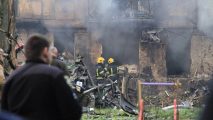
Cameroon is battling devastating floods as the country’s President Paul Biya, still broad on a trip he began two weeks ago, tasked officials to address the dire humanitarian crisis.
Some 20 people have died and 236,000 others displaced in the Far North region, according to the UN Office for the Coordination of Humanitarian Affairs (OCHA).
They are among 2.30 million people in West and Central Africa so far affected severe flooding in 2024.
This region has been experiencing flooding since the start of the rainy season, which began in the second half of July with an average rainfall frequency of one day out of four.
There has been an increasing significant damage to infrastructure, farmland, and disruption of essential services in three of the six administrative divisions of the floods-prone region including Mayo Tsanaga, Mayo Danay, and Logone-and-Chari.
The peak of the floods was recorded on August 28 with the breaking of water retention dikes in Mayo Danay, causing the town of Yagoua and other villages to be flooded, OCHA said on Friday.
Several schools have been forced to shut, destroyed, or are being used to provide shelter for affected communities since the 2024/2025 academic year started on Monday September 9 leaving schoolchildren in the region in limbo.
The mostly agrarian and pastoralist population has seen its and farmland and herds of cattle and sheep; main source of livelihood and vital for local economies and food security washed away by floodwaters. The lifestyle of the people in this part of the country is nomadic.
This week, authorities moved students to schools that are still functioning using mainly heavy duty trucks and canoes, signaling a possible overcrowding for the time being.
Cameroon’s floods aren’t the only source of crisis. While the students in this part of the country are suffering from an environmental disaster, those in most parts of the Anglophone region of the country have also been at home because of conflict.
The English speaking regions of South West and North West in Cameroon have seen school disrupted for fear of being attacked as armed separatists have imposed a lockdown and are reinforcing tactics to prevent children from schooling.
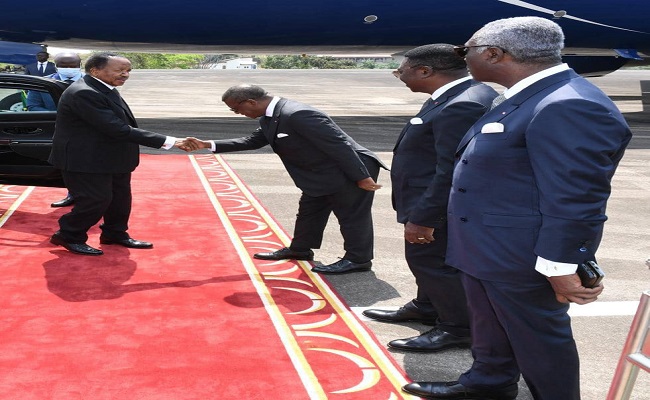
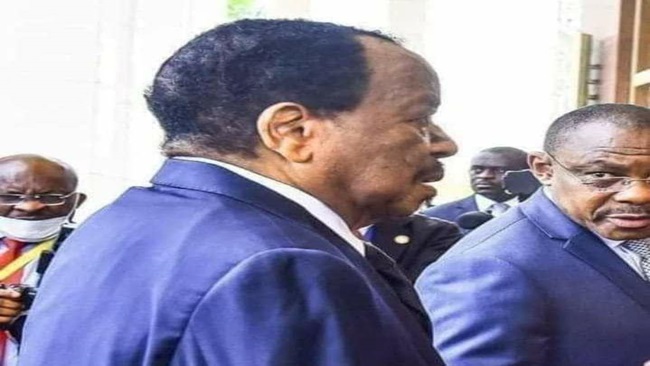
Cameroon’s President Paul Biya is still away after he first left the country for Beijing on September 8 for the Summit of the Forum on China-Africa Cooperation (FOCAC), at the invitation of President Xi Jinping.
State television reported with footages of a plane carrying the president and wife that the ageing leader had left the Chinese capital. But ten days later, he hasn’t returned to Yaounde.
Biya routinely travels to Europe for “brief private stays” and sometimes detours from foreign trips. He has been absent before from national crises although his officials often argue they are delegated to deal with the issues while he is away.
In October 2016, when an overloaded train derailed in the small town of Eseka, killing over 75 people, Biya was on a “brief private visit to Europe” which is how his office refered to his regular jaunts to Geneva.
A year later, the president was again on another “private” visit to Switzerland when protests broke out in the Anglophone western part of the country over perceived and real marginalisation of the English-speaking minority population. The protests ballooned into today’s armed struggle that has kept many schools closed.
Though again absent, the 91-years-old President was touched by news of the devastating floods in the Far North Region of the country, according to the Minister of Territorial Administration, Paul Atanga Nji, who conveyed the Cameroonian leader’s heartfelt condolences to the bereaved families at a press conference in Yaounde on Friday.
As part of a wide range of emergence response measures, Minister Atanga Nji announced that the president had ordered the disbursement of an emergency aid of $594,000 (FCFA 350 million) to the flood victims.
“We will provide beds, matrasses, food items and other health facilities to the victims,” said Atanga Nji. He supervised the departure of some truckloads of part of the assistance from Yaounde on Tuesday.
Blaming the floods on climate change, Atanga Nji said the floods, and droughts, will not be unique to Cameroon. He said neighboring Lake Chad Basin countries like Chad and Nigeria have also been hit by floods, landslide and mudslide resulting from scattered downpours and thunderstorms. The same countries have been pummeled by droughts recently.
In Chad, the United Nations Population Fund (UNFPA) reports at least 341 fatalities, at least 1,495,969 people affected and 265,590 damaged houses by devastating floods in the central and south-western part of the country as at Tuesday. Local media including Chadinfos.com have reported a higher tool.
In Nigeria, at least 30 people have died and several hundred thousand others forced from their homes by floodwaters in Maiduguri, capital of northeastern Borno state that borders Cameroon, Chad and Niger.
Already burdened by violence and insecurity brought about by the Boko Haram insurgency, the recent floods have exacerbated the sorry story of the Far North Region one of Cameroon’s most populous and least developed of the ten semi-autonomous administrative regions.
According to OCHA, the floods have struck vulnerable communities already facing challenges due to climate change, pockets of drought, locust invasions, bird invasions, pachyderm invasions and a highly volatile security context since 2014, “not to mention the structural poverty of the Region”, it said in a report on Friday, September 13.
Cameroon is just one of several countries so far hit by floods this year in West and Central Africa.
Torrential rains and severe flooding have affected more than 2.30 million people in West and Central Africa in 2024, according to statistics by OCHA. The most affected countries are Chad, Nigeria, Niger, the Democratic Republic of the Congo and Mali.
Culled from the East African


22, September 2024
Roman Catholic clerics urge support after devastating floods in West and Central Africa 0
Catholic leaders across West and Central Africa are calling for assistance following unprecedented and deadly floods that have swept through the regions.
The catastrophic flooding in Nigeria, Cameroon, Niger, Chad, Mali, Ghana, and Liberia has triggered severe humanitarian crises, affecting an estimated four million people, most of whom are children.
As of 17 September, the United Nations Population Fund (UNFPA) said that at least 341 people had died due to the floods that have also affected nearly 1.5 million people.
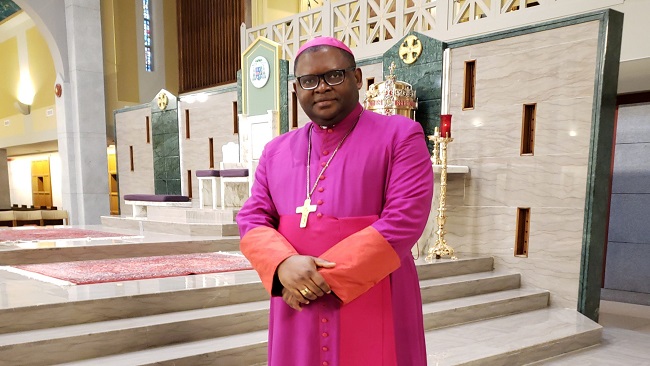
Bishop Dominique Tinoudji of the Diocese of Pala in Chad has urged the population not to despair, reminding them that “God is still on the throne.”
In a September 8 Mass dedicated to the flood victims, the bishop noted that “the situation we face might lead us to question God’s presence, His protection, and His help; but even in the face of such a severe trial, we must not give up hope.”
The bishop called Christians to action, urging them to make sure the new shelters now called home by the millions displaced by the floods do not constitute a source of fresh problems for the people.
“We must safeguard hygiene to prevent disease and protect the vulnerable from the cold and malaria-carrying mosquitoes,” Tinoudji said.
“We are one body in Christ, and individually member’s one of another. Opening your hand to give a kilogram of rice, some maize, or a bar of soap can make a huge difference,” he continued.
He emphasized the importance of supporting local Caritas organizations to ensure a coordinated disaster response.
“Caritas is our way of putting charity into action. Unfortunately, in many parishes, Caritas is either inactive or absent. Even our diocesan Caritas is still in its early stages,” the bishop said.
The Catholic Church leader encouraged communities to take “practical steps in city planning to reduce future risks, particularly in flood-prone areas.”
“Our engineers must help us design cities that consider natural water pathways, flood-prone areas, and proper drainage systems,” the bishop said and reiterated his call to trust in God’s continued presence, saying, “Do not be afraid; be strong and keep your trust in the Lord.”
In Nigeria, at least 269 people are reported dead and more than 640,000 people displaced, according to the latest data from the country’s disaster management agency NEMA.
The flooding in Nigeria was caused by the collapse of a dam following heavy rainfall. There are also concerns that there will be even more flooding in the days ahead as Cameroon plans to release water from the Lagdo Dam in the country’s Far North Region.
Nigeria’s hydrological services agency has warned that 11 states would potentially be flooded as a result.
The Catholic auxiliary bishop of Maiduguri – located in Nigeria’s Borno state that has been most affected by the floods – has in a video message noted that “the city of Maiduguri has been engulfed with a devastating flood and over 40 percent of the city is under water.”
In comments to Crux, the Episcopal Secretary for Laity Affairs of the Catholic Secretariat of Nigeria, Josef Iorakpen Ishu, noted that “the flood regime in Nigeria is heartbroken.”
“The flood that is ravishing some parts of the country is compounding the hardship on the people. In fact, the metrology agency is predicting that more states will experience flooding in days and weeks to come, and the government is asking those living in such areas to vacate immediately,” he told Crux.
“The question is should people vacate where? Because the same government has not provided alternative homes or makeshift homes for the people,” he said.
“Even humanitarian agencies are overwhelmed by the situation. It is a huge challenge for us here,” Ishu added.
Then referencing the recent End Bad Governance Protest in Nigeria, Ishu said the government’s response to the floods is just further proof that it has “lost its relevance at all levels: Federal, state and local levels.”
“People are helpless and looking up to God for divine intervention,” he said.
“We are reaching out to our friends at Aid to the Church in Need for your prayers, especially at this difficult and challenging time,” the Bishop of Maiduguri said in a video message.
In Cameroon, where the UN says at least 17 people have died, the government has offered assistance in terms of basic items like blankets, soap, and buckets.
In Niger, over 137,000 people have lost their homes due to flooding since August. Almost 100 deaths have been recorded.
“The situation [in West and Central Africa] is devastating — people in the region are already grappling with rising hunger and alarmingly high malnutrition,” said Modou Diaw, the West Africa Vice President for the International Red Cross.
Climate change is now blamed for the floods, triggering calls for a response to the high cost Africa pays due to the issue.
“Africa is losing an estimated 2-5 percent of its GDP annually due to climate-related disasters,” said Dr. Richard Munang, Africa Regional Climate Change Coordinator at the United Nations Environment Program (UNEP) in comments to Crux.
“For instance, adaptation costs in sub-Saharan Africa are projected to reach $30-50 billion annually over the next decade,” he said.
Source: Crux