
31, August 2017
Oroko-USA National Convention: Setting the agenda for future accomplishments! 0
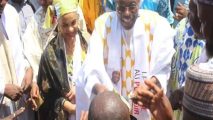
In September 1-3, 2017 the Orokos in the United States will converged in one of America`s historic and UNESCO protective heritage city of Boston in their annual cultural assemblage, in a public display of the rich Sawa cultures, unique in its identity.The event which is the most celebrated, brings together all the Orokos in the United States of America to communion as a family by show-casing its cultural grandeur, traditional regalia and delicate traditional dishes.
The Orokos are an ethnic indigenous Sawa tribe in the Southwest region of Cameroon under the administrative unit of Ndian division. It stretches its cultural and linguistic similarities with the Grand Batanga of the resort city of Kribi in littoral and neighbouring Nigeria. With two newly created additional sub divisions, Ndian currently has four sub divisions namely Mundemba, Isangele, Ekondo Titi and Kombo-Edinti. The Orokos are span across two other divisions in the Southwest region namely Meme and Manyu. Some of the major clans include; Batangas, Bimas, Bakundus, Ngolos, Ekombe, Balondo-Banagas, Balue, Mbonge and Bakokos. Ndian is also considered the largest division in the region in terms of its geographical size.
The growing numerical strength of the Oroko population and the emerging new demographics of future American-Oroko kids became a social call and responsibility to bring all the Orokos under a mother association.In effect, the Oroko Cultural Association-OCA-USA was a dream come-true ostensibly out of the euphoria to unify the Orokos in the United States. And in September 1997, OCA was born in Atlanta Georgia. After the inception and the birth of OCA, it has produced five democratic elected impact presidents in this sequential ascendancy; pioneer president Tata Rev. Sam Esala who reigned from 1997-1998, Tata Awanjo Felix 1998-1999, Tata Louis Etongwe 1999-2005, Tata Fred Bebe 2005-2009, Iya Dr. Mercy Mabian 2009-2013 and Prince Ferdinand Mediko 2013-2017.

The 2017 convention which is an election year is special. And whoever is going to occupy the highest office of the association will have the onerous task of providing constructive and responsible leadership to all Orokos in the diaspora and at home, of every social background, gender, education and belief and above all, he/she must answer the call for socio-economic regeneration and take the destiny of Ndian division in his/her hands.
Despite the fact that Ndian division is one of the richest constituencies in Cameroon, it has benefited little or nothing from its God-given resources. Perhaps it is deliberate perhaps it is accidental, but this political and economic backwardness of Ndian division is a classic example of why all the Orokos must reinvent themselves, by creating new visions and mobilising themselves to develop their own resources. A natural resource is a source of blessings. But those found in Ndian division leaves behind a record devastating poverty stricken population with no signs for things to get better even in the near future.
The local economy paralysed due to in accessibility of road linking two major divisions [Ndian & Meme]. Educational infrastructures and healthcare facilities are deplorable. The inconvenient truth is that there is still the existence of breathtaking rise of personal vilification within the Orokos and the absence of receptiveness. And no matter what, this convention in Boston is special in the sense that it will produce a new presidential team to pilot the association for another deserved mandate. More to that, it is in Boston where American revolutionary ideas were conceived. It is in Boston where the revolution started. And therefore it should be in Boston where the Orokos will set the agenda for future accomplishments. Welcome to the city of Boston.
Prince Etukeni Agbaw-Ebai
Secretary General, Boston








31, August 2017
Anglophone Crisis: Too soon to cry victory 0
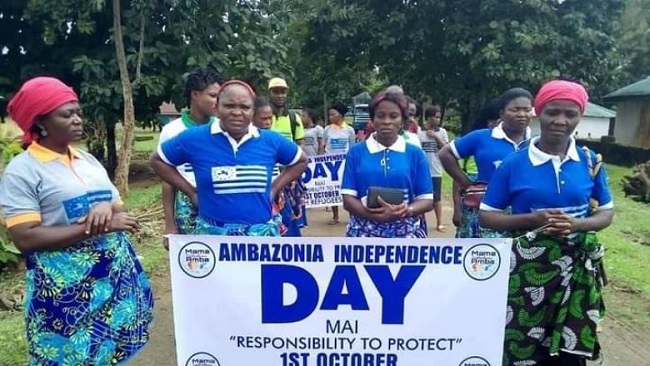
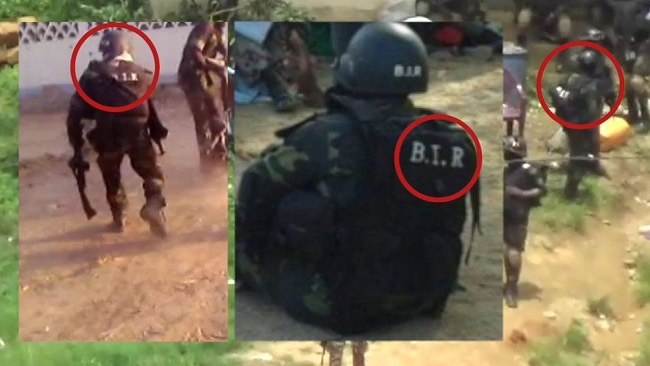
Wednesday’s announcement of the release of Anglophone leaders by the Cameroon government has been hailed by many as a major step in the right direction and many observers think that such a measure by the country’s head of state could pave the way for genuine and sincere dialogue about the country’s political future. Cameroon is central Africa’s major economic power, but over the last ten months, the country has been caught in a dangerous political storm following complaints by Anglophones about their marginalisation for close to sixty years. Many government praise-singers are already marketing the country’s leader as a visionary and a man of peace. Some hold that he is a leader who has the interest of his country at heart and will stop at nothing to promote peace and unity.
But critics have been fast at pointing out that for a man who has the country’s interest at heart, such a major decision could have been taken long before to spare the country the pain and pressure it has gone through following the arrest of innocent and responsible Anglophone leaders such as Barrister Felix Agbor Nkongho Balla, Dr. Fontem Neba, Lord Justice Paul Ayah Abine and Mr. Mancho Bibixy. They argue that the threat to disrupt school resumption has been hanging over the government like the Sword of Damocles and this threat will continue to be on the table for as long as the government continues to treat Anglophones as second-class citizens. These critics, some of whom are legal experts, contend that the government of Cameroon should be dragged to court for illegally arresting and detaining its own citizens. They argue that the Anglophone struggle will continue to be a nightmare that will not go away anytime soon as long as the ruling elites continue to live on their Ivory Tower.
They posit that Anglophones could be a minority in Cameroon, but they constitute a nightmare to the government which has the nasty habit of not listening to the people they govern. Some elements of the Anglophone Diaspora hold that the release of their leaders is not an end in itself, but a means to an end. In their view, it is a major victory in a battle that will be for fought for many years, but they are sure they have the right stomach for a fight. They point out that the government has succeeded in doing one thing – unite Anglophones – and this unity will be leveraged to bring justice and equity to the people of West Cameroon.
They argue that releasing their leaders is a good decision, but it is too early for any sensible Anglophone to cry victory, adding that the arrest of their leaders was not the cause of the crisis, but rather an offshoot of a crisis that has been in the making for more than fifty years. The illegal arrest and detention of Anglophones was what caused the crisis to escalate and the government’s decision to do the right thing is just a step towards de-escalating the tensions, but the battle must continue until the government and Anglophones come to a conclusion that will be satisfactory to both parties.
They also contend that they must continue to mount pressure and keep a careful eye on the government. The government, they say, is like a leopard. It is not going to lose its stripes anytime soon as its bag of tricks is still full, adding that manipulation is its stock in trade, but Anglophones, especially those in the Diaspora, will not be buying into any illusion the government may want to sell. They insist that since violence is the only language the government understands, they will continue to disrupt government activities both abroad and in Cameroon. They point to the successful disruption of recent government missions in South Africa, Canada, England and Belgium, adding that the law is for everyone and if the custodian of the law – the government – is always quick at violating the law, they too will continue to deliver chaos to the government until a clear and definitive solution to the Anglophone problem is found.
Meanwhile, following yesterday’s announcement, Anglophone leaders and activists have been meeting to find an appropriate response to the decision. Meetings in Brussels, Washington DC and London which went into the early hours of Thursday have not yet produced the right response. Federalists and independentists have been disagreeing over the way forward. Differences on how to respond are still being settled behind the scenes and different factions are seeking to promote their perspectives. Proponents of total independence, who have been characterizing federalists as eternal optimists who think that they are capable of reforming eternal sinners, are simply not buying into the noise that is being made by the Yaounde government. To them, their objective is clear. They have had enough of a country that has marginalized its own people for close to six decades. They argue that the government is used to speaking from both sides of its mouth, adding that the government of “La Repulique”, a country they consider as their neighbour, will never act without ulterior motives. The interim leader of Southern Cameroons, Sesekou Ayuk Julius Tabe, who is on a world tour to promote the recognition of his country, is gradually winning hearts and minds, and is being quoted as being indifferent to the Biya-staged dramain Yaounde, as his focus is to drum up support for Southern Cameroons which, in his view, will soon be the continent’s newest country.
For federalists, this could be an opportunity for the form of the state to be discussed. The government, they say, comes out of this situation bruised and fragile, adding that a little pressure will bring the reluctant and ageing government officials to the negotiating table where they will table their constitution for a federal system of government in Cameroon. While others hold that the children have already paid a huge price and should be allowed to go back to school, hardliners are still pushing for a boycott of schools so as to bring the struggling government to the negotiating table. They point to the dictatorial tendencies of the government, arguing that the country’s government is noted for its bad faith and can never be trusted. The decree to release the leaders, in their view, could be a distraction and they are simply not going to fall into this “honey trap” that the government is setting for the Diaspora.
However, there is hope in the future. Many Anglophones still think that something good can come out of yesterday’s decision to release Anglophone leaders. They are calling on the government to build on yesterday’s decision to bring different factions to the negotiating table. They argue that though lots of mistakes have been made, the country can still pull together to make the crisis a thing of the past. They, however, hold that the government should recognize errors of the past and should seek ways and means to calm flaring Anglophone tempers. They also want the government to ensure that future generations do not go through the pressure and chaos that have been playing out in the country for a long time. They think a good constitution as well as goodwill will go a long way in restoring peace in Cameroon. In their view, they are still watching the government very closely and are waiting to see what measures will follow yesterday’s decision.
The Editorial Desk
Cameroon Concord News Group